
Why young Americans don’t care about getting a driver’s license anymore

Licensing rates are declining among younger generations as digital-first lifestyles redefine what independence looks like today.
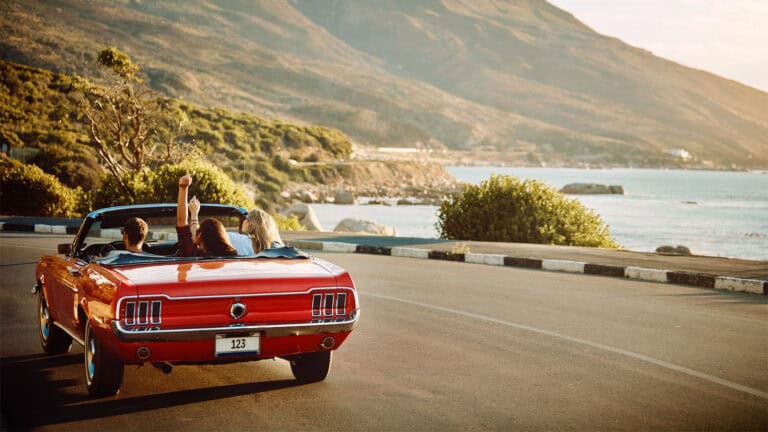
In past decades, getting a driver’s license was widely seen as a key milestone of independence for American teenagers. For many young people in the early 1990s, driving meant freedom and stronger social connections. New drivers were eager to reach the legal age and get behind the wheel.
Today, that picture looks different. Interest in getting a license has clearly declined among younger generations, and driving no longer holds the same cultural weight. Many teens and young adults delay or skip licensing altogether. Not out of fear or inability, but because owning a car no longer feels essential to daily life. Social interaction and entertainment now largely occur online, while transportation needs are often met by public transit and ride-hailing services.
This shift raises a broader question: what’s behind the next generation’s declining interest in driving?
The decline of the driver’s license

Fewer young people are getting behind the wheel than ever before. According to the Federal Highway Administration, only about 25% of 16-year-olds have a license today. This is half the rate of the 1980s. Even by age 24, many still aren’t driving. Now it is more than a trend, it’s a generational shift.
Gen Z is actively reshaping the American car culture landscape. And the reality is, many don’t see the point of having a car. They’re growing up in a world where alternatives are easier to access and often more aligned with their values.
Life and cars got more expensive
Owning a car has always carried a financial burden, but for today’s young adults, that burden has become significantly heavier. Over the past decade, the average price of a new car has skyrocketed from roughly $35,000 to $50,000, outpacing general inflation and stretching most budgets to their limit.
Insurance rates have climbed just as sharply. Annual full‑coverage premiums average $2,315 nationwide, with drivers in their 20′ are facing extreme costs; $4,712 per year.
And don’t forget to add the fuel, maintenance, registration, and parking to get the total cost. According to industry analysis, transportation, including car-related expenses, is now the second-largest household expenditure after housing, and interest rates have further inflated loan costs.
In short, many young Americans are finding that the supposed freedom of car ownership no longer justifies the financial trade-offs.
A generation that thinks about the planet

There’s also a deep cultural shift at play. Gen Z and Millennials have grown up in the shadow of the climate crisis. They’ve seen the wildfires, the floods, and the headlines. And they’re paying attention. Car emissions remain one of the most significant contributors to pollution, and for many young people, choosing not to drive is a conscious decision.
Bikes, walking, buses, and scooters aren’t just practical alternatives; they’re moral choices. It’s not unusual to hear a 20-year-old say they prefer public transit because it’s better for the planet. On various online platforms and Reddit threads, you’ll find Gen Zers discussing how driving feels wasteful or out of step with their values.
The rise of rideshare

The other game-changer is rideshare. In the last decade, Uber, Lyft, and similar platforms have made it easy to travel without owning a car. In bigger cities where taxis are expensive or risky, Uber rewrote the rules overnight. There are no extra loops around the blocks to make the taxi clock run, and each driver has a clear review. The whole experience just became more convenient and safer.
For those with a driver’s license, car-sharing services are another convenient option. It’s not cheap per mile, but it is definitely cheaper and less painful than owning a car full-time.
These services redefined the concept of mobility. Transportation became an on-demand service. And for many young adults, this is a more logical approach. Why buy a car when you can summon one in two minutes?
It’s also safer. For nights out, unfamiliar neighborhoods, or just avoiding distractions while driving, rideshare is often the smarter choice. That convenience and peace of mind are hard to compete with.
Robotaxis

And now, there’s something else on the horizon with autonomous vehicles. In many cities, fully driverless taxis are already a reality. Companies like Waymo and Tesla are leading the change, and younger generations are the most open to it.
For them, robotaxis aren’t science fiction and more like a natural next step. Raised with the internet and smartphones, the idea of hopping into a car with no driver doesn’t feel unsettling. For them, it feels safe and efficient. It’s everything they’ve grown up with: automated.
In a future where robotaxis are widely available, many young people may never need to learn how to drive at all.
The bigger picture
This isn’t just about Gen Z. Especially in cities where public transit or ride-sharing is available, many of us are calculating whether it is worth having a second or third car. As remote work, urban living, and digital connectivity increase, the need to “get behind the wheel” is steadily fading.
So yes, something fundamental is changing. The car is no longer a universal symbol of freedom or status. For many younger Americans, it’s becoming optional, just one of many ways to get from point A to point B. And with climate change, automation, and the cost of living all pressing in, we’re likely watching the slow but steady end of a century-old relationship with the automobile.