

Using AI every day? The hidden downsides you should know

Helpful on the surface, but behind the scenes, it may be reshaping your decisions, creativity, and privacy.
If you’ve used ChatGPT or Gemini this week to write an email, find information, or help make a decision, you’re definitely not the only one. Research from the Pew Research Center shows that many Americans are turning to these AI tools for help in schools, workplaces, and even in healthcare. Notably, about 57% of teenagers engage with AI chatbots to search for information.
However, the bigger concern isn’t just whether people are using these tools. The main issue is that over-reliance on these technologies could make it harder for people to think for themselves and express their own ideas.
When the tool starts thinking for you

Imagine you’re trying to come up with ideas for a new product, and you ask an AI for help. It gives you five great suggestions, and you choose the one that feels the most familiar. But did you really come up with something new?
A study conducted in 2025, with 319 workers, found that the more people trusted AI, the less they engaged critically with what it suggested. This wasn’t because the AI was giving better answers, but because they felt so confident in it that they didn’t think they needed to recheck the suggestions closely. If you stop practicing thinking through everyday issues, your ability to tackle tougher challenges may weaken. Instead of using the tool as a helpful resource, you start to let it do the thinking for you.
It sounds right, but it isn’t always right
AI can sound convincing, but it isn’t always correct. The information it provides often looks professional, is clearly written, and comes quickly, which is why many people take it at face value without checking.
AI can present information with confidence, even if it’s wrong. It might reference studies that don’t actually exist, misquote people, or share outdated facts, all while looking credible. This can lead to problems such as including incorrect statistics in a presentation, sending wrong policy information to a client, or spreading errors throughout a team. Because the information seems so accurate, people might not question it enough to recognize the mistakes.
You might be losing your own voice
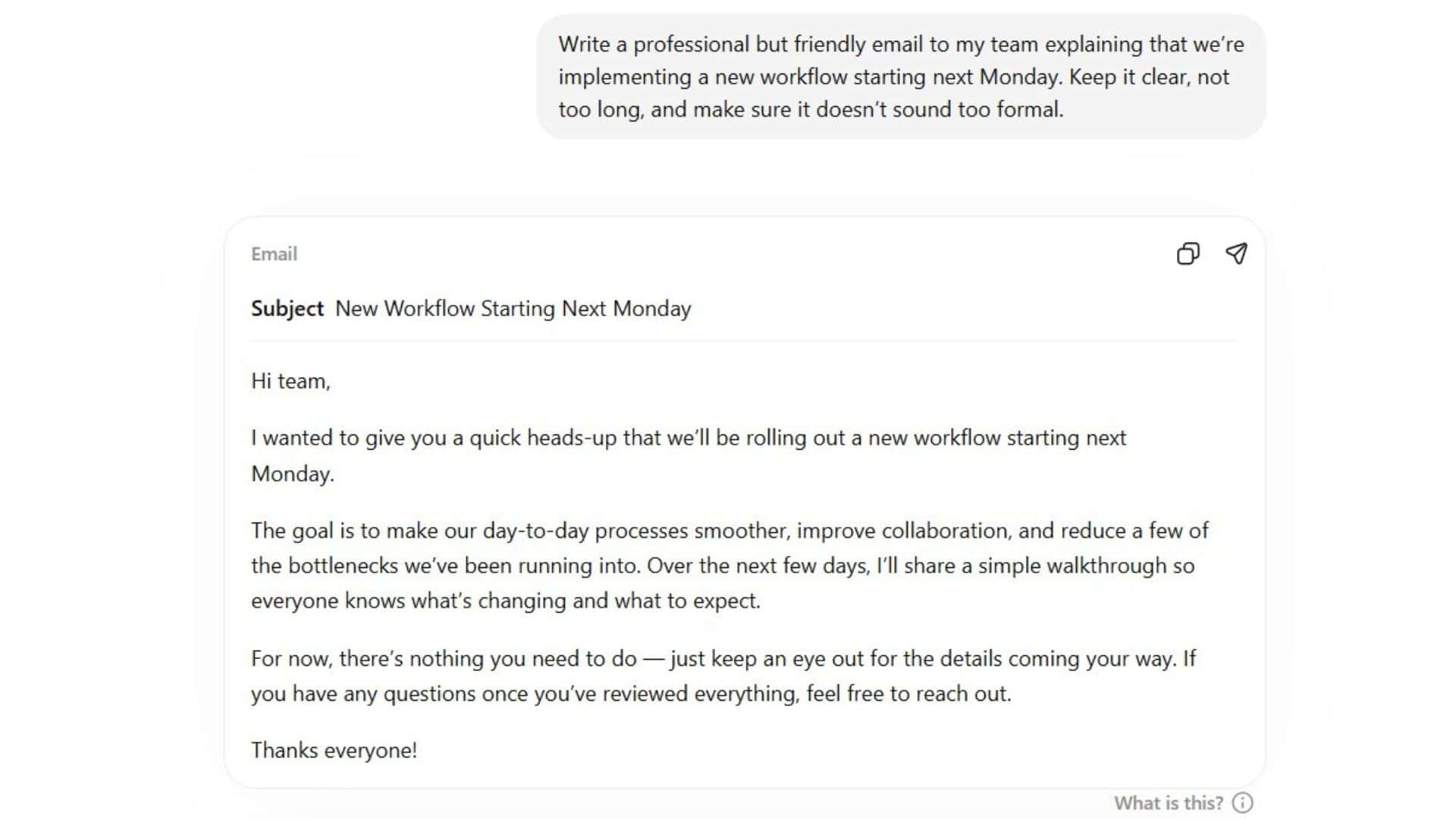
A study involving over 1,000 full-time professionals in the U.S. found that when people knew a message was AI-generated, they perceived it as less sincere and less caring, even when the writing was clear and professional. This suggests that people can sense a difference, even if they’re not explicitly told it was AI-generated.
When everyone uses the same AI model to craft their messages, everything tends to sound polished but robotic. Each time you let AI write a message you would have crafted yourself, you lose a little chance to express your true thoughts and feelings in your own unique way.
Your conversations aren’t as private as you think
Many people have accidentally shared sensitive information in AI chats, like work emails that need rephrasing, parts of a contract that need clarification, or personal health questions they wouldn’t want to Google.
Research from Stanford University looked into the privacy practices of six major AI companies in the U.S. and discovered that all of them use the information users provide to improve their systems, unless you specifically choose not to. Most people are unaware that they can opt out of this.
This doesn’t mean you should avoid using AI tools altogether, but it’s important to realize that what you type might not be as private as you believe.
Relying on AI for decision-making
People are starting to ask AI not just for information but also for help in making decisions. This includes choices like which job offer to accept, whether to address a coworker directly, or how to approach a situation that requires reading social cues. A survey found that among younger U.S. adults aged 18 to 34, 33% of men and 14% of women had turned to ChatGPT for relationship advice.
While seeking advice from AI in itself isn’t necessarily bad, relying on it for many small decisions, like what to focus on during the day, how to handle conflicts, or whether a business idea is worth pursuing, can lead to a decline in trusting your own judgment. Just like any skill, our ability to make decisions can weaken if we don’t use it regularly.
So… is AI the problem? Not really
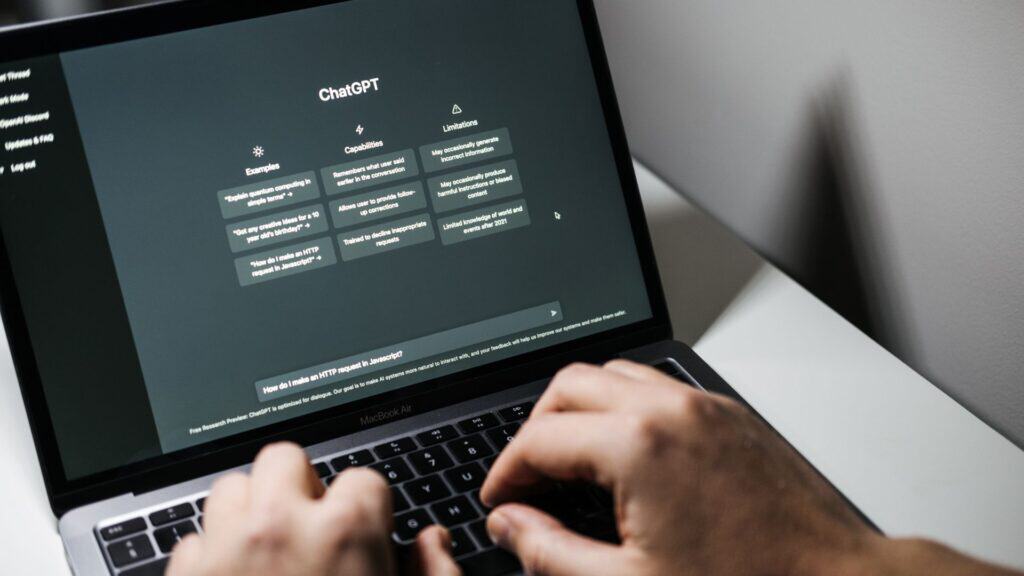
AI is just a tool, and like any tool, its effects depend on how we use it. When we use it mindfully, it can save us time, make complicated tasks easier, and help us solve problems more quickly. That’s why it’s become part of our daily lives; it genuinely helps with tasks like selling your house.
However, the real issue arises when we start using it without thinking. If we stop questioning what it produces, stop considering our own thoughts, or rely on it for things we would normally do ourselves, that’s when we can run into trouble. As technology becomes more advanced, we should be mindful of how much we rely on it.
How to use AI without letting it take over
If you’re thinking about using AI, here are some helpful tips to keep in mind:
Think of AI as a helper: When you get information from AI, don’t treat it as the absolute answer. Use it as a starting point for getting an idea, but make sure to double-check the facts. Learn from it, but don’t let it think for you.
Be cautious with personal information: Before you share anything private in a chat, check the privacy settings. Look for options to protect your data, such as opting out of sharing your information for training purposes.
Create your own drafts first: if you’re writing something important, like a message to a client or a professional email, try writing a rough version yourself. Once you have your own ideas down, you can ask AI to polish them.
Keep some jobs human: Some tasks are best left to people, such as critical thinking, decision-making, and understanding people’s feelings. Seek help, but don’t over-rely on AI for such aspects.
AI is most effective when you know how to use it smartly. The risks we’ve talked about shouldn’t discourage you from using it; instead, they should encourage you to be careful. Double-check what it tells you, be cautious about what information you share, and try drafting your own ideas first. When it comes to decisions that rely on your intuition and experience, trust yourself to guide the way.