What the 6 levels of automation actually mean, and how close today’s vehicles are to true self-driving capability
From no automation to full autonomy: the 6 levels of self-driving cars.
For decades, the idea of cars that can drive themselves has appeared in science fiction and technology forecasts. In practice, turning that concept into a safe and reliable product has proven complex. Automakers and technology companies have invested billions of dollars in driver-assistance systems and artificial intelligence, yet fully autonomous vehicles are still largely limited to controlled testing programs and small pilot deployments.
Part of the confusion comes from the way the term “self-driving” is used. It can refer to several different levels of automation rather than a single technology. To clarify this, the Society of Automotive Engineers (SAE) and the U.S. Department of Transportation created a standardized framework that defines six levels of vehicle automation, ranging from Level 0 (no automation) to Level 5 (full autonomy in all conditions). These classifications are now widely used across the automotive industry.
The following overview explains each level of automation, the capabilities associated with each, and which vehicles currently fall into each category.
Level 0: No driving automation

Level 0 means the driver is entirely in control at all times. The vehicle may provide alerts or short interventions, such as lane departure warnings, blind spot monitors, or automatic emergency braking, but these do not constitute automation because they don’t consistently control the vehicle.
This is still the most common category on U.S. roads. Older vehicles without adaptive cruise control or steering assistance remain firmly at Level 0. Even modern cars with only passive safety alerts, like a 2010 Honda Accord with stability control, are still Level 0 under SAE’s definitions.
Level 1: Driver assistance
Level 1 adds limited automation in one area: either steering or acceleration/braking, but not both simultaneously. The driver is still responsible for monitoring the road and handling all other tasks.
A familiar example is adaptive cruise control, which automatically adjusts the car’s speed to maintain a safe distance from the traffic ahead. Another is lane-keeping assist, which gently corrects steering if you drift.
Typical vehicles Include Many mainstream models, such as the Toyota Camry with Toyota Safety Sense, the Honda Civic with Honda Sensing, and the Ford Escape with Co-Pilot360. These systems reduce fatigue on long trips but still require both hands on the wheel.
Level 2: Partial driving automation

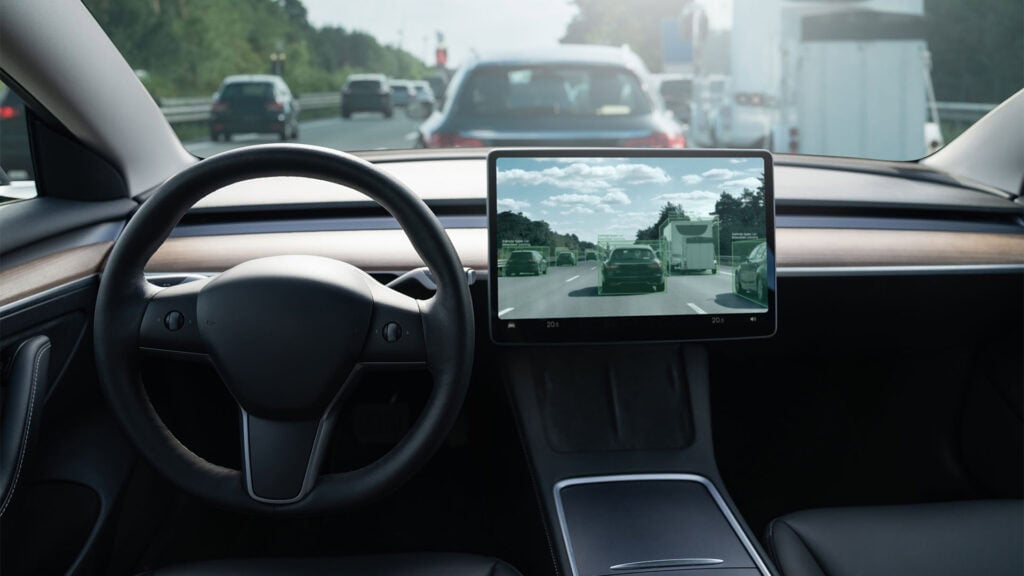
Level 2 represents the first big step toward autonomy. These systems can simultaneously control steering, acceleration, and braking under certain conditions, such as highway driving. However, the driver must remain engaged, monitoring the road at all times, and be ready to take over instantly.
In practice, Level 2 cars can maintain their position in a lane, adjust speed automatically, and even execute lane changes; however, the human driver remains legally and practically responsible for the outcome.
A few modern cars have Level 2 capabilites:
- Volvo’s Highway Assist is a typical example of Level 2 ADAS.
- GM Super Cruise (available on Cadillac Lyriq, Chevrolet Silverado EV, and GMC Hummer EV).
- Ford BlueCruise (on Mustang Mach-E and F-150 Lightning).
- BMW Driving Assistant Professional and Mercedes Driver Assistance packages.
Most new premium and even mid-market vehicles in the U.S. are now shipping with some form of Level 2 driver assistance.
Level 3: Conditional driving automation
Level 3 is where the definition of “self-driving” starts to feel real. At this stage, the car can manage all driving tasks, steering, speed, braking, and lane changes under limited conditions, such as clear weather on mapped highways. Importantly, the driver can take their eyes off the road and hands off the wheel.
But there’s a catch: the system may at any time ask the driver to retake control, and the driver must be able to do so quickly. This makes Level 3 much harder to implement legally, since regulators worry about “handover” safety if drivers are distracted.
Typical vehicles:
- Mercedes-Benz Drive Pilot is approved for use in Germany and in limited parts of California and Nevada.
- The Honda Legend, offered in Japan with a leasing program, is the first production car to legally feature Level 3 automation.
- Zeekr 9X SUV, announced in March 2025, which will ship with Level 3-ready technology, including advanced LiDAR and Nvidia Drive Orin processors. Deliveries are expected later this year in China pending regulatory approval.
Level 3 remains rare, but it marks a crucial milestone for cars capable of “self-driving” in certain real-world scenarios.
Level 4: High driving automation
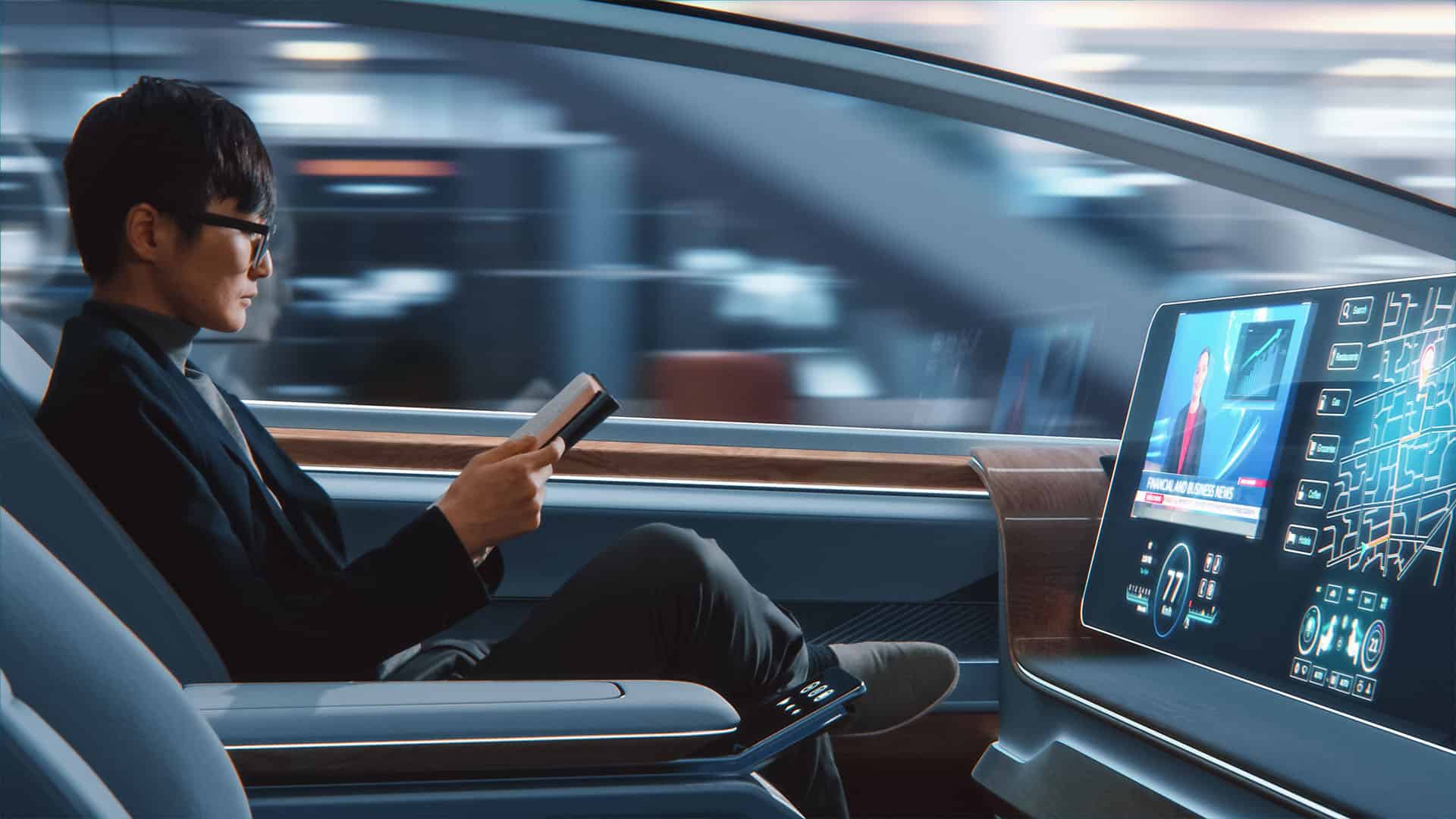
At Level 4, vehicles can drive themselves entirely within specific geofenced areas or conditions, such as well-mapped city zones, without needing human intervention. Unlike Level 3, if something goes wrong, the vehicle is expected to handle the situation safely without requiring driver takeover.
This is the level at which robotaxis operate today. Services operated by Waymo and Cruise in cities such as Phoenix, San Francisco, Los Angeles, and Atlanta are considered Level 4. Passengers can hail a ride with no driver in the front seat.
However, Level 4 cars cannot yet drive anywhere, anytime. They are limited to mapped zones, fair weather, and specific regulations.
Tesla’s new Cybercab claims to be Level 4/5 (fully autonomous), with the ultimate goal of requiring no human intervention. However, the underlying technology, Full Self-Driving (FSD), is currently classified as a Level 2 system as of early 2026.
Level 5: Full driving automation
Level 5 is the ultimate goal: vehicles that can drive anywhere, in any conditions, with no steering wheel, pedals, or human input required. At this level, every occupant is a passenger.
So far, Level 5 remains theoretical. No production vehicle in the world today offers it, although companies like Tesla, Waymo, Zoox, aim to achieve it eventually.
Why full autonomy is so difficult

Moving from Level 2 to Level 5 isn’t a matter of flipping a switch. Engineers face enormous challenges, such as snow, construction zones, and unpredictable human drivers, which create scenarios that even the smartest AI struggles with.
One of the biggest roadblocks to the development of fully autonomous vehicles remains the cost. Key components like LiDAR sensors, radar units, and advanced computing systems can cost tens of thousands of dollars, even before integration. Once you factor in the expense of integrating these technologies into a production-ready vehicle, the price tag skyrockets far beyond what most consumers could reasonably afford. Until the cost of these critical parts drops substantially, mass-market adoption of self-driving cars will remain out of reach.
Robotaxis in the U.S.
While you can’t buy a fully self-driving car yet, you can ride in one in a few American cities. Waymo currently operates driverless taxis in Phoenix, San Francisco, Los Angeles, Atlanta, and Austin, with plenty of other cities in the pipeline. The rides are hailed via app, with no driver behind the wheel.
Tesla has also launched its own Robotaxi service and plans to introduce it in Dallas, Houston, Phoenix, Miami, Orlando, Tampa, and Las Vegas in 2026. These robotaxi rides, though, still require human supervisors and are considered closer to Level 2–3 than Level 4.
These projects demonstrate how Level 4 is gradually entering public life, even if Level 5 remains a distant dream.