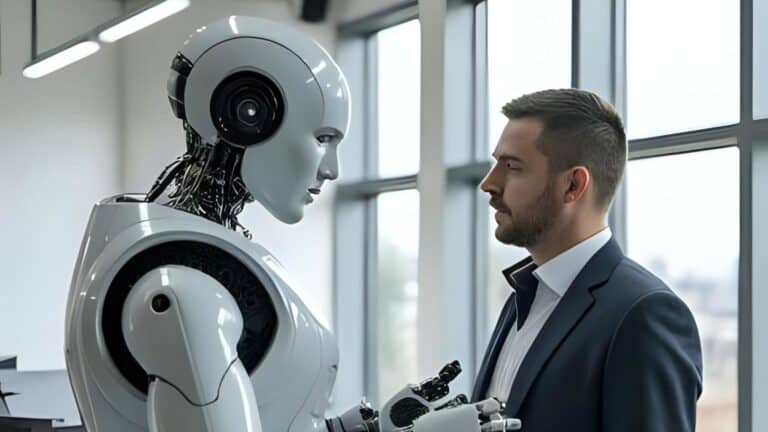

Jensen Huang shares his advice to young people on thriving in the AI era

NVIDIA’s CEO believes AI will create new jobs and shares the most valuable skill young people can learn right now.
Many people are feeling anxious about artificial intelligence (AI) these days. Students finishing school do not know whether the degree they are working toward will even be relevant by the time they graduate. Mid-career workers are wondering if their role will exist in five years. Jensen Huang, the CEO of NVIDIA, recently shared his thoughts on the All-In Podcast about what young people should focus on right now, and his advice surprised many.
What happened
Jensen Huang is the co-founder and CEO of NVIDIA, a company that has become a leader in providing technology that powers many of the artificial intelligence (AI) systems used around the world today. Over the years, he has transformed NVIDIA from a graphics card maker into one of the most valuable companies in the world, which is why many people seek his insights on career paths.
During a recent episode of the All-In Podcast, Huang was asked what advice he would give to young people thinking about their careers. He said. “Every job will be transformed. Some jobs will be eliminated. However, many jobs will be created.” He encouraged recent graduates to become highly skilled in using AI. As Huang puts it, it’s not enough to just know that AI exists; you should learn how to effectively work with it and guide it to achieve desired results. Huang emphasized that, “All of that requires artistry.”
When asked about what to study, Huang said he still believes in deep science, deep math, and strong language skills. Regarding language, he said, “Language is the programming language of AI.” He even pointed out that someone with a degree in English might find great success in this tech-driven world. This is an important message for those who have been told that their degree in the humanities might not be useful in a technology-focused job market.
Huang also shared an example from radiology, where doctors use imaging techniques such as X-rays and MRIs to diagnose patients. About 10 years ago, some experts believed that advances in computer technology would completely replace radiologists. However, technology became a valuable tool in radiology, actually increasing the number of radiologists needed. This is because faster imaging means hospitals can treat more patients and need more specialists to interpret the results.
Reactions
The video went viral, and people had a lot to say about it. Many viewers were genuinely impressed. One person commented, “Jensen’s vision is at least 10 years ahead of our time. It’s incredible.” Another added, “Jensen is brilliant; he reads the market like he has a crystal ball.” Many people strongly believe what Jensen says, especially considering his journey from starting as a dish washer to building a successful empire.
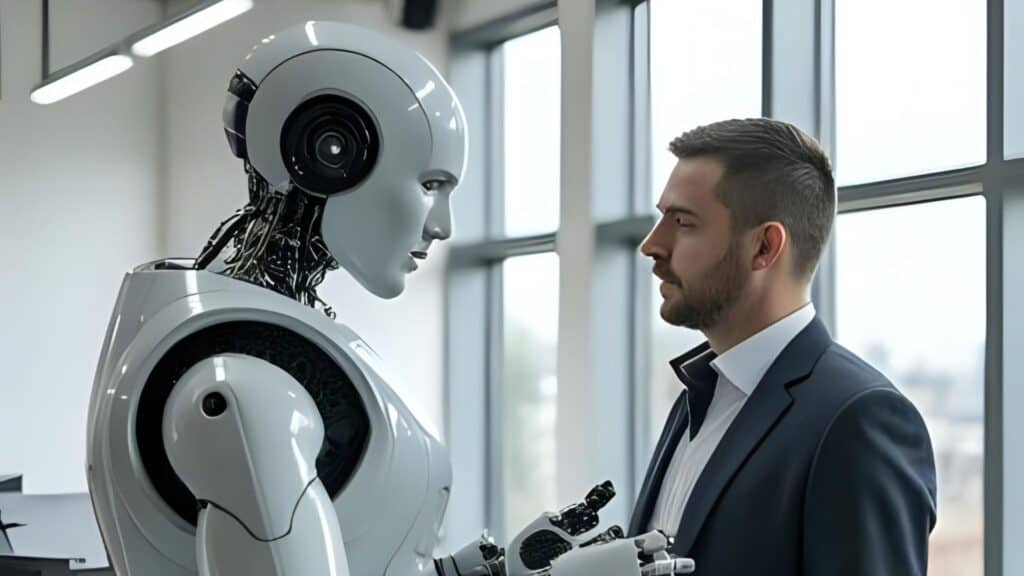
However, not everyone was convinced. One commenter said, “But what happens when AI gets bored?” It reads like a joke, but it poses a real concern about the unpredictability of technology and what could happen if systems start acting in unexpected ways. Some people challenged the optimistic views, saying that the situation might not be as positive as it seems. “Jobs will be created for AI and robots to fill. They are pandering,” one person wrote.
Another person raised a critical question, “Are you trying to fool us? How can AI be the future if we don’t even know how it thinks or works? Will you be able to stop it from hallucinating?” The inability to fully explain how these models produce output is a documented problem, and confidence in AI’s potential does not close that gap.
One person expressed confusion over the idea that humans would hire others to take on jobs that AI is supposed to do: “So humans will hire other humans to do jobs that AI will automate? Is this the future we all imagine?”
Why this matters

AI, or artificial intelligence, is already affecting many jobs worldwide. Tasks like customer service, data entry, content creation, and parts of legal and financial work are increasingly being taken over by machines. Jobs that involve repetitive tasks are most affected, while roles that require critical thinking, strong communication, and the ability to work with complex tools are likely to grow. As technology advances, the difference between these types of jobs is expected to widen further.
The landscape is changing rapidly, and it’s not the first time this has occurred. For example, the printing press replaced some of the work of scribes, tractors took over work from certain farm laborers, and electricity transformed entire industries while creating new ones that didn’t even exist before. None of those transitions was easy, and none of them ended human work. Instead, people adapted, industries changed, and new job categories emerged from scratch.
Fear-mongering doesn’t help anyone prepare for these changes. Throughout history, people have created new industries from nothing, and we still have the ability to shape how things unfold now. The important question for young people today isn’t whether AI will change our world, because it already has. The question is whether they are learning skills that will be valuable in a future in which tools become more advanced. Waiting for certainty about where AI is headed before building any skills around it is itself a choice, and history has never rewarded people who waited until they missed out on great opportunities.