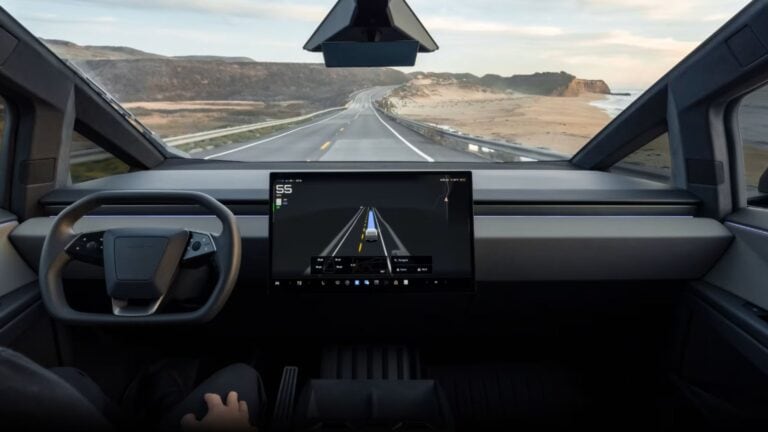

Feeling sick in a Tesla? You’re not alone — here’s why

For some passengers, the same features that make Teslas quiet and efficient are the exact reasons their bodies struggle to handle the ride.
Motion sickness is not new. People have dealt with it on boats, planes, and long car rides for as long as transportation has existed. However, people are reporting feeling nauseous specifically in electric vehicles, such as Tesla. The number of complaints has drawn attention, and people have been sharing their experiences on social media to understand what’s happening to them. A recent video shared online has brought this issue back into the spotlight.
The story
A woman posted a video online declaring herself a Tesla hater, due to how sick she feels sitting in it. It wasn’t just a little discomfort; she described the feeling as so severe that she felt like she was “fighting for my life.” She mentioned that no other car made her feel this way and added that the traffic made everything worse and said she was firmly “team normal cars.”
Hundreds of people said they had been through the same thing, many of them just as confused as she was. Despite Tesla receiving a lot of praise for how smoothly they drive and how energy-efficient they are, the number of passengers reporting nausea is something very alarming.
Reactions
Many people shared similar experiences with riding in Teslas. One person mentioned, “This is so real I don’t even get motion sickness literally ever…. But a Tesla Uber has me.” For people who already deal with motion sickness in other vehicles, being inside a Tesla appears to amplify those symptoms significantly. Another commenter shared a story about someone who owned a Tesla and frequently suffered from headaches: “A woman owned a Tesla and would always get headaches. Then after a few years, she sold her car and her headaches completely went away.”
This is not the only case where passengers experienced headaches. Lately, many people are reporting on social media about headaches along with other troubling symptoms when riding in a Tesla.
Users reported that their issues weren’t just limited to Teslas. One person said, “Me in any electric car. Nauseous and dizzy!” Electric vehicles share some common features: quick acceleration, different braking systems, and a lack of engine vibrations, which might confuse our bodies when it comes to feeling motion.
One commenter suggested a possible solution, “It’s the regenerative brake to save battery. You can actually turn it off or lower how strong it is.” This braking system, which helps the car use energy more efficiently, can sometimes cause sudden stops that our bodies don’t quite react the same way as regular brakes. Adjusting the setting has worked for some drivers.
Why does motion sickness happen
Motion sickness occurs when your inner ear and your eyes send conflicting messages to your brain. When these signals don’t align, your brain gets confused about what your body is experiencing, which can lead to motion sickness. This problem is more common for passengers in a vehicle than for drivers because passengers cannot control the car or anticipate its movements.

If someone has been driving a car with a gas engine for many years, their brain becomes trained to expect certain signals, such as the engine revving, which lets them know the car is about to speed up or slow down. This familiarity helps them better predict changes in motion and reduces the chances of feeling sick while traveling.
However, electric cars like Teslas use ‘regenerative braking’, which slows the car by converting its kinetic energy into electricity. This means that when the car slows down, it does so more gently and smoothly over a longer time, rather than coming to a sudden stop. This gradual stop can sometimes cause nausea, headaches, and other related symptoms.
The takeaway
Feeling nauseous in a Tesla is an issue that many people experience. The way these cars drive, using features like regenerative braking and quick acceleration, can be challenging for our bodies to handle, especially in heavy traffic. If someone is already prone to motion sickness, these factors can lead to discomfort. While there aren’t many solutions, there are some things that might help. For instance, you can adjust the car settings to make braking less intense, sit in the front seat instead of the back seat, or focus on something in the distance.
If you’re a first-time Tesla buyer or planning to buy another electric vehicle, make sure to book a test drive so you don’t regret it later!