
People were asked for their craziest driving experiences — and the responses do not disappoint

An online thread drew hundreds of stories from drivers who’ve dealt with their share of close calls on the road.
Most people assume they’ve seen everything the road can throw at them until one strange moment snaps them back to reality. It could be bad weather, a minor mistake, or someone else being careless. An online thread asked people to share the wildest driving experiences they’ve had, and plenty of drivers responded with situations that left their hearts racing and their hands shaking long after the car stopped.
The story

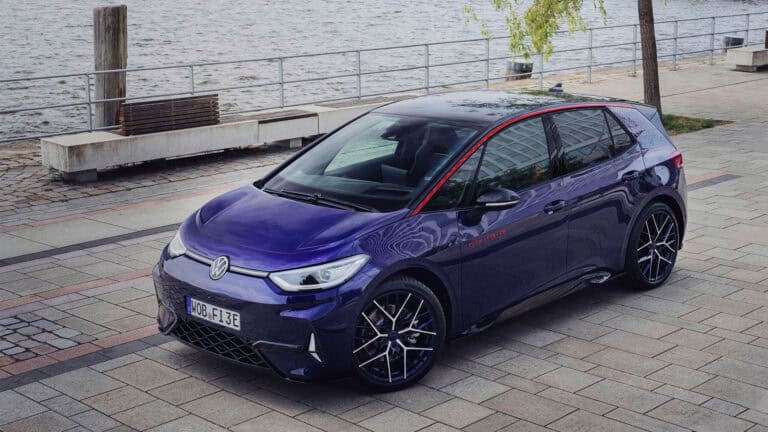
The original poster on Reddit asked the community, “What’s the scariest/craziest driving experience you’ve had so far?” Then they shared their own experience, which happened while driving a friend’s brand-new F10 M5 on a rainy day. The friend encouraged him to drift it in an empty parking lot. It went fine at first, until confidence pushed things one turn too far, and the car slid out of the lot toward the road, missing a ditch by a couple of feet. The friend stayed calm. He just said the car “loves grip,” which is an unusual thing to say after watching your car nearly end up in a ditch.
The reactions
Many users described situations where rain caused their car to lose grip. One person shared, “Probably being in a car that was spinning like a top. Hydroplanned and aggressively spun while it went up and down the bank on the highway, it was like a tilt-o-whirl at 5x speed.”
People underestimate how quickly worn tires can lose grip on the road. Even a shallow puddle can send the car sideways. The simplest way to avoid this is to check tread depth and slow down depending on the road conditions and weather. I also think many drivers forget that using cruise control in the rain makes hydroplaning worse because the car keeps trying to accelerate. It’s better to turn the cruise control off for safety.
One person talked about long-distance winter driving, which can be mentally exhausting when visibility is low due to bad weather, “I’ve taken trips in blizzards a number of times and the white-knucked tension of not being able to see anything and not knowing where the ice is combined with the tedium of doing the same thing for hours on end creates a terrible mix when you’re putting along the interstate at 20 miles per hour, in the middle of the night, on hour nine of a three hour trip, fighting to stay awake.”
People think the challenge is ice, but staying alert when visibility is poor is even harder, especially on a busy road. Breaking long trips into short chunks helps a lot; even a five-minute stretch break wakes you up enough to think clearly in such conditions.
Someone else described sliding downhill in the snow while trying to avoid an oncoming truck: “Lost control on snow going down a curving hill. Did everything I could to avoid spinning out, because a pickup was coming the other way. Ended up going onto the curb and scraping a telephone pole. Messed up my rear suspension, mirror, and paint.”
When you’re heading downhill, braking does almost nothing on snow. The better move is to slow down before the descent, so you can better control and then make a slow turn.

Another user pointed out that everyday commuting often feels more unpredictable due to distracted drivers, “The scariest thing I do is drive to work every day. People randomly stopping, telling you to drive into other cars, driving on the wrong side of the road, stopping at green lights and running red lights, and even eating soup while driving.”
This comment highlights how driving carelessly can pose a real hazard. You can be fully alert and still end up dodging someone who’s texting or not following road rules. A helpful habit is keeping your eyes on one or two cars ahead, not just the bumper in front of you. It gives you more time to react when someone decides to stop for no reason in the middle of a green light. It sounds obvious, but most people stare straight ahead and miss what’s about to happen.
One commenter mentioned a near-crash caused by someone failing to yield. Yield misunderstandings are a consistent source of sudden merges and lane intrusions. “I had some idiot pull straight from behind a yield sign into my lane. I had to lay on the horn and swerve out of my lane to avoid a crash.”
A yield sign is a traffic control device that tells a driver to slow down, look for other vehicles or pedestrians, and give the right-of-way if required. If you proceed without doing that, it can count as a failure to yield, meaning you didn’t give the right-of-way when the law required you to.

Another user described losing traction on a gravel road they knew well, “Heading down a dirt road that I knew, and I was coming up on a slow curve. I knew the gravel was loose here, so I slowed it down to 30, but I still lost traction around the turn. I skidded through it fine, but as I came out, the front of the car was still facing the inside of the turn, and I thought I was going into the ditch. The ditch that had at least 3 feet of water in it, while I was driving a Geo Metro. But at what felt like the last moment, I got traction back and headed on my merry way.”
Gravel surfaces change frequently with rain, grading, and seasonal wear. When the surface is loose, the car can drift outward more easily. The safest way to handle a turn is to slow down before you enter it and steer gently through the curve. Braking in the middle of the turn is what usually causes the back of the car to slide. Also, keeping your hands on the wheel instead of snapping it around helps the car stay stable and headed in the right direction.
The takeaway
Most of the stories shared in the thread revealed how quickly an ordinary drive can turn dangerous when conditions shift or when someone on the road makes a careless choice. Rain, snow, and loose gravel were responsible for many of the close calls, often made worse by worn tires, overconfidence, or relying on features like cruise control at the wrong moment.
Several drivers noted that fatigue and low visibility can be just as dangerous as ice, especially during long winter trips. Others emphasized that everyday commuting often feels more unpredictable than extreme weather because distracted drivers create sudden hazards that even alert motorists struggle to avoid.
Small habits, such as driving according to weather conditions, checking tires, staying alert, and watching traffic beyond the car directly ahead, can make a significant difference when conditions change.