
Why your engine is losing oil—and when it becomes a real problem

A closer look at why oil levels drop in older engines and what it really means for your car’s health.
Many older cars slowly use engine oil over time, and many drivers do not notice it until the oil warning light suddenly appears. In many cases, the problem builds up gradually over months or even years. I see this topic come up constantly online because people are never quite sure what is normal and what means serious trouble.
In one recent Reddit post, a driver with a high-mileage Hyundai explained that the engine kept losing oil between oil changes, even though there were no obvious oil leaks. The owner said the dipstick would eventually show almost no oil after only a few thousand miles, which naturally caused concern.
This is one of the most common situations I see with older engines. The car may still drive perfectly fine, there may be no warning lights, and the owner assumes everything is normal until they start checking the oil level more carefully.
The important thing to understand is that “eating oil” usually means the engine is burning oil internally during combustion. Small amounts can pass worn piston rings, valve seals, or the PCV system and end up burning together with fuel.
What is normal and what is not
If your engine uses a quart or more of oil every 1,000 to 1,500 miles, that is a clear sign that something is not right, regardless of the vehicle’s age or mileage. While some manufacturers may tolerate a certain level of oil consumption in specific engines, that level of loss is generally considered excessive in normal everyday driving. In practice, it usually points to an underlying issue that should be checked rather than ignored.
If you only need to top up a little oil between oil changes, I usually would not panic. In fact, adding a bit of fresh oil regularly can actually help the engine because fresh oil keeps the additives stronger and cleaner.
The real problem starts when the oil level drops very quickly or the engine begins showing symptoms. One of the biggest warning signs is blue smoke from the exhaust, especially during acceleration or cold starts. Blue smoke almost always means the engine is burning oil internally.
Another thing I tell people to look for is oil stains around the engine, underneath the car, or around seals and gaskets. Sometimes the engine is not burning the oil at all; it is simply leaking slowly.
One hidden danger many drivers miss
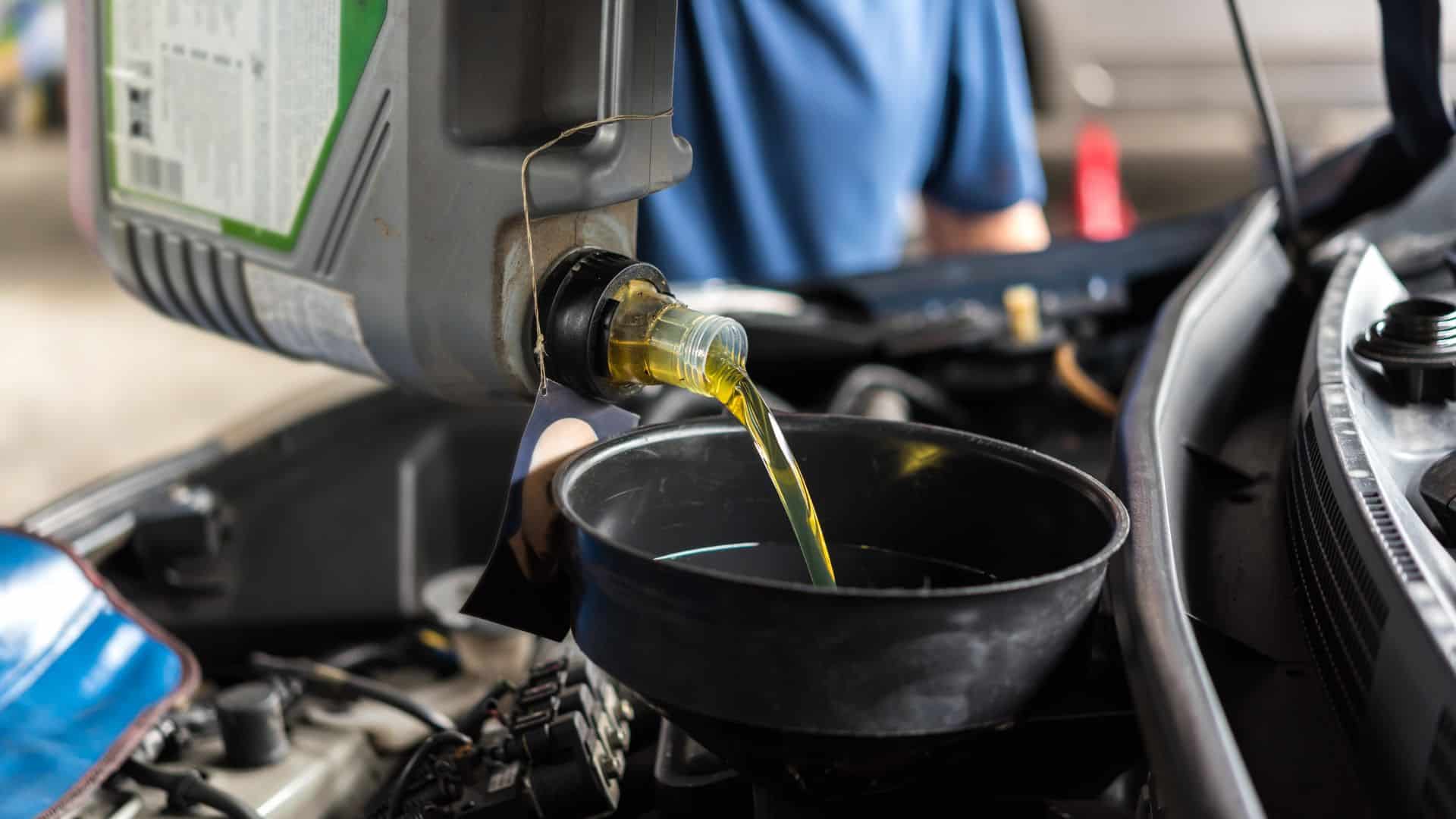
There is another situation that worries me much more than normal oil consumption. Sometimes an older engine appears to keep a stable oil level, but that does not actually mean everything is fine. The engine may be burning oil while coolant is leaking internally into the engine at the same time. The coolant mixes with the oil and artificially keeps the level looking “normal” on the dipstick.
This can occur due to failing head gaskets, cracked cylinder heads, or internal cooling system leaks. In those cases, the oil may start looking milky, creamy, or unusually thin. You may also notice coolant disappearing from the reservoir without visible leaks and massive white smoke from the exhaust. This situation is far more serious because coolant contamination can quickly destroy engine bearings and lubrication.
My advice if your engine is loosing oil
If the oil level drops slightly over thousands of miles, I would simply monitor it carefully and keep topping it up with the correct oil. Many older engines live long lives this way. But if you see blue smoke, heavy oil loss, strong burning smells, oil-covered engine parts, or disappearing coolant, it is time to investigate further before the engine suffers major damage.
The key is simple: check the oil regularly and never assume “it probably still has enough.” A surprising number of engines fail simply because owners stop checking the dipstick.