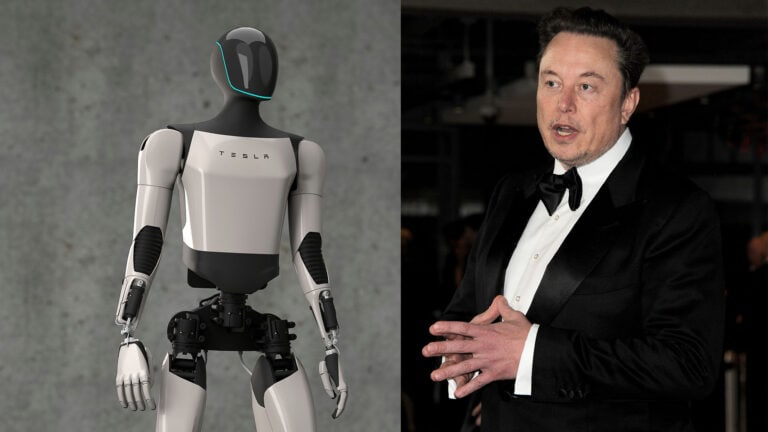

Wikipedia won’t die, but it will dwindle into irrelevance over time”, says Elon Musk

The rise of Grokipedia and AI-driven data is forcing a major debate over whether we still need human consensus in an era of instant machine answers.
For more than twenty years, Wikipedia has been the go-to source for information, managed by a dedicated group of volunteers who carefully check every detail to ensure fairness and accuracy. However, things are shifting quickly. New AI technology can now provide answers in a matter of seconds, making the traditional way of editing and updating information seem slow and outdated to many people. Recently, Elon Musk, known for speaking out against major platforms, has expressed concern that Wikipedia may lose its significance in our everyday lives.
What happened
Elon Musk has been making a lot of noise lately, from his huge plans to build a self-growing city on the moon to his work with Tesla and Grok. Now, he’s sparked a new debate by claiming that Wikipedia is on its way to becoming irrelevant.
The tension between human-made content and AI-generated data arose when Musk introduced Grokipedia. Part of his xAI project, Grokipedia is built to be a real-time, AI-driven knowledge hub. While Wikipedia relies on human consensus before an update goes live, Grokipedia uses the Grok model to instantly summarise what’s happening. Musk’s goal is to offer a conversational tool that avoids the biases he believes are found in traditional sources like Wikipedia.
Recently, Jimmy Wales, one of Wikipedia’s co-founders, shared his thoughts in a candid interview. He stood by the site’s core value of neutrality, calling it non-negotiable and dismissing the idea that the site has become a “Wokipedia”. While he acknowledged that the site has its flaws, he emphasised that its strength lies in its community, where anyone can jump in to correct mistakes.
Wales pointed out an interesting irony: most AI systems, including those used by Grokipedia, were trained on Wikipedia’s content. He believes that these AI companies should ethically and legally credit their sources, which many have failed to do. When asked about the competition between Wikipedia and Grokipedia, Wales dismissed it, saying, “There’s no competition. I don’t know of anyone who uses Grokipedia.”
Wales claimed that he doesn’t know anyone who actually uses Grokipedia. He went on saying, “It’s a ridiculous idea and will never work”.
That dismissal didn’t sit well on social media. One user fired back, claiming, “Wikipedia founder Jimmy Wales is wrong. Grokipedia will crush Wikipedia.” They argued that the real problem isn’t AI stealing work, but rather Wikipedia taking volunteers’ effort and using it as propaganda. “Wikipedia will die, and that’s a good thing, but the work of those volunteers will be salvaged”, they added.
Musk eventually joined the conversation, offering a more specific prediction. He said Wikipedia won’t exactly disappear, but it will slowly lose its place. “Wikipedia won’t die, but it will dwindle into irrelevance over time”, Musk said.
Public reactions
Many people agreed with Elon Musk that Wikipedia may no longer be relevant. One person shared, “The major reason why Wikipedia will dwindle is that Grokipedia is AI-driven rather than crowd-edited like Wikipedia.” There’s a real challenge with the traditional way of doing things. Human editing is thorough, but it can’t keep up with a machine that synthesizes data in a heartbeat. If people start choosing speed over the long process of community consensus, the traditional approach could struggle to survive.
Some were not happy with the competition and noted that criticizing a long-standing source to push a new product is unnecessary. One user questioned, “Why do you criticize to uplift? Just an honest question.”
Focusing on the user experience, another person said: “Wikipedia’s biggest threat isn’t a lack of information; it’s a lack of efficiency.” We live in a world where everyone wants the short version of everything. Efficiency is the new standard, and if a site makes it hard to get a quick answer, people will naturally look elsewhere.
One observer noted how the changing landscape of information sources is encouraging people to pick the most reliable options. They said, “Wikipedia has real competition for the first time in its existence. When Grokipedia becomes an established reference tool, people will decide which product they prefer. Accuracy matters.”
Why this matters
The real issue isn’t about one technology replacing another. The challenge is whether traditional platforms, like Wikipedia, can adapt to change. If Wikipedia starts using AI to help its editors catch mistakes faster or make the site easier to navigate, it could still remain a powerful resource. Combining the efficiency of AI with human judgment is a strong advantage. However, if Wikipedia continues to operate the same way while the rest of the internet embraces AI-driven tools, it might become less visible and less relevant.
There is also something unique about the way Wikipedia is built that an AI can’t easily copy. You can see every single edit and where every fact came from. AI is often a “black box” where you just have to trust what it says, and without a credible source, users won’t know if the information is true or manipulated. Wikipedia is built on documentation and receipts, while AI is built on delivery and speed. They are two very different ways of organizing human knowledge.
In the end, being well-known doesn’t necessarily mean being useful. Wikipedia might not always be the first choice for people looking for information, but it could serve as a valuable resource that supports the AI people rely on for answers. Its future depends on whether a community-run system can survive in a world that moves at the speed of an algorithm. If it can’t, it risks becoming just a relic of the past while the rest of the internet evolves.