

“AI took my job”: People share the roles across the country already affected
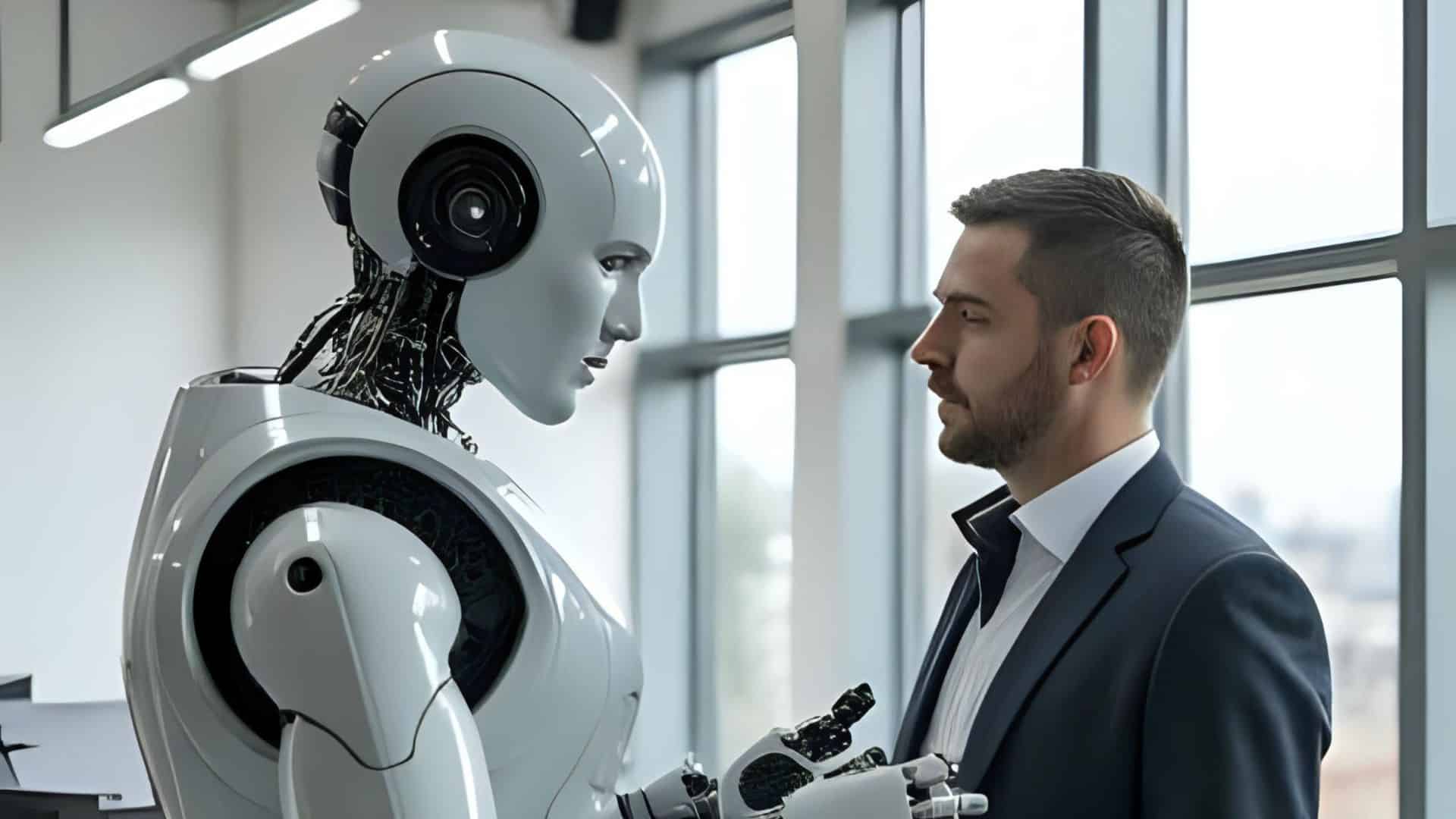
Workers across different fields describe how AI changed or completely erased their jobs. Here’s what vanished first, and what might be next.
For years, artificial intelligence was treated as something that might affect jobs someday, not something already happening. This changed quickly when people across the country began sharing authentic stories about roles that were reduced or cut entirely. A single online question opened the door to firsthand reports showing how quickly AI moved from a theory to a turning point for many careers.

The story
The post came from r/AskReddit, where someone asked, “People who got laid off because of AI, what was your job?” Redditors in the comments described exactly how their work disappeared, sometimes overnight and sometimes slowly, but always under the promise that “AI is good enough.” The thread offers an unusually clear snapshot of where automation is already biting, and where it’s likely headed next.
The comment section quickly filled with thousands of responses. Some users said they were replaced directly by AI tools, and others lost their jobs indirectly as companies shifted budgets or bet too heavily on automation experiments that didn’t fully work.
Responses
One of the most revealing stories came from a person from a tech company: “Outbound sales at a tech company. Redundancy in late 2023, replaced by AI. Someone in the company’s recruitment department contacted me a couple of days ago to say that they’re hiring outbound salespeople again. Obviously, the experiment didn’t work.”
The post’s real point is that workers are absorbing the risk of rushed decisions while leadership moves on.
One HR professional admitted that “I know people who would recommend cutting people for AI. I’ve seen HR people promoted for recommending… And then! Leave it for others to clean up.” This is an uncomfortable truth: recommending AI cuts has become a way to climb the career ladder.

Another commenter described working in medical transcription, watching people around her lose their jobs. “They had a pool of medical secretaries, about 40 people transcribing dictations, writing letters, etc. They moved to an AI system. Now, AI transcribes/writes the letters and does the dictations, and about 6 people check the output. What used to be a whole floor in a building is now a small office.” This clearly shows how AI can replace the majority of the workforce when tasks are repetitive and digitalized.
A technical writer shared that their department was eliminated because AI documentation was “80% there.” That missing 20%, which involved safety and real-world consequences, was dismissed. Customers now spend hours prompting chatbots to explain software errors that clean manuals used to prevent.
There were also creative workers who spoke of a different loss. Graphic designers, illustrators, voice actors, and composers described clients dropping them not because AI was better or more efficient, but because it was cheaper. Several Redditors said companies openly admitted they were fine with worse or less personal output if it meant lower costs.
Jobs most immediately at risk

The roles that disappear first share one key trait: they’re repetitive, measurable, and digitizable. About 19% of U.S. workers are in jobs highly exposed to AI, meaning much of their core tasks can already be automated. Administrative and clerical work, like data entry, transcription, billing, and scheduling, is among the most vulnerable. Customer-facing positions, such as outbound sales or customer support, also face high exposure.
Creative roles are more complex, but designers, illustrators, voice actors, and composers are increasingly under economic pressure. Administration and insurance processing tasks are also at risk as AI can handle billing and claims easily. AI doesn’t need to replace jobs entirely; it only needs to reduce headcount and cut costs. In short, the most exposed roles are repeatable and replaceable, leaving fewer workers doing more with less room for error.
What comes next
Some believe white-collar disruption will accelerate sharply over the next three to five years as tools improve and companies grow more comfortable with risk. Others argue that legal exposure and safety concerns will slow adoption and keep humans in the loop. Both views show up in the thread, as several users described AI rollbacks followed by rehiring humans after automation failed. Others warned that oversight roles themselves may shrink once systems stabilize.

The most likely outcome here is that there’s no one right or wrong opinion, but rather the truth sits in the middle. Fewer people doing more work, but with thinner margins for error. AI won’t eliminate entire professions overnight. Instead, it will steadily reduce headcount and job security across many of them. Some roles will adapt, some will rebound, and others won’t return at all. What’s clear is that stability is no longer evenly distributed.