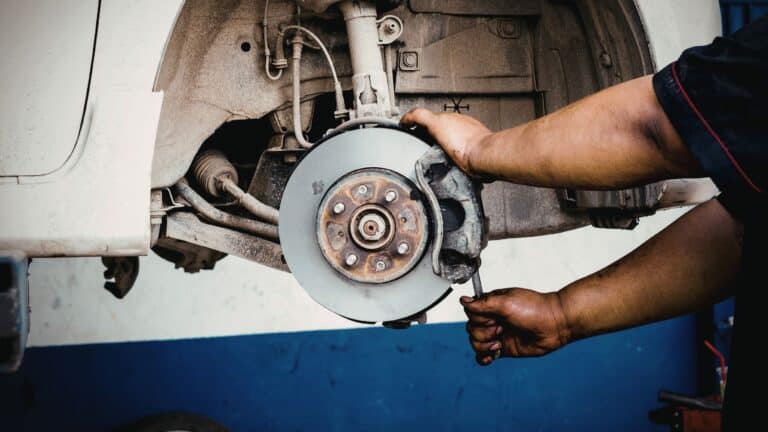

Here’s a good way to tell if your car’s tire is still safe to drive

Often ignored by drivers, this part of your car matters more than it seems.
Tires are often overlooked because they do their job quietly in the background, and many drivers only think about them when a problem becomes obvious. In reality, they are one of the most important safety components on any vehicle, providing the only contact between the car and the road. As they wear down, grip, braking performance, and stability can gradually decline without drawing much attention. Here’s what to check, and what crosses the line from normal wear to a safety risk.
Visual check
Start the check with a quick visual review. All tires on your car should look uniform. Same brand and same dimensions on each axle, ideally on all wheels.
Look for cracks in the sidewall, cuts or punctures, bulges or bubbles, and any section that looks uneven or worn differently.
Bulges are probably among the biggest on this list. They usually mean internal damage, often from hitting a pothole or curb, and can lead to sudden failure. If you see a bubble like in the following video, it is best to visit a tire shop as soon as possible and get a replacement. They are almost impossible to repair, and you will likely need to replace both tires on the axle.
Tire tread
If you want a fast answer, tread depth is one of the clearest indicators of whether a tire is still safe to drive. Tire performance drops significantly as tread wears down, reducing traction and increasing stopping distances. According to the National Highway Traffic Safety Administration, tires should be replaced once tread depth reaches 2/32 of an inch, as they no longer provide adequate grip.
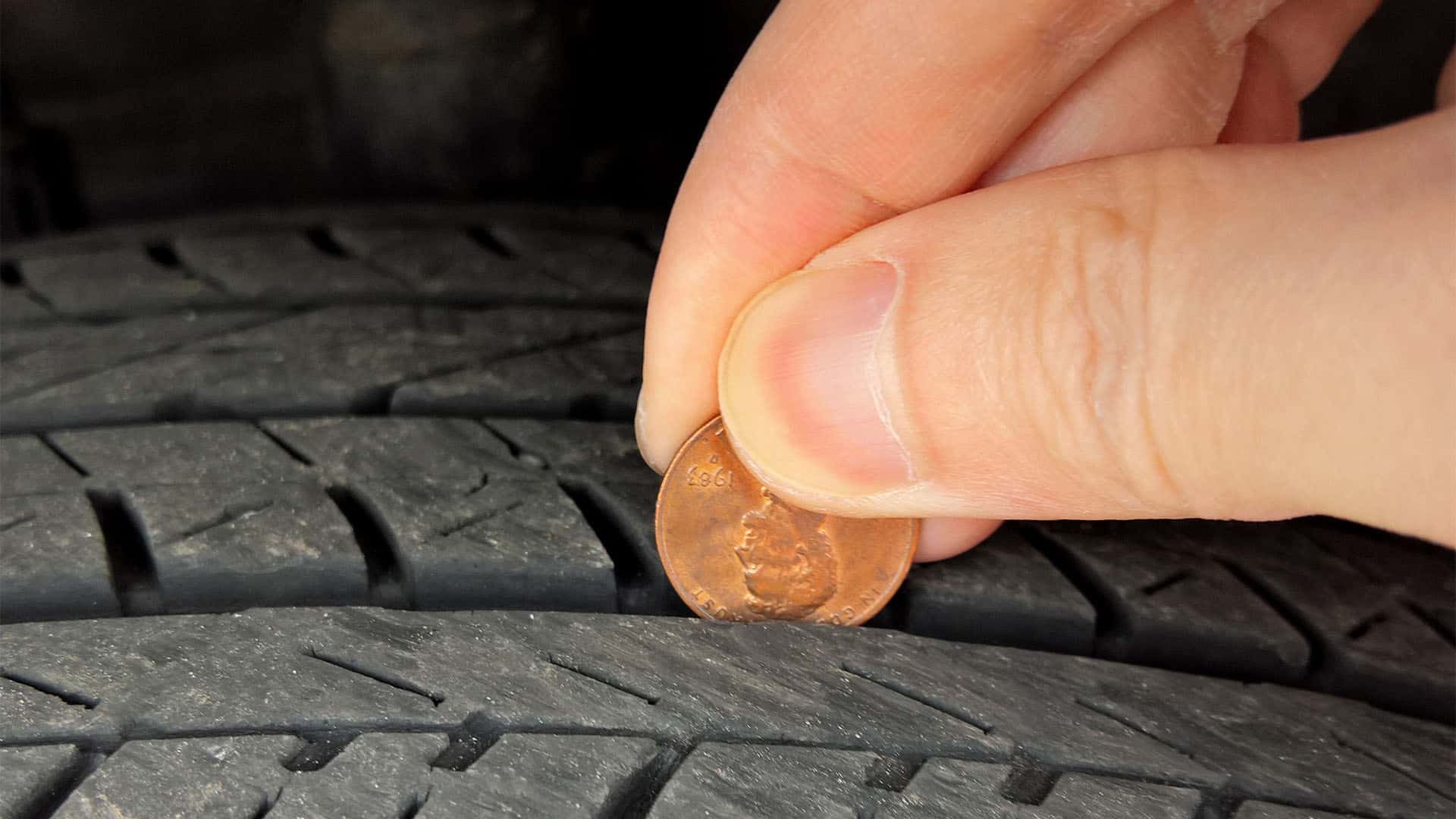
A simple way to check is by inserting a penny into the tread with Lincoln’s head facing down; if the top of his head is visible, the tire is too worn. Some tires have built-in tread wear indicators, consisting of small bars that run across the grooves. When the tread is worn down to the same level as those bars, it’s time for a change.
For winter tires, experts recommend replacing them when tread depth falls below 4/32 of an inch, since shallow grooves can’t properly grip snow or slush. Drivers should also regularly inspect tires for cracks, bulges, or uneven wear, as these can compromise safety and handling.
Tire age
The age of a tire is more important than most people realize. A tire can have new tread, look usable, and still be past its prime. As a rule of thumb, if you still have the same tires around the 6-year mark, you should change them regardless of use. Rubber naturally degrades over time, which can reduce traction and performance and increase safety risks. You can find the tire’s manufacture date in the DOT number on the sidewall. The last four digits represent the week and year (e.g., 2319 means the 23rd week of 2019).
But age is just one indicator of an aged tire. Sunshine and extreme weather can degrade even the best rubber. Even if the thread looks okay, small cracks in the rubber can indicate the tires are too old, and it’s time to replace them.
Tire pressure
Low tire pressure is one of the biggest safety hazards, but it is easy to maintain. It can lead to overheating, tread separation, and even a blowout. The basics are important.
Every new car is fitted with a tire pressure monitoring system that will warn you if a tire has low pressure, but still check your tire pressure about once a month. Do it when the tires are cold, before driving or after the car has been sitting for a few hours, and always follow the recommended PSI listed on the driver’s door sticker, not the number printed on the tire itself. Just a small drop in pressure can affect how your car handles and brakes, and overinflating reduces the amount of the tire that makes contact with the road.
Uneven wear
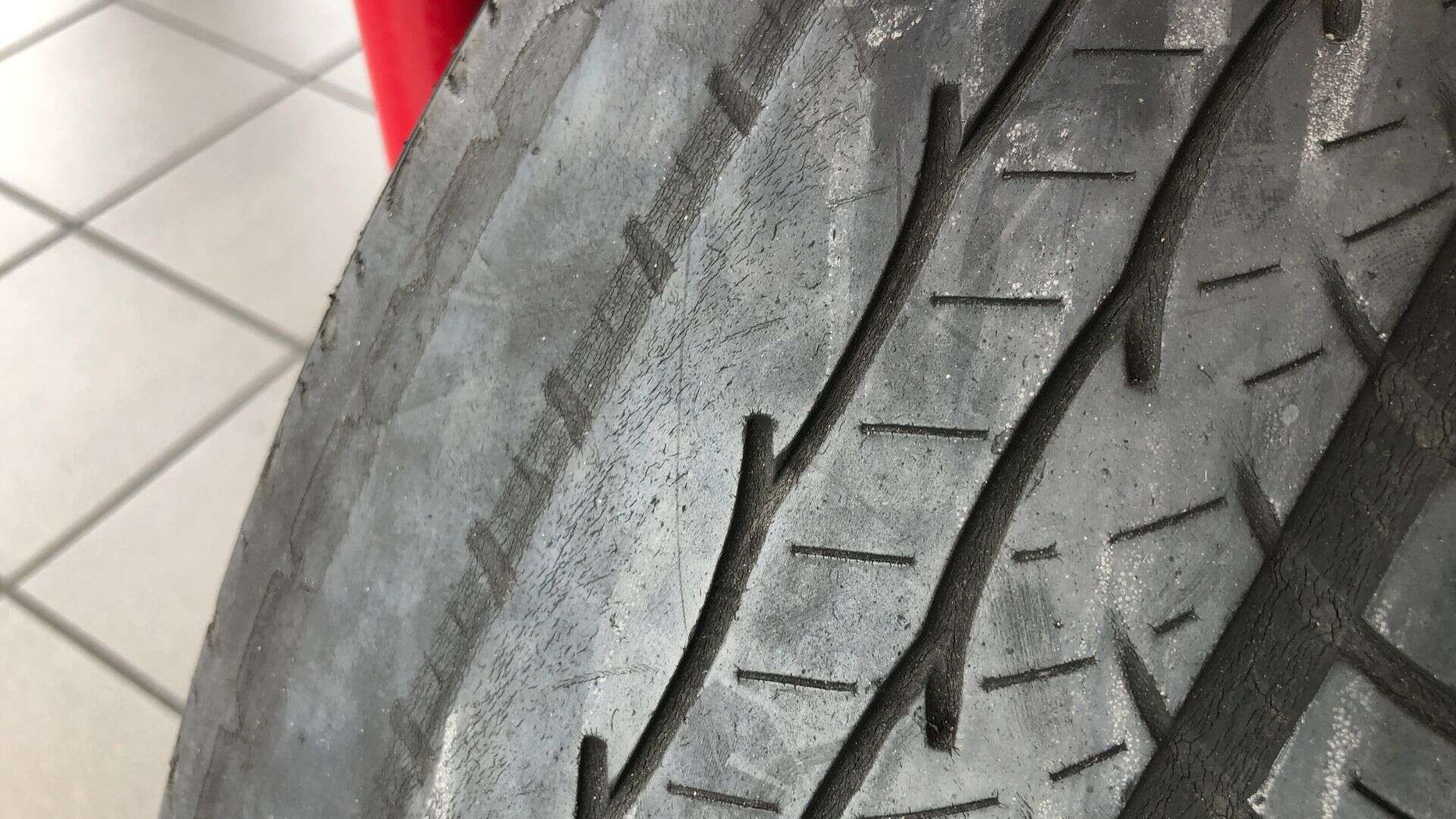
When tires are worn only on one side, as shown in the image above, it usually means a wheel alignment issue. These patterns aren’t just a cosmetic concern. Uneven wear reduces grip and shortens tire life. A quick wheel alignment at a specialized workshop can fix the problem, but if the tire has uneven wear, it usually needs to be replaced. The issue is that the worn tire section lacks grip, which can lead to unexpected situations on the road.
Seasonal tires
Not all tires are built for the same conditions. If you’re using seasonal tires, timing matters. Winter tires are designed to stay flexible in cold temperatures, while summer tires perform better in warmer conditions. close to freezing temperatures, summer tires harden and lose traction, while winter tires can be too soft and slippery in hot weather.
Also, in snowy conditions, summer tires can be absolutely useless because snow can stick to the threads and lose grip instantly.
Using the wrong type for the season can reduce traction and increase wear, and even all-season tires have limits. If you live in an area with more extreme weather, it’s worth considering whether your current setup matches the conditions you’re driving in, and checking summer and winter tire guides.
What to do if something seems off
If any of these checks raise concerns, the safest next step is to get a professional opinion, as tire shops can accurately measure tread depth, inspect for internal damage, and recommend the best course of action based on how you drive.
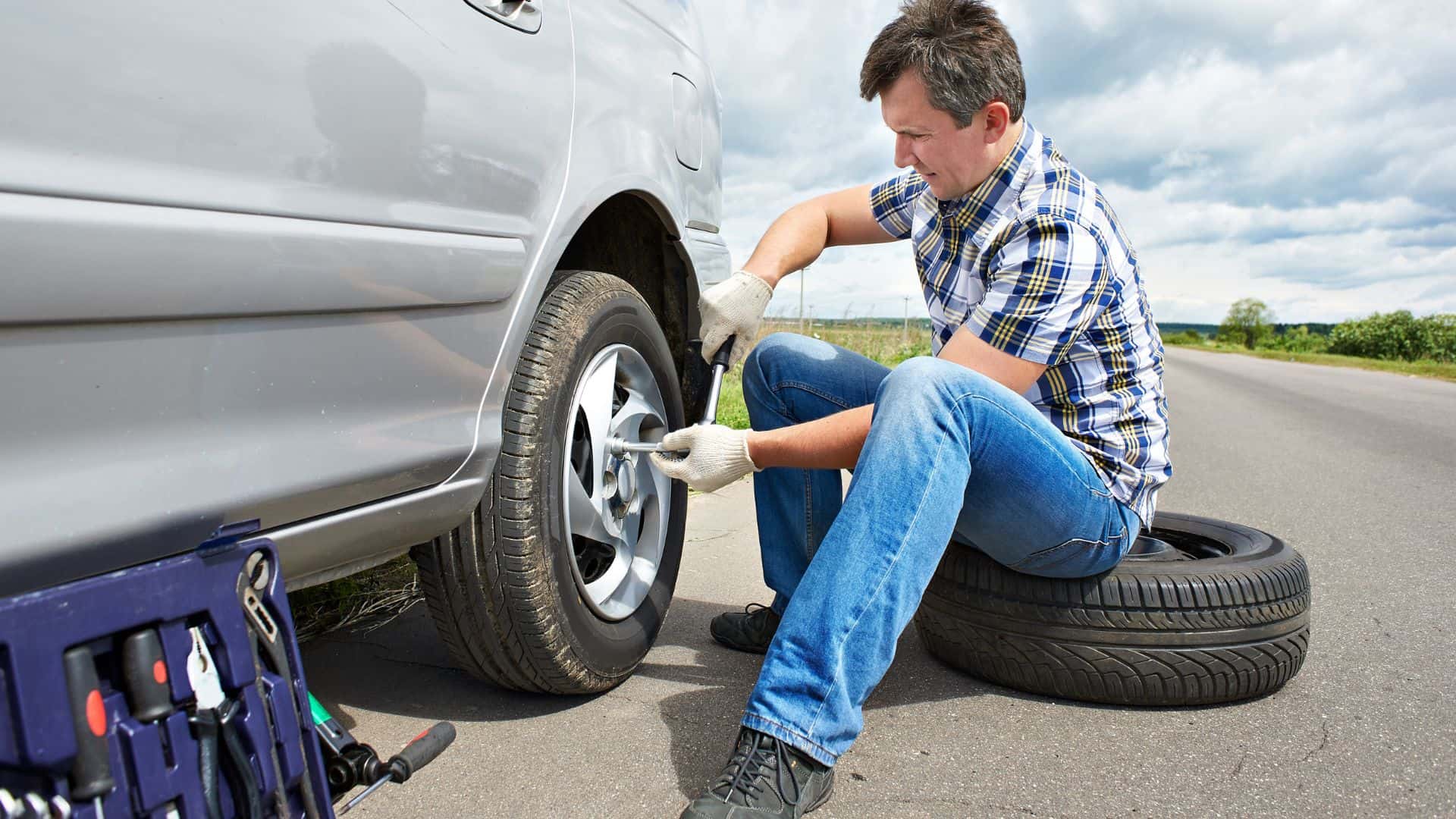
If a replacement is needed, it is also best left to a professional fitter, since removing and mounting a tire without proper tools can easily damage the tire or rim, and each wheel must be correctly balanced afterward. Your tires are the only part of your car that touches the road, so keeping them in good shape is one of the simplest ways to stay safe behind the wheel.