

Inside the Volvo EX60 crash test that’s forcing the industry to rethink safety standards
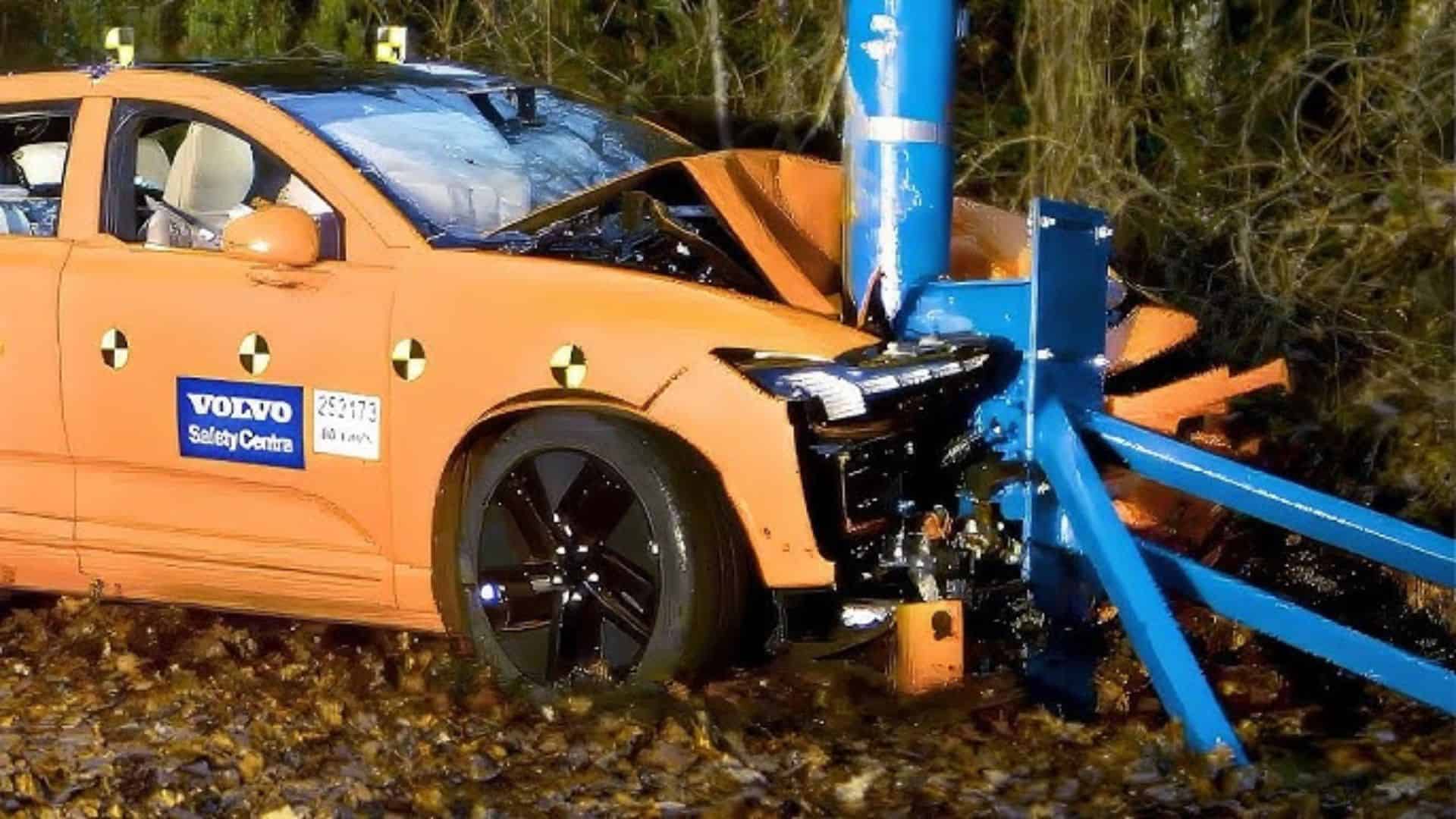
Volvo’s crash test shows how the new EX60 uses real-time decision-making and technology not just to survive accidents, but to prevent them.
For decades, Volvo’s name meant safety in the automotive industry. The Swedish brand was a pioneer in safety features such as seat belts, and its latest crash-test video for the new EX60 shows that it is still one of the strongest players in vehicle safety. Instead of just focusing on surviving accidents, Volvo is designing cars to prevent them.
Their new car, the EX60, shows what consumers should expect from a “safe” car in 2026. It challenges car manufacturers to look beyond crash-test scores and focus on keeping passengers safe in real-world situations.
About Volvo EX60
The EX60 is the most significant launch for Volvo in years, serving as the all-electric successor to its best-selling model, the XC60. Sitting between the smaller EX30 and the flagship EX90, this mid-size SUV is the first vehicle built on Volvo’s SPA3 platform, a tech-heavy architecture designed to improve everything from battery efficiency to offering protection in worst-case scenarios.
The SUV is expected to start around $60,000, putting it in direct competition with the Tesla Model Y and the Porsche Macan EV, both known for their advanced technology and safety features. While the specs are impressive, with range estimates near 400 miles and a 0-60 time around 3.8 seconds, Volvo is focusing on its long-standing commitment to safety, marketing the vehicle’s advanced safety technology and enhanced crash-protection systems.
Volvo EX60 crash test and safety
In a recent crash-test video by the Volvo Cars Safety Centre, experts Åsa Haglund and Lotta Jakobsson shared insights into the extensive safety measures of the Volvo EX60.
They explain that the Volvo EX60 is built with a unique safety approach that focuses on preventing accidents before they happen. For example, as shown in the crash test video, if a pedestrian suddenly steps into the road, the car doesn’t just slam on the brakes. Instead, it instantly calculates the safest path and automatically steers the vehicle smoothly around the person. It effectively chooses the best survival strategy for that specific millisecond.
Volvo understands that not every car accident can be avoided, so its engineers have worked hard to improve safety for situations when a crash is unavoidable. They conducted their own tests, even tougher than industry standards, and simulated real-life crashes. One particularly challenging situation they tested is when a car leaves the road and hits a solid object, such as a tree. This kind of impact can be hazardous because it focuses all the force on a small part of the vehicle.

The EX60 is designed to crumple in a way that absorbs crash energy, protecting the passenger cabin and keeping occupants safe. It is a violent event to watch, but the result is engineering perfection: the front of the car is destroyed, but the safety cage remains rigid. This controlled damage helps reduce the force that reaches the driver, turning a potential life-threatening situation into one where survival is possible.
To further enhance safety, Volvo has introduced a multi-adaptive seat belt that adapts to the person sitting in the seat. This innovative system monitors the passenger’s size, shape, and sitting position. If an accident occurs, the belt adjusts its tightness and settings for personalized protection based on the individual’s measurements and the nature of the crash.
Reactions
Some people have raised concerns about the car’s door handles. One person asked, “How does the door handle from the outside work in an accident or power failure?”
Volvo has reassured users that the EX60 is equipped with a backup system to ensure the doors can always be opened. In a crash, the doors will unlock automatically so they can be opened from the outside. The car’s battery system is designed to be reliable, with two independent systems (left and right) and an extra backup battery. This means even if one part fails, another will take over.

Overall, the consensus on the EX60’s technology is that it feels familiar and trustworthy. As one observer pointed out, “Wouldn’t be a new Volvo without it being absurdly safe.”
For many buyers, this strong emphasis on protection is a key reason to choose the EX60 over other vehicles, reinforcing Volvo’s reputation as a leader in keeping families safe, as one person put it, “Definitely a reason to prioritise this over competitors. Volvo has always been ahead in safety.”
The Volvo EX60 is a great example of how car safety is evolving. It’s not just about surviving a crash anymore; the focus is now on preventing accidents before they even happen. With its sturdy design and smart technology, Volvo is not only raising the bar for luxury electric vehicles but also changing what we should consider as “safe” in cars.
As the industry chases faster acceleration and bigger screens, the EX60 reminds us that the most valuable technology is the kind that ensures you make it home.