

Warning signs and red flags you should never ignore when buying a used car

Learn to spot hidden damage and mechanical issues before buying a used car to protect your money and avoid costly mistakes.
Not everyone can or wants to spend a lot on a new car. Buying used can be a practical and cost-effective option. But used cars come with risks, and buyers need to know what to check before buying. Sellers often show cars in their best light, which can hide mechanical issues or past damage. Learning the common warning signs can help you avoid costly mistakes and make a safer, smarter purchase.
Mismatched paint or body panels

When you expect a used car, begin with brief, neutral questions about mileage, ownership history, recent maintenance, and overall condition. This establishes context and may reveal past repairs. Inspect the vehicle in a well-lit area, not a dim garage. Step back and view the car from several angles. Watch how light reflects across the surfaces; small bumps or subtle wrinkles often appear only at certain angles.
Check that the paint looks consistent across all panels. A door or fender with a slightly different shade or texture can indicate a paint repair or replacement.
Examine gaps between the panels. The gap between the panels should be straight and uniform. Wider gaps at one end, pinched gaps, or uneven gaps may suggest prior collision damage or poor-quality repairs.
Look at headlamps and taillamps. Fixtures that sit high, low, or proud of the bodywork or that don’t match side to side can signal previous impact and misalignment. Minor scratches or small door dings are common on used cars. By contrast, mismatched paint, crooked panels, and irregular gaps warrant closer inspection and may justify a professional evaluation before purchase.
Warning lights that stay on

Once the vehicle is inspected from the outside, it is time to check for any warning lights. Start with a cold start. If the seller brings the car with the engine running, first switch it off before examining it. When switching the key to the “on” position—but before starting the engine—all warning lights should appear for a moment, then turn off once the vehicle is running. If any lights remain illuminated, except for basic indicators such as the parking brake or seat belt, the car may have a problem that requires further inspection.
It’s also important to note that some warning lights do not appear immediately. Certain systems, such as transmission or engine management, may trigger alerts only when the vehicle is moving and sensors detect a fault signal. For this reason, taking the car for a short test drive can help identify problems that might not appear at startup.
Buyers should verify that none of the dashboard lights are missing, covered, or unusually dim. In rare cases, sellers have tried to hide issues by disabling indicators. To confirm the vehicle’s real condition, it is advisable to have an independent mechanic perform a diagnostic scan. A fault code readout can uncover hidden issues that may not yet trigger visible warning lights.
Soft or spongy brake pedal

Before starting a test drive, start the engine and check the brake pedal. It should feel firm under your foot and provide steady resistance. If the pedal feels soft, sinks too easily, or requires repeated pumping to build pressure, the system may have an issue that needs attention.
A spongy brake pedal often indicates air or moisture in the hydraulic system. Over time, brake fluid can absorb humidity, and the resulting air bubbles reduce pressure and make the pedal feel less responsive.
In most cases, this can be fixed with a brake fluid replacement.
However, persistent softness can also point to leaks or other mechanical problems. While it doesn’t always mean the car is in poor condition, it is a clear signal to have the braking system inspected by a qualified mechanic before proceeding with the purchase. Reliable braking performance is essential for safety, and even minor issues should not be ignored.
Visible rust on the undercarriage or body
Rust is one of the most common issues found on used vehicles, especially those driven in wet or snowy climates. It may appear minor on the surface, but it can develop into a costly structural problem. Rust on a panel or door can indicate a neglected or poorly completed repair after a previous accident. While localized body rust can sometimes be fixed, corrosion on the vehicle’s underbody requires a professional inspection to determine whether it is repairable or too severe.

Look underneath the vehicle, paying close attention to the frame and suspension components. Light surface rust is typical on used cars and often not a major concern. However, peeling metal, heavy flaking, or holes in structural areas are signs of advanced corrosion.
Even a car that looks clean and polished from the outside can be rotting underneath, so checking for rust is an essential step before finalizing any purchase.
Unusual noises during start-up or driving
After visual inspection, starting a vehicle with a cold engine can reveal issues that may not appear once it has warmed up. During startup, listen for any knocking, rattling, or high-pitched noises that could indicate wear in internal components.
During the test drive, pay attention to any unusual vibrations or noises. A useful test is to turn the steering wheel fully in one direction and slowly move forward. Repeated clicking or cracking sounds during this maneuver may indicate worn constant-velocity (CV) joints.
Watch the exhaust as well. Blue smoke can indicate the engine is burning oil, while white smoke can indicate coolant entering the combustion chamber. These signs are easy to overlook in a short or distracted test drive, so maintaining focus and observing how the car behaves can help identify mechanical issues early.
Leaking fluids under the car

A quick inspection beneath the vehicle can reveal fluid leaks that may indicate mechanical issues. Any visible dripping on the ground indicates a need for closer examination before purchase.
With the hood open, check all fluid levels and their condition.
Engine oil should sit between the dipstick markers and appear smooth, ranging from amber to dark brown. Oil that looks black, gritty, or sludgy can signal neglect or overdue maintenance.
Brake fluid should be nearly clear or light yellow. Dark or dirty fluid often means it has not been replaced for an extended period. Coolant should appear bright—commonly green, orange, or pink—and free from rust, debris, or cloudiness. A burnt smell may indicate overheating or contamination.
Power steering fluid should be clean and light brown or red, not thick, foamy, or discolored. Unusual odors or sticky textures in any of these fluids suggest the vehicle may not have been properly maintained and should be inspected by a qualified mechanic.
Mismatched or worn tires
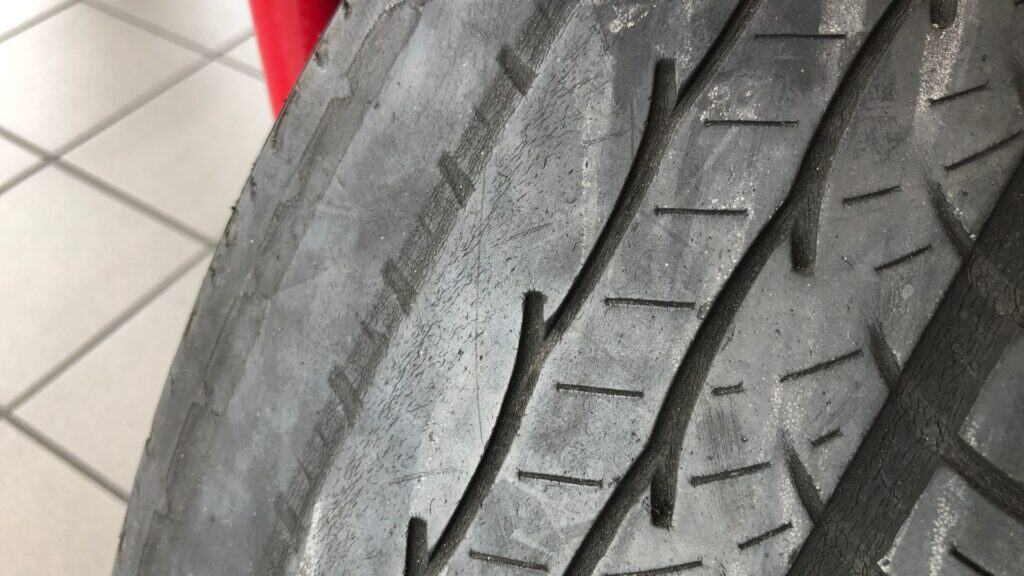
Uneven tread wear can indicate alignment or suspension problems. The legal minimum tread depth in the United States is 2/32 of an inch, but many safety experts recommend replacing tires once they reach 4/32. Tread depth can be checked using a dedicated gauge or a penny; if the top of Lincoln’s head is fully visible, the tire is excessively worn.
The DOT number stamped on the sidewall shows when the tire was manufactured. The final four digits represent the production week and year—for example, “2319” means the 23rd week of 2019. All tires on the same axle should match in size and type, and their sidewalls should be free of cracks, bulges, or signs of dry rot. Mismatched or deteriorated tires suggest inconsistent maintenance or possible mechanical issues.
During a test drive, a simple way to check alignment is to briefly loosen your grip on the steering wheel while driving straight on a quiet, flat road. If the vehicle drifts to one side, the alignment may be off. Apply the brakes gently to observe how the car responds; uneven braking that causes the vehicle to pull sharply left or right can also point to suspension or brake system problems.
Very clean engine bay
The condition of the engine bay can reveal how well a vehicle has been maintained. An engine compartment that appears unusually clean, almost like a showroom display, can indicate that it was recently pressure-washed, possibly to conceal oil leaks or fluid residue.
Heavy grime buildup, oil splatter, or visible leaks suggest poor maintenance or potential mechanical issues.
Inspect hoses, belts, and wiring for signs of wear. Rubber components should not be cracked or peeling, and electrical cables should be properly secured without makeshift tape repairs or loose connections. Components under the hood should appear organized and firmly mounted. A brief visual inspection often provides important clues about a car’s history and can reveal issues that may not be mentioned in the listing.
Refusal to allow pre-purchase inspection

A seller’s reaction to a pre-purchase inspection request can reveal a great deal about the transaction’s transparency. Reputable sellers generally have no objection to an independent mechanic evaluating the vehicle. A professional inspection typically includes checking diagnostic fault codes, assessing mechanical components, and verifying the car’s overall condition.
While the cost of an inspection is relatively small, it can help identify hidden problems that might lead to expensive repairs later. If a seller refuses, tries to rush the sale, or provides excuses for why an inspection cannot be done, it should raise concern. Buyers are advised to proceed only with sellers who are open to a full, independent assessment before finalizing the purchase.
Suspiciously low price
A price that appears far below market value is often a reason for caution. When evaluating a used car, it’s important to compare listings across reliable sources such as Kelley Blue Book, Edmunds, or local marketplaces. Reviewing vehicles of the same make, model, year, mileage, and condition helps establish a fair market range.
A significant price difference may indicate undisclosed issues, such as mechanical problems, prior accident damage, missing documentation, or costly upcoming maintenance. While competitive pricing can be legitimate, unusually low offers should prompt closer scrutiny rather than excitement. A fair asking price typically reflects the car’s true condition and history.
Final thoughts
There are many factors to consider when evaluating a used car, and even experienced buyers can overlook important details. The points above cover some of the most common warning signs that can help identify potential issues early. A careful inspection, supported by professional advice when needed, can reduce the risk of unexpected repairs and ensure a more informed purchase decision.