

DIY or hire a pro? How to decide when to do it yourself and when to call for help

Not every project is meant for DIY. Find out how to judge when to handle it yourself and when to hire out.
Home renovation projects can be rewarding, but deciding whether to handle them alone or hire a professional requires careful consideration. The right approach depends on several factors, including available time, skill level, budget, and project complexity. Understanding these elements helps homeowners choose the most effective path. Balancing cost savings and personal satisfaction with safety, quality, and long-term value.
Consider the cost

Cost is often the deciding factor in whether a home renovation should be done independently or by a professional. Small, low-risk projects that can be completed in a few hours or over a weekend may not justify the expense of hiring a contractor. Tasks that require only basic tools and materials that are already on hand are usually manageable without professional assistance.
Larger or more complex projects, such as those involving electrical wiring or the installation of high-value fixtures, often warrant expert attention. Mistakes in these areas can lead to costly repairs or safety hazards. The price of specialized tools, permits, and the time required to learn new skills should also be included when assessing total cost.
In some cases, the financial trade-off between time and labor is also worth considering. For individuals in high-paying professions, the potential income lost by dedicating personal time to renovation work may outweigh the savings from avoiding contractor fees.
Pro Tip: Allocate 10-15% of the total project budget as a contingency fund to cover unforeseen expenses. A financial cushion can prevent work stoppages or reliance on high-interest credit if unexpected costs arise.
The complexity of the task
Some home improvement projects appear simple at first glance, but can quickly become complicated. Many household tasks are manageable with basic tools and a short learning curve. With proper preparation and patience, cosmetic updates like painting or replacing hardware can often be completed successfully without professional assistance.
More technical work, however, demands specialized knowledge and experience. Plumbing, electrical installations, heating systems, and air conditioning units involve complex systems. Installing these requires knowledge, experience, and in many cases special tools. Also, some of these must meet safety standards and local regulations that many people might not know about. Errors in these areas can lead to significant property damage or even personal injury.
While online tutorials can provide valuable background information, practical experience remains essential for performing high-risk tasks correctly. Professionals are trained to recognize potential issues before they escalate and can complete complex projects efficiently and safely. When consulting a professional, always discuss the project in detail, as some specialize in only one product or technology.
The amount of time available for the project
Time is one of the most underestimated factors in DIY projects. Before beginning any work, it is essential to outline each step, what needs to be done, and how long each phase is expected to take. Projects that seem simple on paper often extend well beyond their initial timeline, particularly for those without prior experience.
Learning new skills also requires additional time. Watching tutorials or researching methods can help, but practical execution often takes longer than expected. For first-time renovators, doubling the estimated time frame is a realistic approach. A delay in one step can easily affect the rest of the project.
It is also worth considering the financial trade-off between time and labor. For individuals with demanding jobs or limited free time, focusing on one’s profession and hiring a qualified contractor may be more efficient than investing several weekends into a project. Beyond the financial aspect, the decision should also take into account personal priorities. Time spent renovating is time not spent with family or on other activities.
Pro Tip: Create a realistic timeline that includes buffer days for unexpected setbacks. Projects often take longer than planned, and allowing extra time reduces stress and helps maintain both productivity and work-life balance.
Safety and potential hazards
DIY projects also come with safety risks. Tasks that involve working with unfamiliar power tools can quickly become dangerous without proper training and safety preparation.
Climbing ladders, using saws, drills, or other power tools, and working around wiring or plumbing all require caution. Even small mistakes like using the wrong tool or skipping protective gear can have lasting consequences. Professionals are trained to manage these hazards safely and are equipped with the right tools and protective equipment to reduce risks.
Before starting any project, it’s important to assess whether the potential dangers outweigh the benefits of doing the work independently. Tasks involving electricity, gas, or work at height are best handled by trained specialists who can complete the work safely and correctly.
Pro Tip: Never underestimate the importance of safety. Wear protective gear such as gloves, goggles, and non-slip shoes, and make sure the workspace is well-lit and clutter-free. If a project involves risks beyond your comfort level, hiring a professional is the safer option.
Quality of work expected from the project
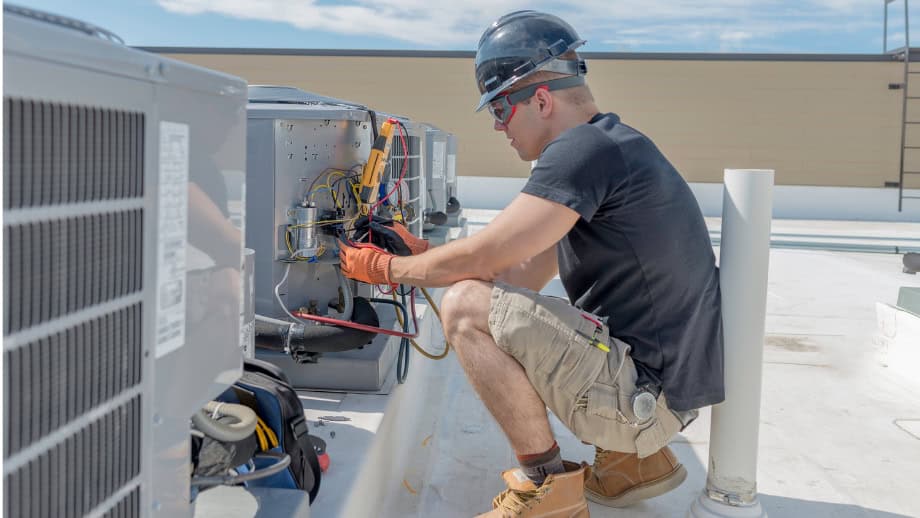
Different projects demand different levels of precision. Some tasks focus on basic maintenance, while others require a flawless finish to achieve a professional look.
Professionals have the specialized tools, materials, and techniques to produce consistent, polished results. When visual appeal and long-term durability are priorities, hiring a professional is generally the more reliable choice.
Pro Tip: Before starting, define how perfect the final outcome needs to be. For purely functional updates, DIY can be sufficient. But for visible, high-traffic, or design-focused spaces, professional work ensures a result that lasts and looks refined.
Physical effort required for the job
The physical effort required for DIY projects is often greater than it appears. While light tasks such as assembling furniture and repainting walls are typically manageable, more labor-intensive work can be exhausting and potentially unsafe without proper preparation.
Projects that involve carrying heavy materials or operating large tools demand significant strength and endurance. Demolishing concrete walls, moving appliances, or lifting construction materials is better handled by professionals.
Pro Tip: Assess the physical workload before starting. If a project involves heavy lifting, difficult angles, or long hours of repetitive motion, consider hiring professional help or arranging assistance to reduce the risk of injury and fatigue.
DIY or hire a pro?
Deciding whether to tackle a project personally or hire a professional can often be straightforward. A practical rule of thumb is to assess the amount of time, skill, and equipment required. If the work demands specialized tools or a significant time commitment, calling a professional is usually the better option.
The expected quality of the outcome is another key factor. For projects where a precise, polished, or high-end finish is important, such as flooring or detailed carpentry, a professional’s expertise can make a noticeable difference. However, if a functional, “good enough” result meets expectations, completing the project independently can be a cost-effective and rewarding choice.