

Is Steven Bartlett starting to get cancelled over his The Diary of a CEO podcast?
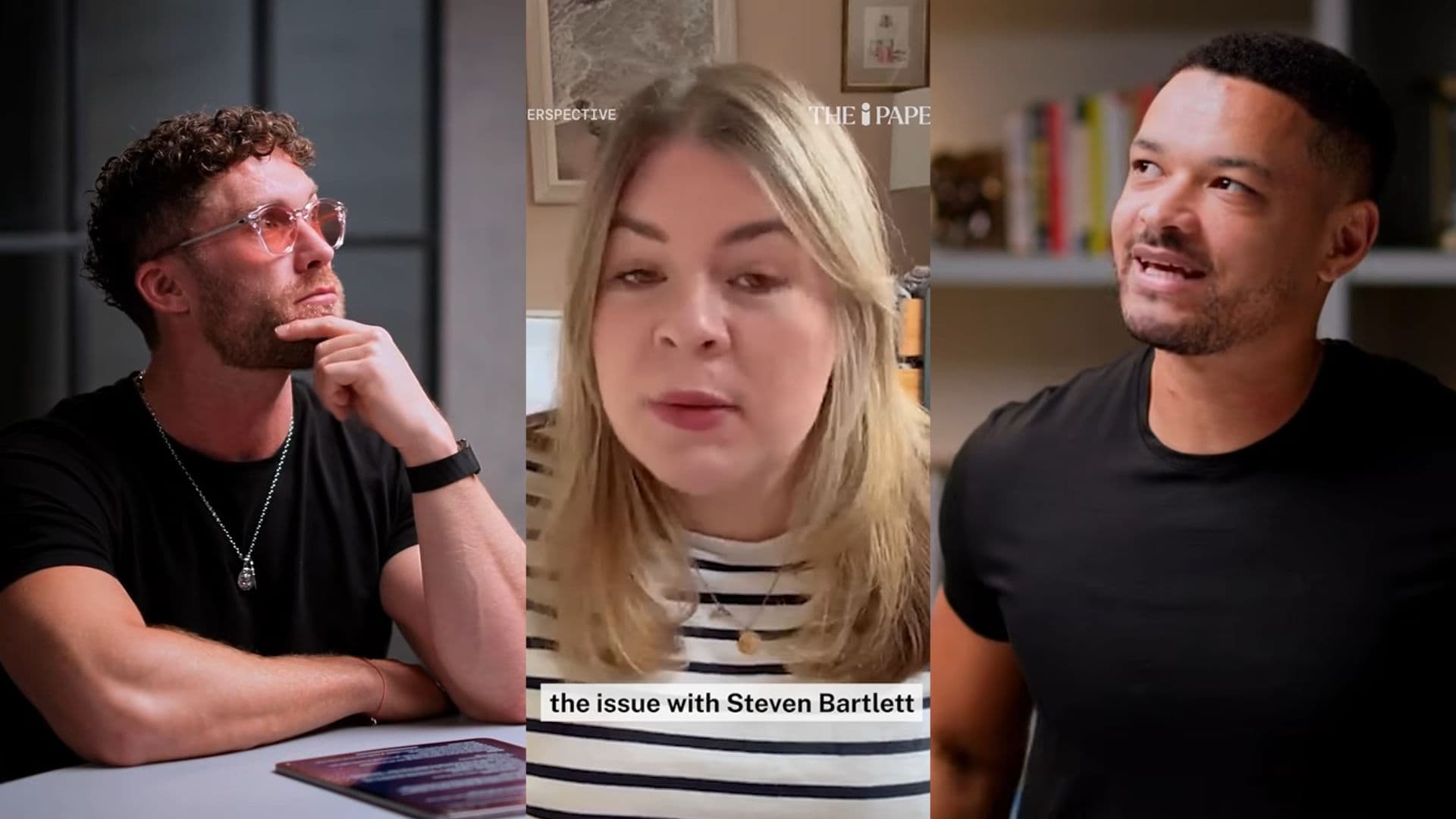
How a podcast built on self-reflection found itself accused of normalizing harmful ideas.
Steven Bartlett has spent the last few years positioning himself as the thoughtful, emotionally intelligent face of modern masculinity. The Diary of a CEO is a cultural product, with millions of listeners hanging on conversations about success, business, purpose, mental health, and relationships. Bartlett’s appeal has always been his ability to make big, uncomfortable topics feel safe.
For many men, Diary of a CEO fills a gap left by louder, angrier corners of the internet and offers reflection instead of rage. Which is why, when a couple of recent clips started circulating online, the backlash was loud, and it came from people who used to be fans, saying he’s changed.
Background
In a July 2025 episode featuring psychiatrist Dr. Alok Kanojia, the conversation turned to male loneliness and incel culture, where Bartlett floated the idea of whether society should really “intervene” to help so-called incel men find partners. Critics argued these comments echoed manosphere-adjacent talking points, centering men’s access to relationships as a societal obligation rather than examining the behaviors or structures that push people away in the first place.
Fast forward to late December 2025, Bartlett hosted podcaster Chris Williamson for a wide-ranging discussion that eventually landed on declining global birth rates. Williamson referenced a TikTok creator known as “The Girl With the List,” who famously shared “350 reasons not to have kids,” before remarking, “by the sound of things, it’s a really good idea that she’s not a mother.”
Bartlett didn’t meaningfully challenge the statement. That moment became the tipping point for many listeners. To critics, this is a pattern of conversations about women’s choices, reproduction, partnership, and societal “course correction” being had largely without women, and without pushback.
Reactions
The response online was sharp. In one widely shared reel, Rebecca Reid, an opinion writer for The i Paper, argues that The Diary of a CEO has grown too influential to be held accountable. She criticized his suggestion that society might need to “intervene” to prevent men from being excluded from the gene pool, saying it implicitly frames women as a solution to men’s social or romantic failures.
One commenter said “What systems would be put in place? What in the Handmaid’s Tale is he on about?” This echoes the sentiment of how easy it is for abstract discussions about birth rates to slide into controlling narratives about women.
Some went further. “He is more dangerous than Andrew Tate,” that comparison is telling. Tate is easy to dismiss, but Bartlett is polished and calm, which makes his platform feel safer, and that might be the issuue.
Another well-known creator, Shabaz Says, took aim at what he described as a noticeable tonal shift in The Diary of a CEO, arguing that a podcast once centered on growth, business, trauma, and personal responsibility has increasingly drifted into “blame women for men’s problems” territory.
He acknowledged male loneliness and mental health are worthy of discussion, but the criticism focused on the way manosphere-adjacent ideas are delivered through what he called a “therapy-coded” aesthetic.
Bartlett’s calm tone and soft-focus production give controversial claims a sense of legitimacy without requiring evidence or pushback. The result, he argued, isn’t balance or nuance, but a repeating narrative packaged as self-help, and more like gender politics disguised as wellness.
One user in the comments responded, “It’s misogyny covered in patchouli and pigeon pose,” and another said, “This isn’t red-pill rage. It’s wellness-coded control, delivered softly.” Perhaps the most cutting observation came from someone asking why one solution never seems to come up. “It’s funny how ‘let’s become better partners to women’ is never floated as an option.”
Why this matters
When you host one of the most influential podcasts in the world, the role goes beyond asking interesting questions. Steven Bartlett’s influence shapes real world conversations. With millions of listeners, what gets said on The Diary of a CEO can normalize certain framing in society and influence how complex social issues are understood.
That type of power has to come with some sort of responsibility. Audiences expect sensitive topics to be handled with context and balance, reflecting a broader cultural shift. Listeners are no longer satisfied with “just hosting a conversation” when the platform is this influential. Even neutrality can be seen as a choice, and silence or lack of pushback is seen as endorsement.
This moment highlights how modern podcasting has outgrown casual, long-form roots and entered the world of mass media where influence and trust come bundled together.