
He took his Tesla into extreme cold — here’s how the car actually performed

A real-world test of a Tesla Model 3 in sub-zero weather and what it reveals about EVs in the cold.
Extreme cold weather can challenge every vehicle, but electric cars are even more vulnerable than petrol cars. As EV adoption grows in colder regions, questions about winter reliability and performance become more than theoretical. In a recent YouTube experiment, a Tesla owner deliberately exposed his Model 3 to extreme sub-zero temperatures to see how it would actually behave after a deep freeze. The result offers a real-world look at what happens when an electric car faces conditions far outside everyday driving, and what drivers should realistically expect when winter hits hard.
EVs in cold weather
Real-world driving range can drop dramatically in winter. On average, EVs can use only 78% of their range in freezing temperatures compared to ideal conditions.
Cold temperatures reduce battery efficiency and slow chemical reactions. It makes it harder for the battery to deliver energy. To operate properly in cold weather, EVs must warm the battery to an optimal temperature, which takes energy from the battery. On top of that, EVs do not have components like an engine that generate heat, which is used to heat the cabin. They use the same battery to power and heat the cabin, further reducing their range. Compared with electric vehicles, petrol cars use more fuel at freezing temperatures, but the difference in range loss is much smaller.
The test
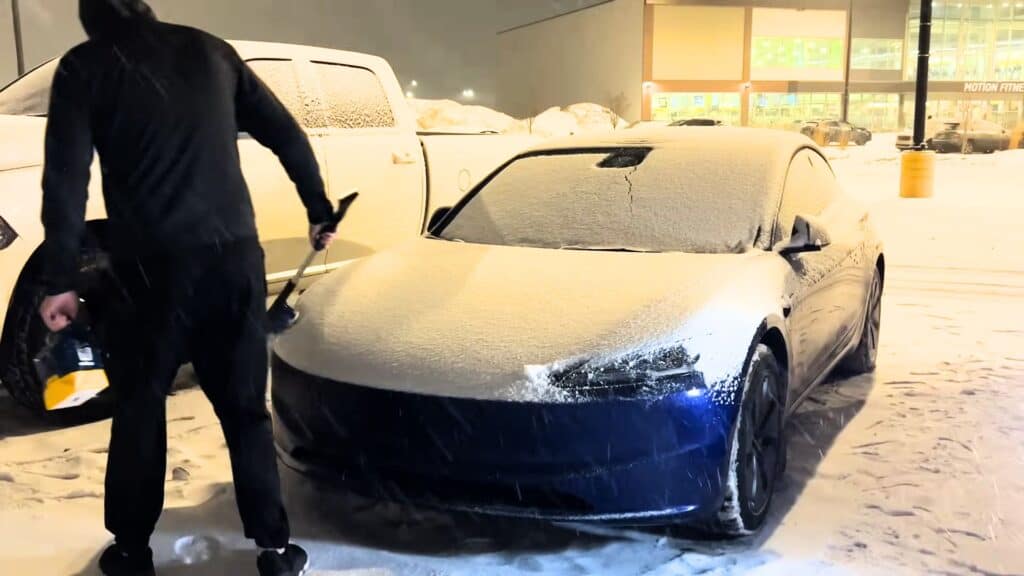
To demonstrate how EVs react to extreme cold, a YouTube creator from Canada took his 2024 Tesla Model 3 long range out into temperatures around -36 °C (-33 °F). He left the car overnight unplugged in extreme cold, so the battery reached sub-zero temperatures, and the next morning, he went on a typical commute to see how the car behaved with a thoroughly chilled battery. It was a proper, cold test since most cars never experience such frigid temperatures.
What happened
The car was parked at 80% charge and lost just 2% overnight, but the real drain came in the morning. He preheated the vehicle for 30 minutes before driving, during which the car used 11% of its battery. While the cabin warmed impressively quickly and reached above-freezing temperatures in about six minutes, the energy use was high.

Over the course of a 42-mile round trip commute, the Tesla used 46% of its total range, more than double what the same drive typically consumes on an average cold day, where usage is closer to 20%. The test showed that while the car remained fully functional and kept the cabin comfortably warm, extreme cold dramatically reduced efficiency, especially when the vehicle was left unplugged and relied solely on battery power for preheating.
Range
The Model 3 did show a noticeable drop in range under these extreme cold conditions, but overall, it handled the situation remarkably well. Cold weather is known to affect battery performance due to the chemistry involved and the added energy needed for heating. Yet, this behavior is consistent with what testing shows across most electric vehicles. When driving or charging immediately, much of the available energy is first used to warm the battery before restoring usable range.
It is also worth keeping the context in mind. In temperatures this cold, many diesel or petrol cars would struggle as well. Diesel fuel, in particular, can begin to gel in low temperatures depending on its paraffin content, leading to starting issues or reduced performance. Seen against that backdrop, the Model 3’s cold-weather performance was solid, even with the expected reduction in range.
Reactions
Viewers of the video highlighted both surprise and admiration for how the Tesla handled extreme cold. One commenter wrote, “I’m just impressed that the car works so well in that cold. Not every car can even start from -30 Celsius,” emphasizing the reliability of the Model 3 even in harsh temperatures.
Others focused on energy efficiency, noting that “32 kWh/100 km is like normal Audi energy consumption. Actually, it is very, very good! Nice job, Tesla,” suggesting that even in sub-zero conditions, Tesla’s performance remains impressive compared with traditional vehicles.
Longtime Tesla owners also weighed in, sharing experiences like, “I’ve had Model 3 Standard Range, also Long Range, and now I have 23 Model Y Standard Range with LFP battery. Charging to 100% every time, very happy with my battery even in -25C. Love Tesla’s. People who criticize Tesla’s don’t understand what they’re talking about. Did a trip to Florida from Montreal this summer. Spent like $350 in charging round trip.”
One commenter offered his personal advice saying, “2021 LR AWD owner in Alberta here. You don’t need to let it warm up nearly that long. You’ve wasted a lot of power trying to let the battery get totally warmed up before driving. Maybe that was just for science, so to speak, but it might give prospective buyers the wrong idea. You can drive away immediately, or as soon as the cabin is warm enough for your comfort. The battery will heat up faster when driving anyway, due to heat from the drivetrain and heat from discharging the battery in use.”
Across the comments, the overall sentiment reflected a combination of respect for the car’s winter performance and pride in Tesla’s technology, showing that knowledgeable owners view cold-weather challenges as manageable rather than prohibitive.
My EV tips for cold weather

There are a few practical steps drivers can take to reduce surprises in cold weather, even though range loss is unavoidable. Preconditioning the car before departure is one of the most effective. Warming the battery while the vehicle is still plugged in is a great practice. Keeping the car connected to a charger overnight and during morning preconditioning ensures that grid power is used instead of the battery.
Using heated seats and the heated steering wheel instead of relying heavily on cabin heating can save significant energy. These features warm the driver directly with far less power than heating the cabin air.
When possible, park in a garage. Even a cold garage is better than the street. The battery range will be better, and heating up the cabin will also take less time.
The takeaway from extreme cold testing is consistent with what many electric vehicle owners already know: EVs continue to operate reliably in freezing conditions, but cold weather changes how they use and recharge their batteries. Knowing what to expect and preparing for it allows drivers to plan more efficiently and travel with greater confidence in low temperatures.