

Elon Musk says the Optimus Robot will end poverty — and the public has plenty to say

Critics argue that poverty isn’t a tech glitch but a structural distribution issue, raising doubts that Musk’s robot can fix it.
When Elon Musk recently stated that Optimus, Tesla’s humanoid robot under development, would “eliminate poverty,” the remark lit up social media, headlines, and debates about the role of automation in society. For Musk, Optimus isn’t just a high‑tech gadget; it’s a solution for what he calls a “future of abundance,” where goods, services, and even medical care could become widely available. But as reactions poured in and analysts weighed the claim, many questioned whether a robot (no matter how advanced) can address the deep structural causes of poverty.
What is the Optimus Robot?
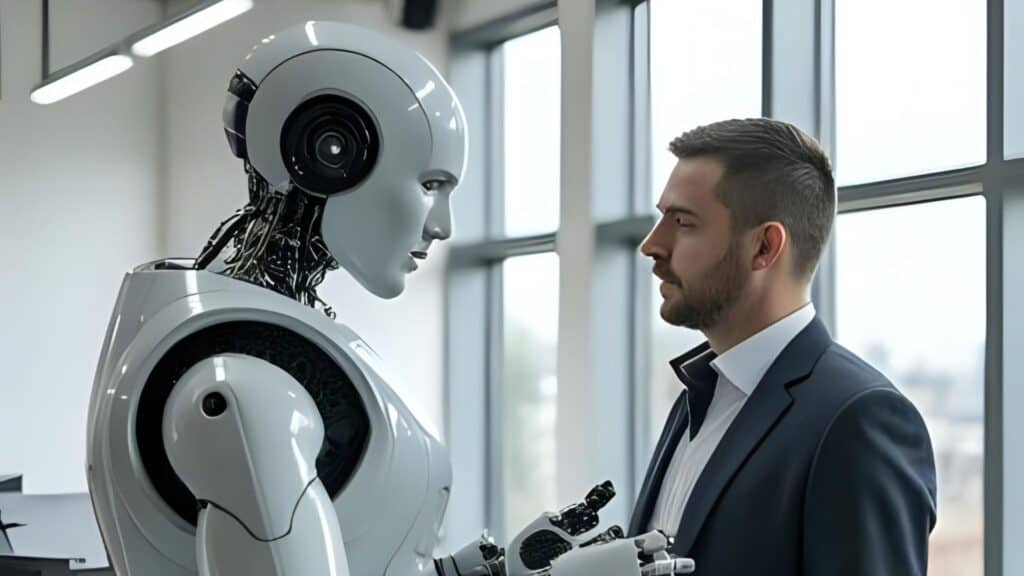
The Optimus Robot is Tesla’s latest venture into humanoid robotics, designed to perform tasks ranging from basic manual labor to complex, precise operations. It’s not commercially available yet, but Musk has outlined ambitious goals for the robot’s capabilities and what you can expect, including assistance in manufacturing, logistics, and even medical procedures. The robot is designed to navigate human environments and perform tasks with a level of efficiency and consistency that surpasses human limitations.
Expectations are high, with Musk suggesting the robot could be mass-produced in the near future, although no official release date or cost has been confirmed. The potential applications are vast, from industrial settings to personal assistance, sparking interest and debate over its societal impact.
Though Tesla has revealed prototypes, robots that have walked, danced, and recently even jogged in a lab, Optimus is still in development. Musk has envisioned mass production: at scale, once supply chains are built, he estimates a possible retail price for Optimus between $20,000 and $30,000.
But it’s worth noting that, as of now, Optimus remains a work in progress. Engineers at Tesla say there is still a lot of work to be done before Optimus could operate reliably in everyday environments.
How it will solve poverty
Poverty, as defined by international standards, typically refers to people living below a minimal income threshold, barely enough to meet basic needs such as food, shelter, and clothing. According to a recent update by the World Bank, as of 2025, roughly one in ten people worldwide (around 831 million people) live in “extreme poverty,” surviving on less than US$3 per day (using a newly updated global poverty line).
Musk argues that Optimus could trigger a new era of robots producing goods and services nonstop, sharply reducing labor costs and increasing global productivity so dramatically that basic needs would become broadly affordable. He states, “with Optimus … there is no poverty, where everyone has access to the finest medical care.”
A scenario like this goes past technological promises. When computers, industrial automation, and globalization first spread, advocates claimed it would lift entire societies out of poverty. In many regions, technological progress did contribute to poverty reduction, but always in connection with other factors like economic growth, strong institutions, social safety nets, and equitable resource distribution.
Critics point out that while automation can increase productivity, it does not automatically redistribute wealth or address structural inequalities. Indeed, recent research shows that automation and AI may increase output but often widen the income inequality gap, benefiting high-skilled workers even as low-skilled jobs are replaced. Simply having more goods and services doesn’t guarantee access, because access depends on purchasing power, social safety nets, education, infrastructure, and fair distribution. Ending poverty isn’t just a technological challenge; it’s a political, economic, and social one.
The math for ending poverty doesn’t require new technology or futuristic robots, but redistribution. The financial resources already exist for large‑scale humanitarian interventions. According to the BBC, Elon Musk’s net worth had crossed the $500 billion mark. That kind of wealth, if deployed differently, could have a considerable impact. A report by Brookings Institution estimates that just 1 percent of global billionaire wealth could generate roughly $130 billion per year, enough to “eradicate extreme poverty for all the 700 + million people” living under the international poverty threshold.
Public reaction

The reactions to Musk’s statement have been immediate and mixed. On the social media platform X (formerly Twitter), reactions ranged from hopeful optimism to blunt skepticism. One X user wrote, “There is no profit motive to eliminate poverty and make everyone wealthy under our capitalist system…” While another user added, “So a nation that won’t give their population universal Healthcare is just going to *checks notes* make everyone wealthy? Ha! Okay. But it’s more depressing that someone somewhere actually believes this.”
There are also plenty of users online who acknowledge claims about the robot’s potential medical abilities, noting that the possibilities (like performing advanced surgeries with incredible accuracy) are “Amazing“. The technological marvel is hard to deny, but nonetheless, many remain unconvinced that a robot can be the sole solution to poverty.
Elon Musk’s claim that Optimus will “end poverty” is bold even by his standards, and it’s certainly causing debate. Optimus represents a technological ambition with enormous potential. If humanoid robotics ever reaches the level of reliability and scale that Musk envisions, they could transform many sectors, reduce labor demands, and make goods and services more abundant. But poverty is not just a matter of labor scarcity. It is deeply rooted in inequality, social structures, access to resources, and distribution. History and research show that technological progress alone rarely delivers equitable outcomes, unless paired with social, economic, and political reforms.