
Duolingo CEO says they have paid taxi drivers to share how executive job candidates treated them

This unconventional hiring tactic suggests that a person’s behavior toward service workers is the most accurate predictor of how they will treat their own team.
The term “cultural fit” often seems like just a buzzword companies use to justify unclear hiring decisions. However, Luis von Ahn, the CEO of Duolingo, recently shared an interesting approach that makes reference-checking more hands-on. In a podcast, he shared that when assessing a candidate for a high-level executive position, the process starts even before they step into the office. In fact, it begins in the backseat of a taxi.
Duolingo CEO’S no. 1 interview question
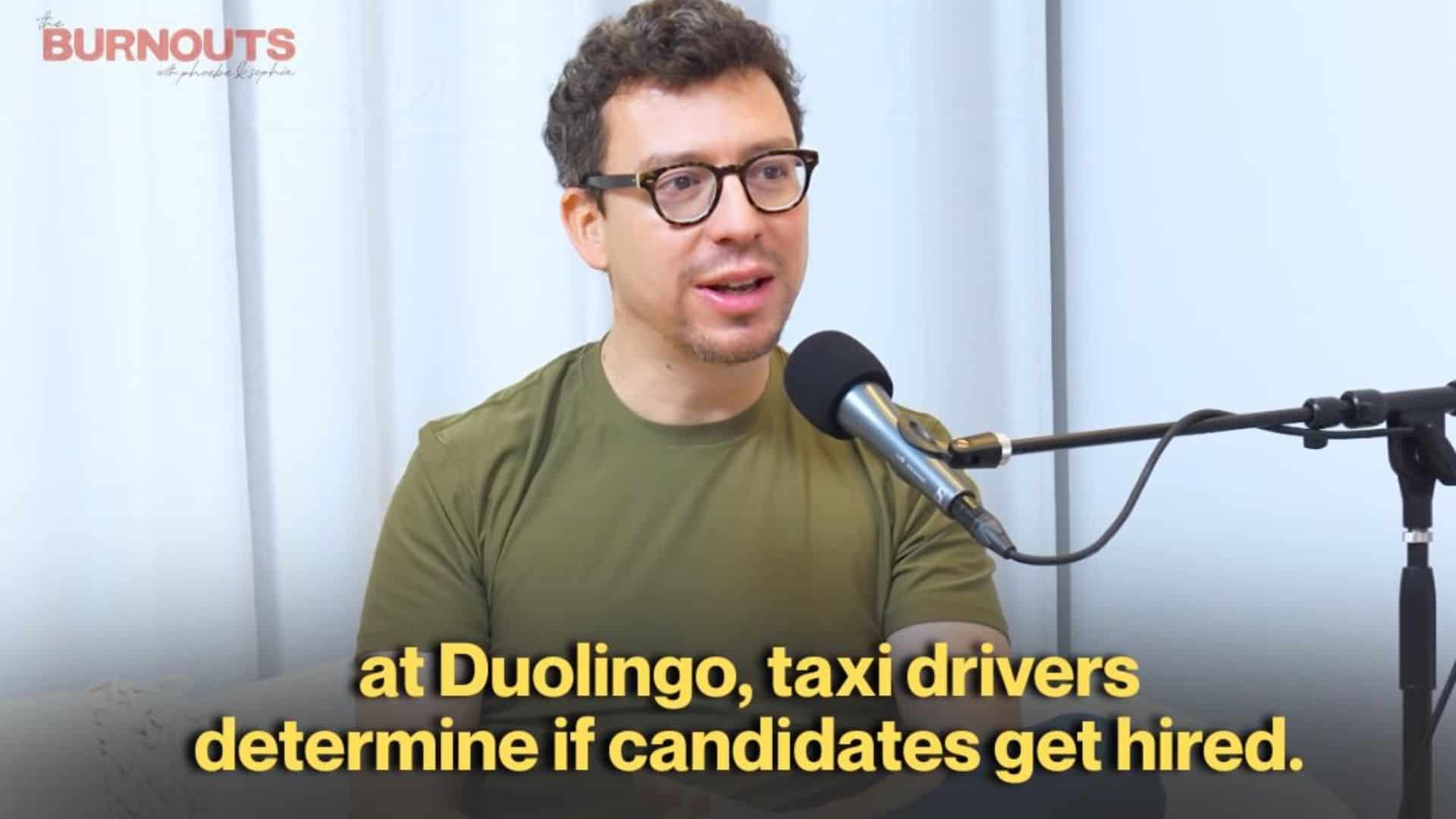
Luis von Ahn recently shared insights into his unusual hiring process on The Burnouts podcast, hosted by Phoebe Gates and Sophia Kianni. Phoebe mentioned that von Ahn is known for being extremely careful when hiring new employees. One aspect of his approach is that he pays taxi and rideshare drivers to give feedback on how job candidates treat them during their ride to the Duolingo office.
Luis von Ahn explained that they had been looking for a Chief Financial Officer for about a year. They found a candidate who seemed perfect on paper, with all the right qualifications. However, the driver’s feedback changed everything. He shared, “And then it turned out that they were pretty mean to their driver from the airport to the office,” which led von Ahn to decide not to hire him.
For von Ahn, that behavior was a non-negotiable dealbreaker. He believes that if someone is mean to a driver, they’ll likely treat subordinates with the same lack of respect. The candidate’s impressive qualifications didn’t matter anymore once he saw a lack of basic kindness. He feels that a person’s true character shows when they think no one is paying attention.
People on social media had a lot to say about the CEO’s interview approach
One person emphasized the importance of strong leadership, saying, “Leading with culture first, excellence in leadership right there.” Many companies feel pressure to hire exceptionally skilled yet difficult people, believing that their expertise makes their bad behavior acceptable. When a CEO decides not to hire someone for a job after observing how they treat a service worker, it sets an example for the entire company. It shows that every employee, no matter their position, deserves respect and dignity, just as much as financial profits are valued.
Another commenter shared their relief that some corporations look past the paperwork, “Love that major companies are digging beyond the resume.” Often, hiring decisions are made solely on the basis of impressive resumes. These documents are carefully crafted by candidates who only show their best sides. By assessing how candidates behave outside the formal interview setting, companies like Duolingo can avoid hiring people who lack kindness. One person urged everyone to be kind in every situation, saying, “In a world where you can be mean or kind, choose kind.”
However, not everyone agreed. One critic discussed the controversy surrounding the company, asking, “Was he being mean to his employees when he replaced almost all of them with AI?” While the CEO promotes kindness toward service workers, Duolingo has faced criticism for laying off a significant number of its contractors in favor of AI. This raises questions about the company’s commitment to respect and kindness when its choices lead to the loss of many jobs.
Is secretly vetting candidates a smart move or a flawed one?

The approach of evaluating job candidates by how they treat taxi drivers is unconventional, but it can reveal a person’s true character, which is hard to judge from an interview alone. If a candidate seems friendly and charming in formal interviews but is rude to a taxi driver or any other worker, it’s likely that they will behave similarly in the office. How leaders treat people who have less power says a lot about the kind of workplace culture they create. So, observing this behavior before making a final decision is important for many positions, especially since a resume won’t show these character traits.
However, this approach has some limitations. A candidate’s behavior during a short taxi ride might be influenced by travel-related stress, a bad day, or cultural differences in communication styles. Just because someone is polite to a driver doesn’t mean they won’t be difficult or disrespectful to their coworkers. Relying on a single interaction to make a final decision can be misleading, especially if the candidate doesn’t even know their taxi ride was part of the evaluation process.
On a positive note, this method draws attention to an important question that many companies might not discuss openly: Does it matter how someone treats those with less power? At Duolingo, they believe it does, and recognizing this issue is definitely a step in the right direction.