
When heavy rain overwhelms the road — here is how to handle floodwater while driving

Historic rainfall and flash floods turned roads into rivers, trapping drivers and offering crucial lessons on safety.
San Diego welcomed the new year under dangerous conditions as intense rainfall triggered flash flooding across the region, submerging roads, trapping drivers, and businesses in multiple locations. The rain quickly overwhelmed storm drains and low-lying neighborhoods, transforming streets into fast-moving channels of water. Videos shared online showed cars partially underwater and, in some cases, floating as emergency crews rushed to help stranded motorists. The scenes were alarming but also familiar to flood experts, who warn that many drivers underestimate how quickly water can turn deadly.
The story
The flooding came after a powerful storm system moved through Southern California on New Year’s Day, dumping heavy rain in a short period of time. According to local reports, parts of San Diego saw rainfall totals more typical of an entire winter month compressed into just a few hours. The sudden volume of water overwhelmed drainage systems, particularly in low-lying areas near the San Diego River.
Neighborhoods such as Mission Valley and areas surrounding Fashion Valley Mall were among the hardest hit. Floodwaters surged across roadways, leaving cars stranded or swept into deeper water. San Diego Fire-Rescue and lifeguard swift-water teams responded to numerous emergency calls, including rescues involving adults and children trapped inside vehicles as water levels rose.
In widely shared footage from San Diego CBS 8 on New Year’s Day, emergency crews can be seen rescuing a man and a young child from a Jeep that had been overtaken by floodwater near Fashion Valley as conditions worsened on local streets. In the clip, water surges around the vehicle’s tires, pushing against it as responders work to stabilize the scene and guide the occupants to safety in chest-deep water. Even larger vehicles can become trapped or swept away when drivers underestimate the power of moving water.
Dangers of driving in a flood
Experts say that more than 50% of all flood-related deaths are linked to drivers attempting to travel through floodwater. One of the biggest dangers is perception, because floodwater is often murky and gives no reliable visual clues about depth or what lies beneath the surface. A road that appears passable may hide washed-out pavement or open storm drains. In urban areas like San Diego, underpasses and low crossings can fill rapidly and trap vehicles before drivers have time to react.
Water also creates far more force than many people realize. One foot of moving water can already float many vehicles, while two feet can sweep away most SUVs and trucks. Once a car begins to float, steering and braking are nearly impossible.
When to say no
The safest choice during flooding is always to avoid driving altogether. Emergency agencies nationwide promote the message “Turn Around, Don’t Drown” because entering floodwater is one of the most common and preventable causes of storm-related deaths.

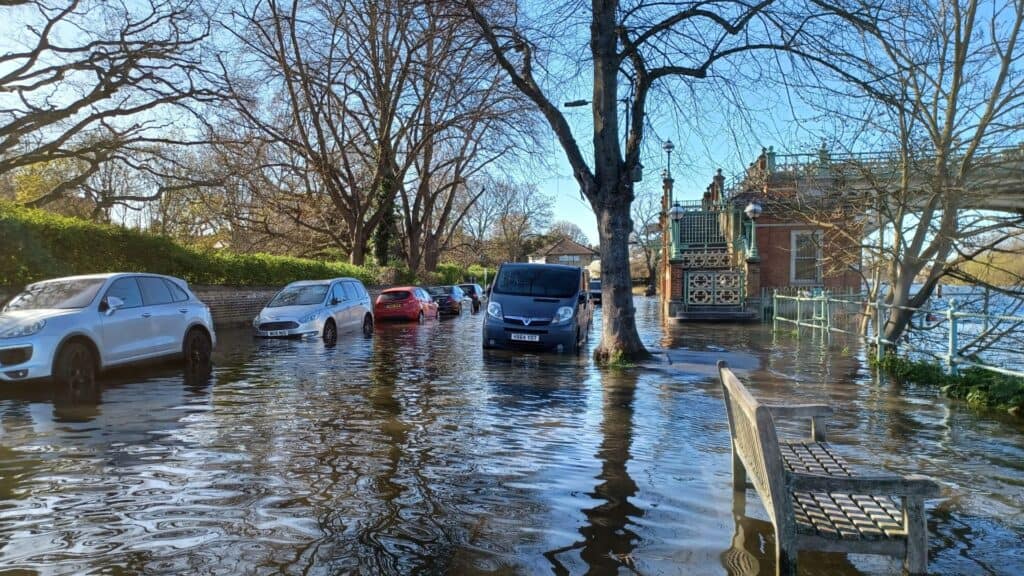
Drivers should avoid the road entirely if flood warnings are in effect, especially in areas known to flood. Road closures and barricades should never be ignored. They are placed because conditions ahead are already dangerous or unstable. If you encounter water on the road, turn around immediately if water covers the pavement or if you cannot clearly see the road surface beneath it. Even shallow-looking water can deepen suddenly, particularly near drainage channels or underpasses.
Why cars fail in floodwater
Driving through water can also cause catastrophic vehicle damage because the machines tend to malfunction after getting submerged. One major issue is engine failure. If water enters the engine’s air intake, it can cause a condition known as hydrolock, where internal components are damaged because water cannot be compressed, which can result in sudden engine failure and costly repairs.
Floodwater can also damage brakes and electrical systems. Brakes may become less effective or fail entirely after being submerged, while electrical malfunctions can disable power steering or airbags. Even if a car appears to function after driving through water, damage may appear later. Once water lifts a vehicle off the ground, the car can drift into deeper water or overturn, leaving passengers trapped.
How to drive in a flood
If your vehicle stalls or becomes surrounded by rising water, stay calm and act quickly. Call 911 immediately and stay inside the vehicle if it remains stable and water levels are not rapidly rising. Leaving a car too early can expose you to fast-moving water that can knock you off your feet. If water begins entering the vehicle and conditions worsen, you should prepare to exit. Seat belts should be unbuckled, and children unrestrained.

Windows should be opened early, before electrical systems fail. Doors may be difficult or impossible to open if water pressure is high, making windows a safer escape route. Once out, you and any other passengers should move only toward higher ground and avoid walking through moving water whenever possible. Emergency responders are trained and equipped to conduct water rescues and should be relied upon when available.
Takeaway
The flooding that struck San Diego at the start of the year was a real-time demonstration of how quickly everyday driving conditions can turn life-threatening. Cars floating in city streets and swift-water rescues serve as powerful reminders that familiarity with a road does not make it safe during a storm. As extreme weather events become more frequent, officials stress that preparation and caution are critical. Checking and respecting road closures and refusing to drive through water can prevent tragedies before they happen. An inconvenience turns into an emergency very quickly. The most important rule is that if you encounter water on the road and can’t see the pavement beneath it, turn around. No destination is worth the risk.