

Finland replaced artificial playground surfaces with natural elements like mud and soil — and the results surprised even researchers
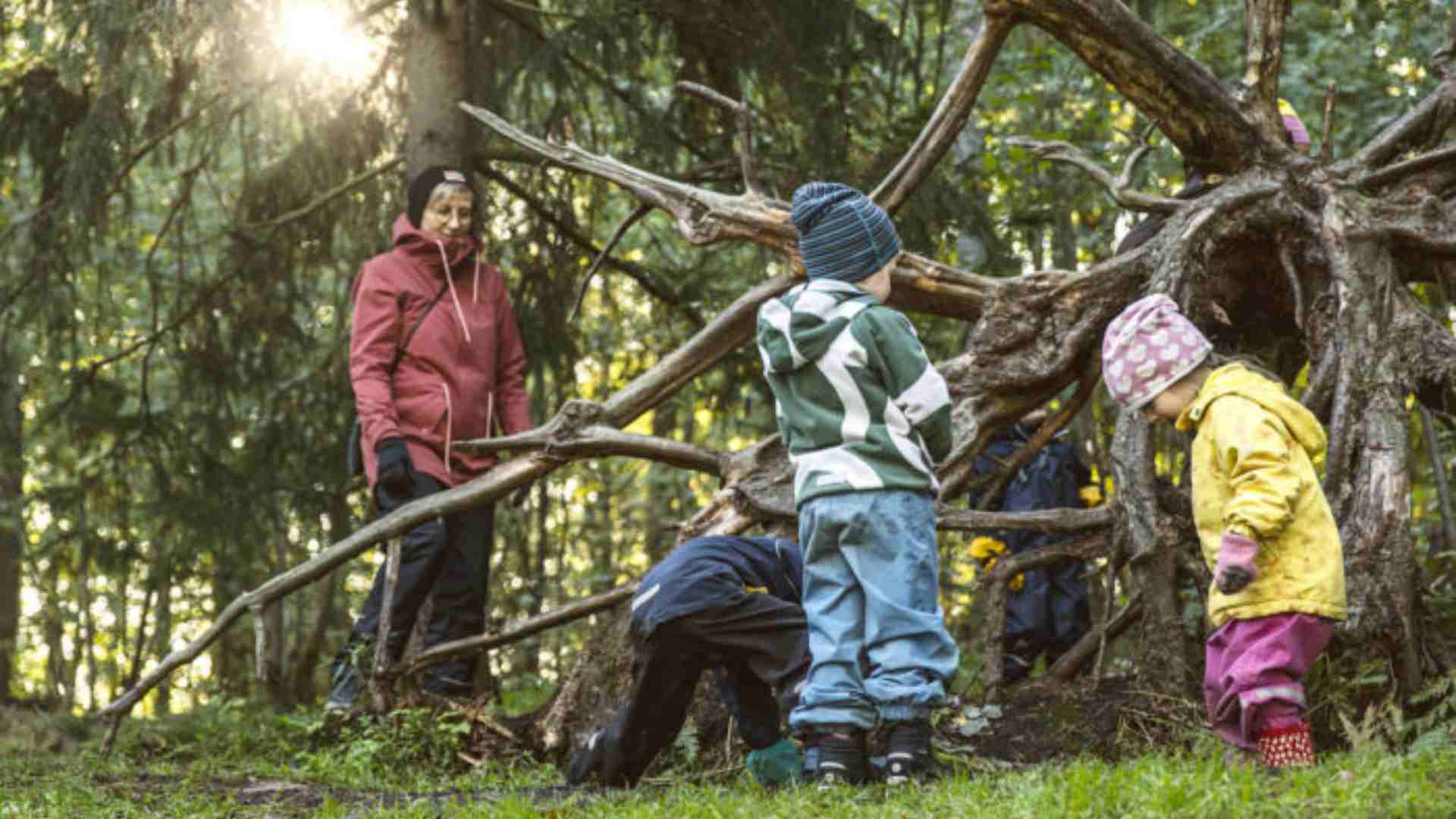
A kindergarten swapped plastic playgrounds for soil and sand, and researchers say what happened next challenges how we think about kids, immunity, and nature.
A growing number of educators and researchers are rethinking what children actually need from the spaces where they grow up and learn. In Northern Europe, that question led to an experiment that replaced familiar playground setups with less controlled, more natural ones. This is what happened next.
Finland’s experiment with natural playgrounds
In Finland, 43 daycare centers replaced traditional playground surfaces like rubber mats, gravel, and plastic flooring with natural materials, including soil, sand, moss, plants, and sections of forest floor. The goal was to increase children’s exposure to environmental microbes through everyday play.
According to a report from The Guardian, at sites such as Humpula daycare in Lahti, outdoor areas were redesigned into small ecosystems. Children were encouraged to dig, play in soil, use compost, and interact directly with natural materials rather than synthetic playground surfaces. In some centers, researchers even introduced imported forest floor containing living soil, moss, and native plant life.
The two-year study, led by Finland’s Natural Resources Institute, tracked around 75 children across “rewilded” and conventional daycare centers, analyzing microbes from skin, saliva, and faces, as well as immune markers in blood samples. Findings showed that children in biodiverse environments had fewer disease-associated bacteria, such as Streptococcus, on their skin, shifts in gut bacteria linked to inflammation, and increases in immune-regulating T cells within weeks. Researchers also reported stronger overall immune responses than in children in standard asphalt-and-plastic playgrounds.
The study links these changes to the biodiversity hypothesis, which suggests reduced exposure to natural microbes in early life may contribute to immune-related conditions. Many users online reacting to the news said the findings are a return to something older rather than new, groundbreaking findings. Some praised the idea of children “needing to play in the mud,” arguing that unstructured outdoor play was once the norm and should still be central to childhood. Others pointed out that growing up with dirt, grass, and outdoor environments felt intuitive and aligned with how previous generations were raised, often noting they rarely saw illness linked to it in practice.
Why “getting dirty” became a scientific question
The idea that modern childhood environments may be too biologically “sterile” for optimal immune development is gaining popularity. The core argument isn’t that dirt is automatically beneficial; it’s that diversity of exposure matters. As one study notes, biodiversity loss in living environments can lead to “inadequate stimulation of immunoregulatory circuits,” contributing to asthma and allergies.
Children today spend more time indoors or in heavily controlled environments than previous generations, limiting interaction with soil microbes, plants, and natural ecosystems. But in Finland, they are adopting outdoor learning that takes place year-round regardless of the weather. These programs encourage direct contact with natural materials in everyday play and education.
And it’s not just happening in education. Some researchers are now introducing the concept of “probiotic cities”, arguing that urban environments should be designed using bio-integrated materials and microbiome-aware landscaping to promote healthier ecosystems and support human immune regulation. Finland’s playground shift moves this idea from theory into controlled real-world testing. Instead of asking whether nature exposure might matter, it changed the environment and measured what followed. The findings also tie into broader conversations about mental health and spending time outdoors.
Children used to grow up in constant contact with natural environments
They had to learn about soil, plants, animals, and the microbes that come with them. In many urban settings today, that exposure is far more limited, replaced by sanitized surfaces, indoor routines, and highly controlled outdoor spaces. What makes the Finnish findings important is that they suggest these environmental differences may show up in measurable ways. If early exposure to biodiverse settings influences immune development, then it adds weight to a growing body of research linking modern, low-microbial environments with rising rates of allergies and immune-related conditions.
It’s more than just a conversation about health alone. Urban design, education spaces, and city planning all play a role in how much contact children have with natural systems during key stages of development. The question is whether removing living systems from everyday spaces entirely has unintended effects. At the same time, researchers are still cautious. These findings don’t prove a single cause-and-effect relationship, and long-term outcomes are still being studied. But the pattern is consistent enough that it’s pushing more attention toward how “clean” modern environments should actually be. Finland’s experiment gives us an idea of how biology has developed within the environment designed for children.