Mexico just developed an $8,600 electric car after decades of being the world’s auto assembly hub
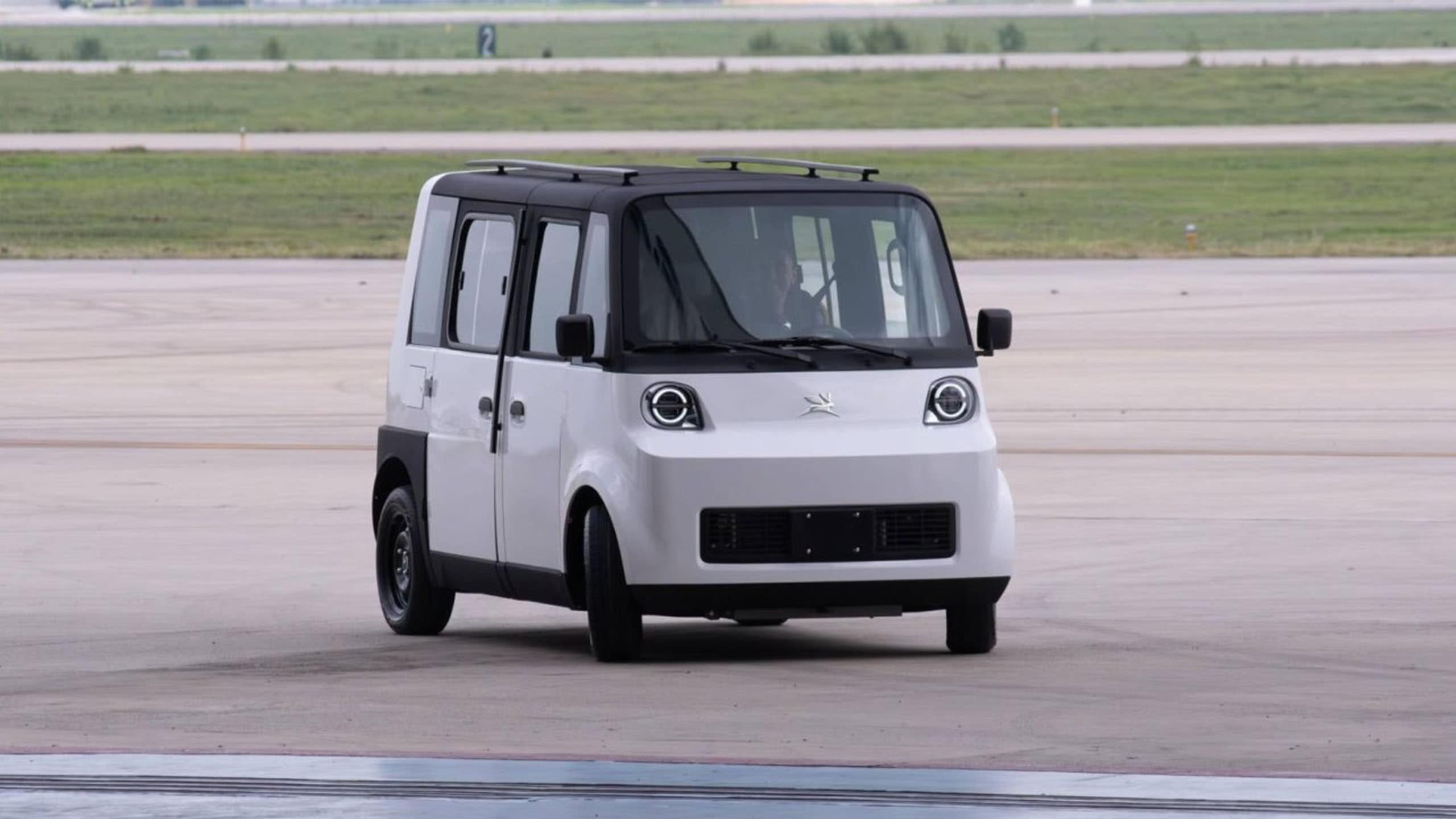
Mexico spent decades assembling cars for the world, and now it’s developed one of its own.
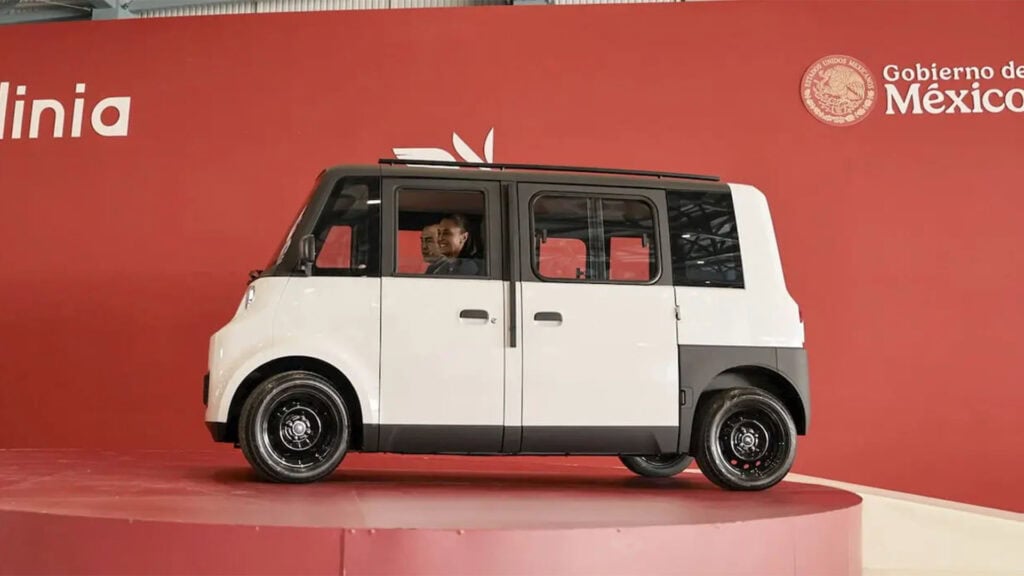
Mexico has been one of the world’s largest automotive manufacturing hubs for decades, building vehicles for Ford, GM, and BMW, yet it has never produced a single homegrown model. Last Sunday, that changed. President Claudia Sheinbaum drove a domestically engineered electric vehicle onto a national stage and announced it would go on sale in 2027 for $8,600. The car is called Olinia, and it deserves a proper look.
Most countries that assemble cars for the world never develop one of their own. The engineering capability, institutional knowledge, and regulatory complexity tend to remain with the foreign brands doing the contracting. What Mexico has done here breaks that pattern. It is worth understanding exactly what it means.
The development
The Olinia was developed by three of Mexico’s leading public institutions: the National Technological Institute of Mexico (TecNM), the National Polytechnic Institute (IPN), and research centers under the Secretariat of Science, Humanities, Technology, and Innovation. The Chinese embassy provided some technical collaboration, worth noting, but it does not diminish what a genuinely domestic engineering achievement is.
Sheinbaum, presenting the vehicle on June 8, 2026, was direct about what it represents. “We were told that innovation was reserved for other places,” she said, that Mexico’s role was to receive technology, not create it. The Olinia is a rebuttal to that assumption. Project manager Roberto Capuano Tripp described it as a vehicle designed for both city and rural driving.
Performance
The Olinia runs on a 14.7 kWh LFP (lithium iron phosphate) battery paired with a 13.5 kW electric motor. The range is rated at 100 km (62 miles) per charge, though real-world figures with a full load or on hilly terrain will likely be lower, as they are with any EV. Charging takes 4 hours at 220V or 8 hours from a standard 110V household outlet. No fast charging or complicated ecosystem, and it comes with a 7-inch infotainment screen, Bluetooth 5.0, and a two-speaker stereo.
The LFP chemistry is a smart choice for this vehicle. These batteries have a longer cycle life, more stable thermal behavior, and lower fire risk than the NMC chemistry found in most premium EVs. For a budget car expected to run daily for years, that durability matters more than peak energy density.
The top speed is 31 mph, meaning that in many countries this vehicle will be exempt from full crash-test requirements and have low insurance costs. With the speed limit, Mexico has made a strategic decision that makes the price point possible. The exact dimensions of the vehicle have not been released, but it is described as a six-seat compact, raising legitimate packaging questions that the production version will need to address clearly.
My honest take
I know what it takes to bring a vehicle to market: the engineering sign-offs, the supply chain negotiations, the regulatory certifications, the constant pressure to cut costs without reducing functionality. What Mexico has achieved here is not trivial. A functioning prototype, publicly unveiled, with a credible production timeline, built through public universities. That is genuine industrial ambition, and I have respect for it.
The Olinia is the right vehicle for its stated purpose. School runs, grocery trips, urban commutes under 30 miles. It needs to be reliable, cheap to run, and simple enough that a family without a dedicated mechanic can keep it going for years. On those terms, the concept sounds great. It can also be a great option for delivery drivers who want something more than a motorcycle for almost the same price.
But I want to be honest about the affordability gap. Mexico’s GDP per capita is around $14,000, roughly one-sixth of that of the United States. At two to three months of average wages, $8,600 is a meaningful financial stretch for the families this car is designed to serve. The vehicle’s real-world success will depend on whether the government backs it with financing programs, fleet purchasing, or subsidies. Without that infrastructure, the price is aspirational rather than accessible.
The domestic competition is also real. BYD’s Dolphin Mini is already in the Mexican market at a slightly higher price point, with significantly stronger specs and the backing of one of the world’s most capable battery manufacturers. The Olinia will need to win on national pride, service network, and parts availability, not just on paper.
The Olinia will not threaten Tesla, nor will it keep BYD’s engineers awake at night. It is a purposeful, affordable, domestically built city EV from a country that spent decades being told its job was assembly, not innovation. The concept is right, the use case is real. The price, for now, is still a stretch for the people who need it most, and the government needs to close that gap with serious support programs if this is going to be more than a symbolic launch.
If the production version delivers on build quality and the government gets the financing right, the Olinia succeeds. Not as a revolution, but as something more useful than that. A practical tool that quietly improves many people’s daily lives. Mexico should be proud of building it.