
Theo James on why men struggle to open up—and why it’s important
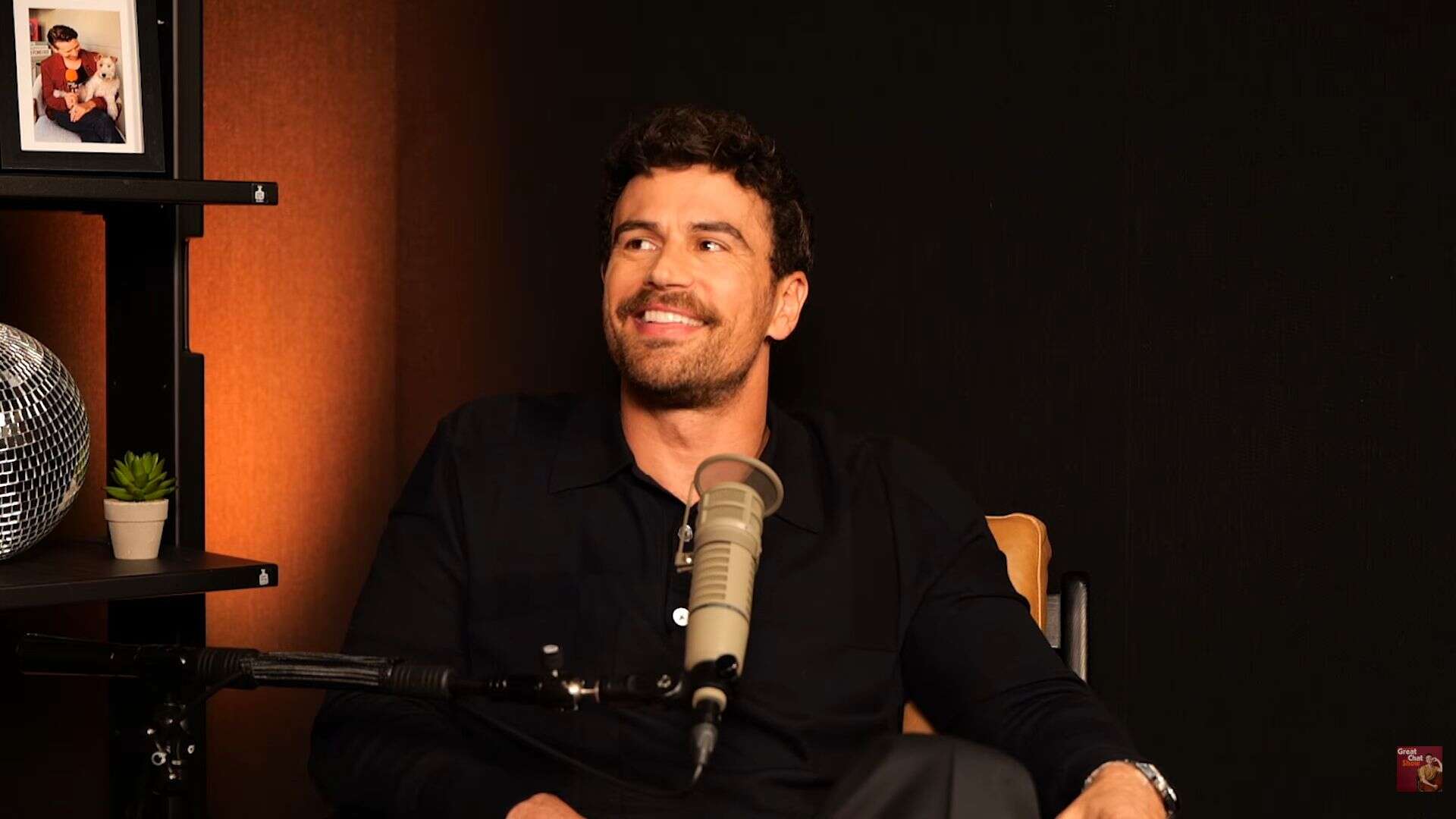
Why Theo James thinks real strength in men isn’t silence, but learning how to talk before it’s too late.
Between the male loneliness epidemic and the rise of the “manosphere”, men are feeling more pressure than ever to perform a certain version of manhood. The question isn’t whether men are struggling; it’s whether or not they are talking to someone about it. In a recent interview on Josh Smith’s Great Chat Show, Theo James shared his view.
Theo James, well known for his roles in The White Lotus and The Gentleman, is currently promoting his latest film, Fuse, a high-intensity thriller that leans into his familiar “bad guy” appeal.
In a recent interview, he admits he enjoys those roles, “I love a bad guy.” But off-screen, his opinions are slightly different. When asked about the rise of the manosphere and modern masculinity, James was straightforward. He calls parts of it “terrifying,” and says it’s not confidence, but insecurity dressed up as bravado. Men, he suggests, are often “untethered” and unclear on who they’re supposed to be. And that confusion can manifest as aggression, misogyny, or performative toughness.
Crucially, he ties that back to silence. “I try and have conversations with my friends and be open about mental health,” he says, before acknowledging how difficult that can be. Men are still raised, implicitly or explicitly, to suppress vulnerability and be quiet, don’t show stress, don’t show weakness. James points to suicide rates among men, and how they remain alarmingly high, particularly in midlife.
He doesn’t give a solution, but he keeps circling back to the same idea that conversation is the starting point, even if it’s messy or incomplete. More public figures are coming forward to tell men they have to stop bottling up their emotions, and it’s the spotlight we need on this issue.

The real barrier isn’t willingness, it’s language
Part of men not wanting or knowing how to talk is generational. Emotional literacy hasn’t historically been encouraged in men, which means even when the willingness is there, the tools often aren’t. Conversations default to humor, deflection, or surface-level check-ins. But part of it is cultural as well.
As James points out, there’s a growing pressure to define success in narrow terms of money, status, and dominance. In that sense, vulnerability feels like failure. In his interview, James describes a system that rewards performance over honesty. Opening up requires stepping outside that system and risking how you’re perceived, and that is the hard part for most men who just don’t have the language or know-how.

Silence has consequences
What Theo James suggests is a complete shift in how we define strength, to rewire those old systems with smaller, consistent acts of true strength and self-care. This can look like talking to friends, admitting when things aren’t great, creating a home that supports your mental health, and listening without immediately trying to fix or compete. It won’t resolve the bigger, more nuanced cultural debates overnight, but it’s a starting point at the hardest part.
Learning to open up will help men undo years of keeping it all in and the baggage that goes with it. The stakes in this conversation are personal. When men don’t open up, problems don’t disappear; they just show up elsewhere in mental health crises, in strained relationships, or in isolation that’s easy to hide but hard to escape.