
Theo James on feeling the pressure to fit in as a young man
Growing up can feel like a balancing act between figuring out who you are and trying to be who everyone else expects you to be, and for many men, that pressure doesn’t always fade with age.
Fitting in can feel like the goal when you’re young, but for many people, it’s also where the confusion around identity really begins. In a recent interview, Theo James opened up about the pressure to belong, the challenge of figuring out who you are, and how those struggles don’t always disappear with age. His thoughts tap into a broader conversation about masculinity and the growing influence of online spaces that shape how young men see themselves today.
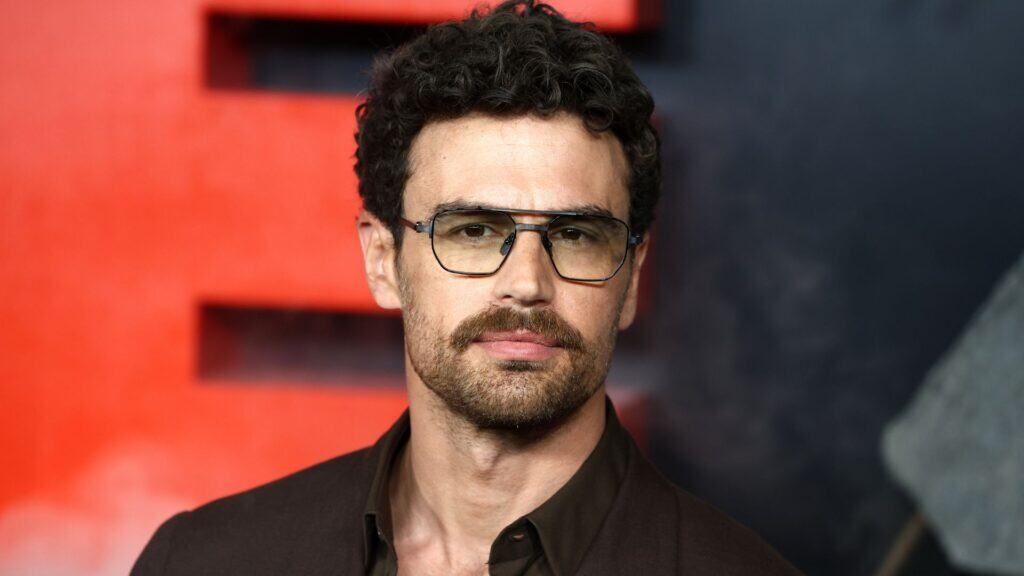
Theo James has been balancing a mix of high-intensity roles and more character-driven performances lately. In Fuze, he steps into a fast-paced London-set story centered around a WWII bomb discovery that sparks a city-wide evacuation, creating the perfect cover for a high-stakes heist. James plays a key figure in the operation, bringing a sharp, intense edge to the film’s suspense-heavy plot. He’s also widely recognized for his role in The White Lotus, where he portrayed a wealthy yet complex guest, showcasing a more character-driven side of his range.
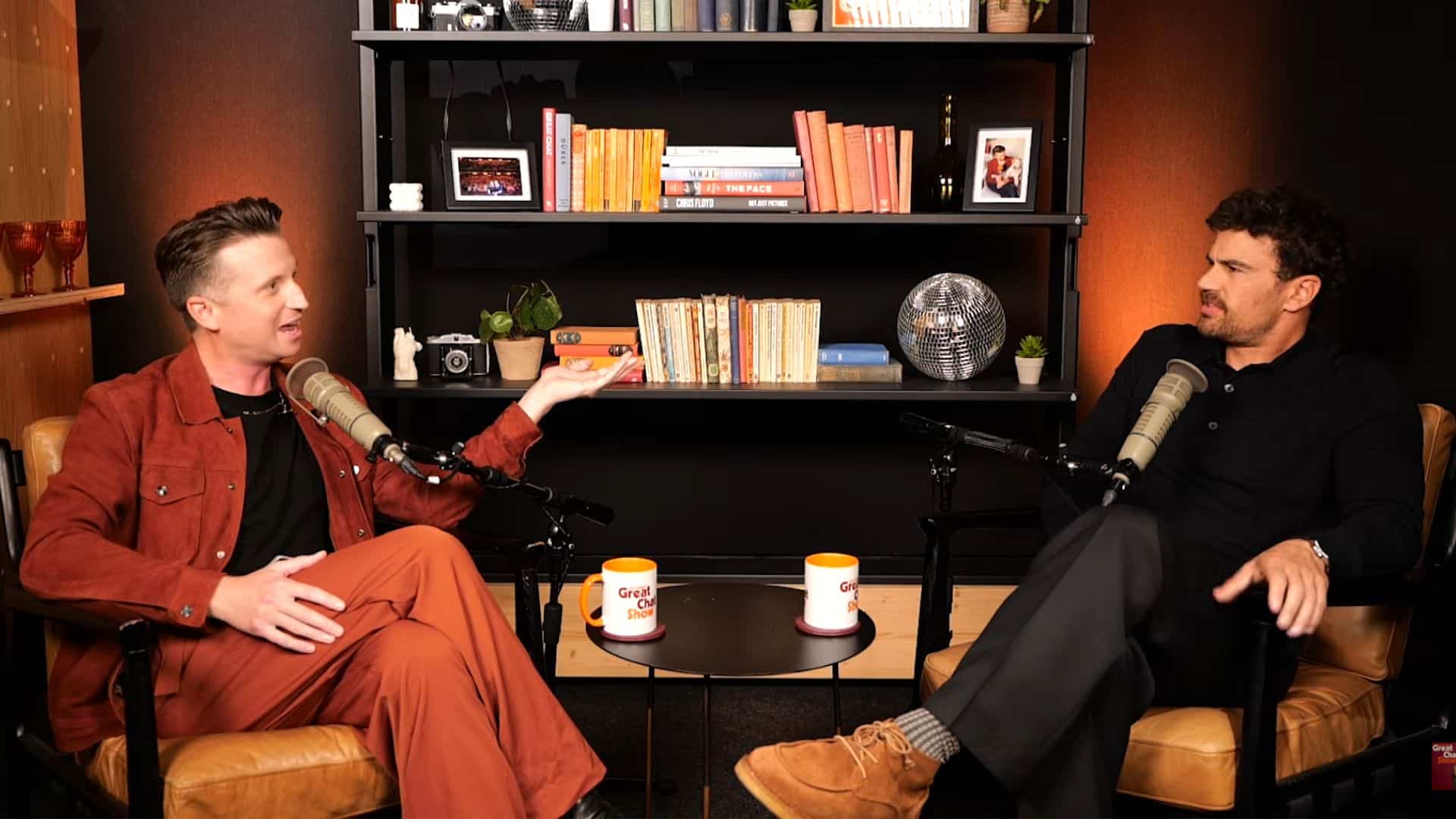
In a recent podcast interview on Josh Smith’s Great Chat Show, Theo James opened up about something many people can relate to: the pressure to figure out who you are while also trying to belong.
“Identity is a complex thing for anyone,” James said. He touched base on how being viewed through a certain lens growing up can make it harder to understand yourself, especially at a young age. For himself, that sense of uncertainty didn’t just disappear as he got older. He admitted that even into his mid-20s, he was still trying to figure out who he was and where he fit.
Looking back, James said he’s grateful he had time to experiment and “mess around a bit” before his career took off. He described that period as “super useful,” giving him space to grow without the added pressure of public expectations.
The conversation then shifted to a broader cultural issue that’s been gaining attention: the rise of the “manosphere.” When asked about it, James didn’t hesitate in his response.
“It’s terrifying.”
Both James and the host agreed that this online culture has become increasingly influential, especially among younger men. But what stood out in the discussion was a point that often gets overlooked. Toxic masculinity, they noted, doesn’t just harm others; it also has a negative impact on men themselves.
When asked how he sees that impact play out, James pointed to something deeper. “It’s a lot about deep-seated insecurity,” he said. That men who lean into misogynistic or overly performative are often struggling internally and not feeling secure in themselves.
He also connected those feelings to a larger societal shift. In our current world and climate, success is measured by wealth above all else. “Capitalism is the dominant force. You are celebrated, no matter what you are, if you are stinking rich,” he said.
That combination of insecurity and external pressure, he explained, creates a difficult environment for young men trying to define themselves. It’s something that feels even more personal now that he’s a parent.
James said that having a son adds another layer to his concerns. He described it as “terrifying,” noting how easily people can be drawn into these ideas. At the same time, he pointed out that qualities like empathy and emotional openness don’t always feel valued or easy to talk about.
According to James, that disconnect can lead to a deeper sense of emptiness over time. Chasing status or material success without a stronger sense of self can leave people feeling unfulfilled, even if they appear successful on the surface.
People online voiced their thoughts and opinions
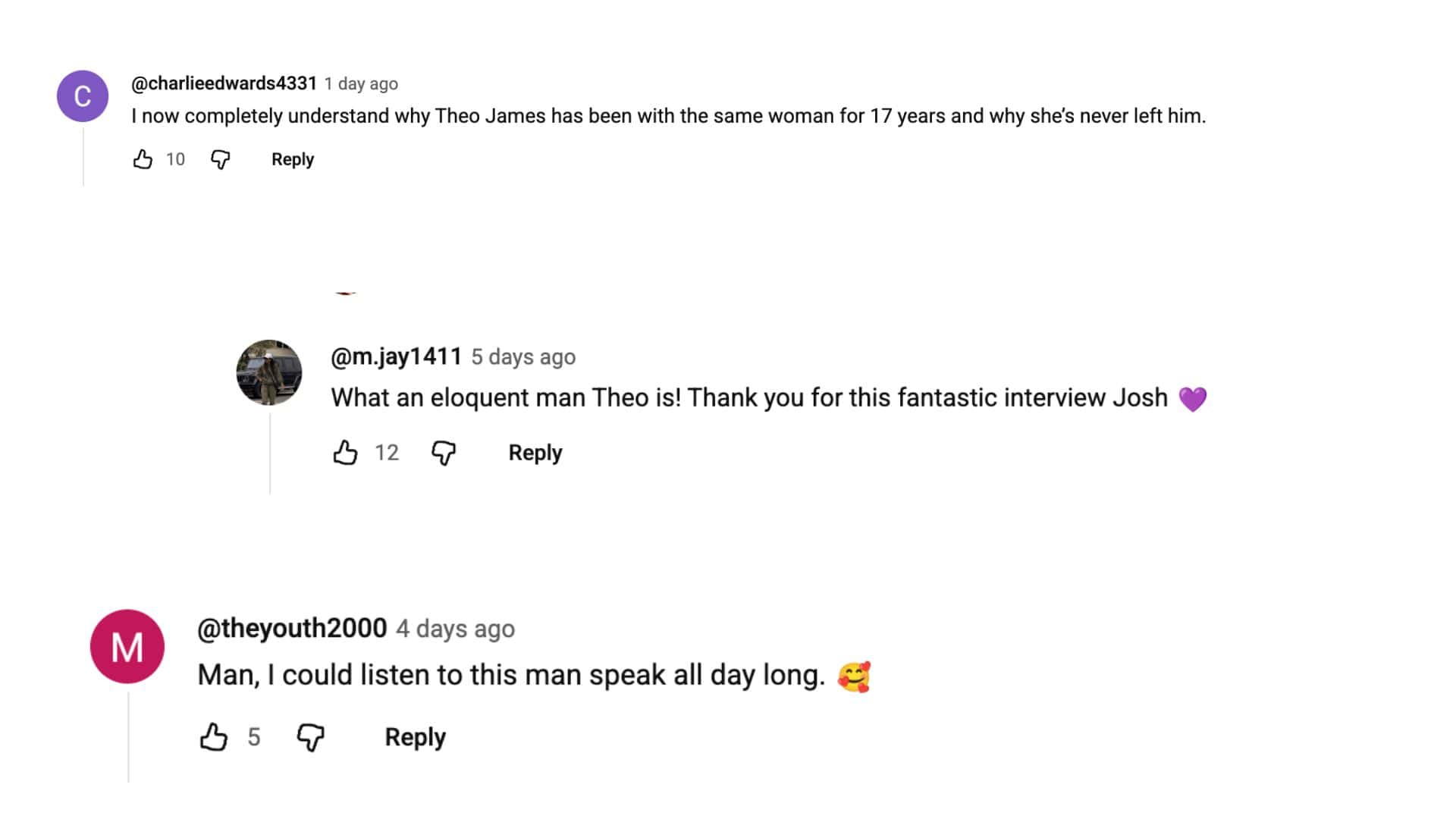
One person said, “I now completely understand why Theo James has been with the same woman for 17 years and why she’s never left him.”
Another actually disagreed, saying, “The manosphere is not taking over- most men do not subscribe to that ideology – also the term “toxic masculinity ” is not helpful.”
This person praised his comments, saying, “I could listen to this man talking for hours. He’s just so deep, so intuitive and so real, like he’s not someone who chooses to be disconnected and arrogant. Bless him and his brain. We need more men like him.”
Identity, masculinity, and the pressure to fit a certain mold
The interview goes far beyond a single interview or a single person’s experience. When Theo James speaks about the pressure to fit in as a young man, it reflects something far more widespread. The unspoken expectation that many men grow up navigating without ever fully questioning it. The need to conform, to meet certain standards of masculinity, to behave in ways that feel acceptable rather than authentic, often begins early and follows them into adulthood. It shapes decisions, relationships, and even how men see themselves, often without them realizing the extent of its influence.
The reactions from listeners highlight just how deeply this resonates. For many, it’s about recognition. It’s hearing something that feels familiar but is rarely put into words. That quiet pressure to blend in, to avoid standing out in the “wrong” way, can limit self-expression and create a disconnect between who someone is and who they feel they’re expected to be.
Looking at the bigger picture, this points to a cultural shift that’s still unfolding. More men are starting to question these norms, to examine where these expectations come from and whether they still serve them.
As online spaces and cultural expectations continue to shape how young men see success, confidence, and even emotion, conversations like this help push back on that narrative. It opens the door for a more honest discussion about insecurity and what it actually means to feel comfortable in your own identity.