
The Waymo incident in San Francisco wasn’t a glitch. It was a stress test we were not ready for
A power failure left hundreds of autonomous vehicles stranded and highlighted risks beyond traffic disruption.
For a brief moment, much of the media attention in San Francisco was not focused on the thousands of residents left without electricity but on a fleet of driverless cars staying motionless in the streets. Headlines and social posts quickly zeroed in on stranded Waymo vehicles, even though the root cause was a widespread power outage affecting thousands of homes and businesses across the city.
What actually happened

The incident began with a major power outage caused by a failure within the local electrical grid. Utility officials reported that a substation issue triggered a cascading disruption, leaving tens of thousands of households without electricity. Entire neighborhoods went dark, traffic lights shut off, and mobile connectivity became unreliable in some areas.
For residents, the outage meant traffic disruptions and closed businesses. Emergency services shifted to backup power, while city officials worked to stabilize the grid and restore service as quickly as possible. Power outages of this scale are not unheard of in dense urban areas, especially when aging infrastructure meets high demand. What made this one different was what happened next.
How Waymo vehicles were affected
Waymo, which operates in San Francisco, Phoenix, Los Angeles, and parts of Austin, is one of the largest robot taxi operators in the US. The company’s vehicles have already logged millions of autonomous miles and are loved by users for offering an easy, affordable alternative to more traditional taxi services like Uber. But the outage revealed a previously hidden dimension of risk.
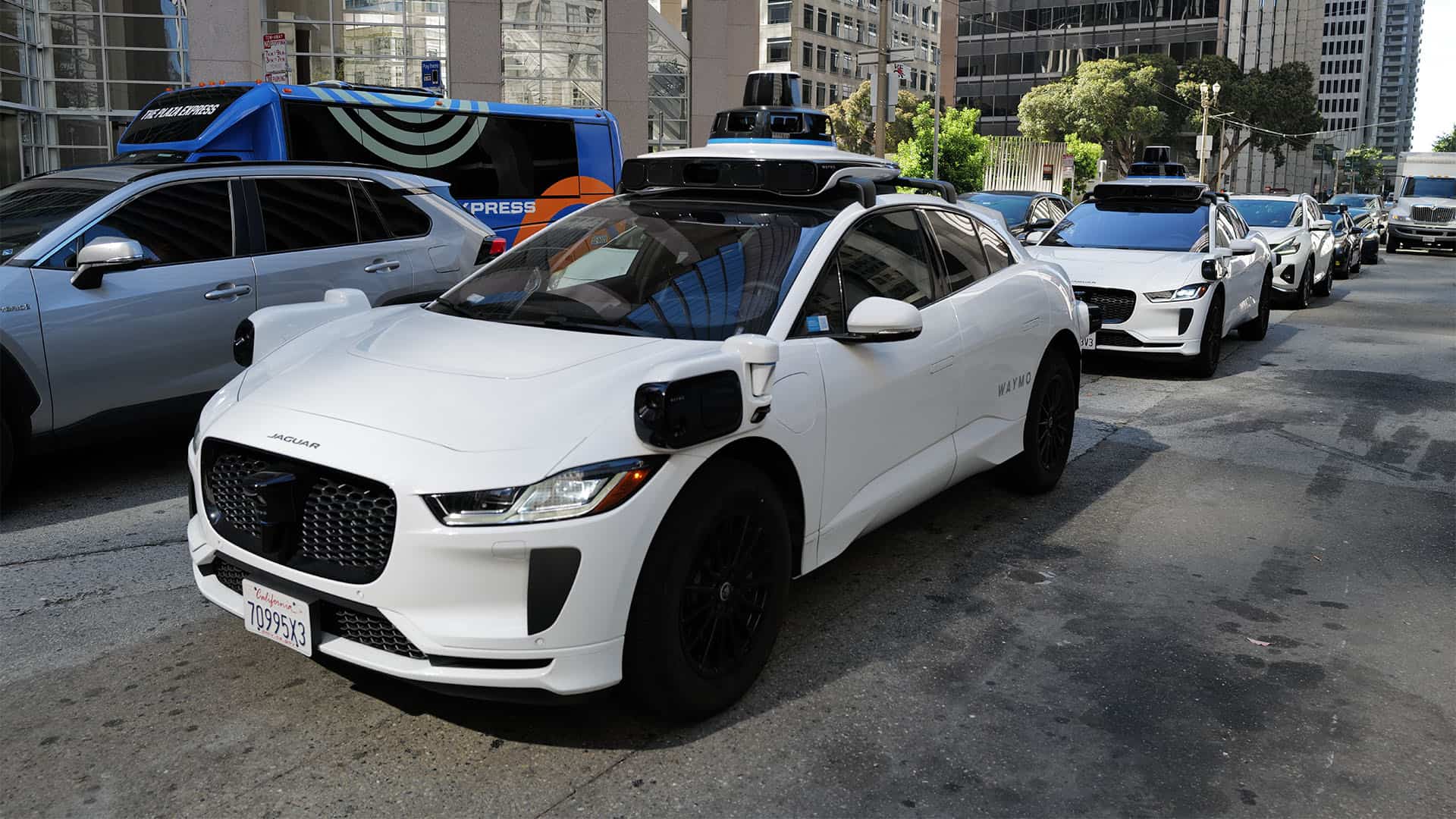
As the outage unfolded, Waymo’s autonomous vehicles began shutting down and stopping in traffic. Waymo operates around 1,000 vehicles in San Francisco, and even though not all cars were affected, hundreds were likely hit by the power shortage. Robotaxis either slowed, pulled over, or came to a complete stop. Some ended up parked at the curb. Others halted in traffic lanes or near intersections already made chaotic by dark traffic signals.
Waymo vehicles are not simply cars with sensors. They operate as part of a deeply connected ecosystem that includes cloud computing, real-time traffic data, and continuous communication with centralized systems. When connectivity fails, the vehicles switch to safe mode, which means they do not move.
The cars did not crash, and no injuries have been reported, but they became immobile obstacles at precisely the wrong time, adding friction to an already stressed traffic system.
To Waymo’s credit, the disruption was temporary, and the vehicles were behaving as designed. Once power was restored, Waymo restarted the vehicles, and they returned to normal operation, but the whole situation raised questions about how secure the infrastructure is in situations like this.
Why this is such a big deal
Waymo stated that its systems behaved as designed by prioritizing safety over continued movement. From a technical standpoint, that is true. From a practical standpoint, the incident raised larger questions that go beyond a single outage.
The real takeaway is not that Waymo stopped. It is that the system worked exactly as intended and still caused widespread disruption.When hundreds of autonomous vehicles respond to the same failure in the same way, they create a new category of risk. What looks like a reasonable decision for one vehicle becomes a serious problem when multiplied across an entire fleet.

Human drivers are imperfect but adaptable. They can make judgment calls, communicate with gestures or eye contact, and improvise when infrastructure fails. Autonomous fleets, by contrast, tend to react uniformly. That consistency is usually a strength, but during a crisis, it can become a weakness.
A single infrastructure failure took dozens of vehicles offline simultaneously. Imagine that, in a few years’ time, when robot taxis are likely to take over every taxi ride and self-driving vehicles become a daily part of life for thousands, a distribution like this could become a much bigger problem.
Power outages are accidental, and there is a solution for them. Today’s modern battery technology offers grid operators a solution for localized backup energy storage in situations like this. For example, old EV batteries are ideal for grid energy storage and are already in use at solar and wind energy farms. With the adoption of EVs in a few years’ time, companies will have access to thousands of old but still fully functional batteries that can serve as backup solutions in situations like this.
Resilience

This story is not just about robotaxis. It is about how deeply technology is built into daily life. Smart grids, automated logistics, algorithm-driven traffic control, and software-managed public services all promise efficiency, but they also increase dependency.
The Waymo outage is a small preview of a much larger challenge: resilience. Technology does not need to fail to cause disruption. It only needs to fail to connect. As cities automate more systems, failures become less localized and more systemic, and the margin for error narrows. This is an area where cities and companies need to improve to minimize the disruption.
But there is another big problem. Cyberattacks.
Cyberattacks
As computer-driven systems take over more everyday functions, the risk profile changes dramatically. Autonomous vehicles are not isolated, and they are networked devices. Their connectivity enables convenience and efficiency, but it also introduces vulnerability.
If a localized power outage can immobilize part of a city, what could a coordinated cyberattack do? A single successful intrusion targeting communications, cloud services, or power infrastructure could potentially freeze traffic, or even worse.
This is no longer science fiction. Highly connected systems and many modern vehicles are high-value targets. Modern cars collect and record much data about their drivers, which in the wrong hands can be dangerous. But it is not just the driver’s data. Imagine that someone could take control of thousands of vehicles and their passengers. The consequences can be disastrous.
The uncomfortable reality
Automation is coming, and in many ways, it improves safety and efficiency tremendously. But the assumption that computer systems will always make cities more reliable deserves closer scrutiny. The more centralized and automated systems become, the more important redundancy, decentralization, and human fallback options will be.
The sight of empty cars blocking streets during a power outage was more than a technical hiccup. It was a reminder that progress brings new vulnerabilities along with its benefits.
As cities continue to embrace software-driven infrastructure, the real question is no longer whether the technology works. It is whether society is prepared for the moments when it doesn’t.