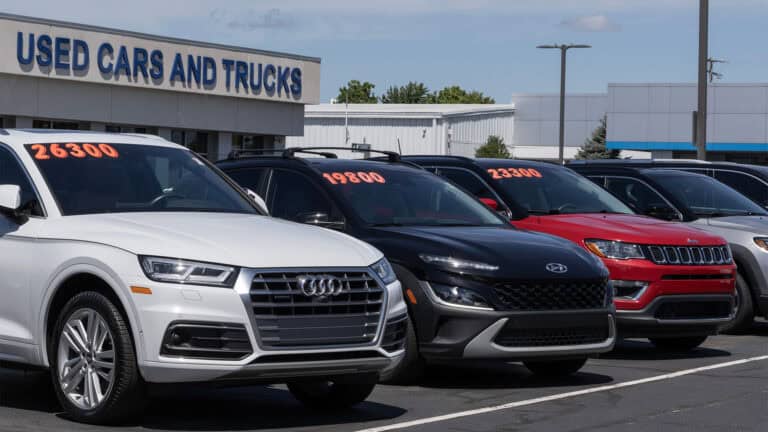

He’s fed up with his neighbors parking in front of his home — and the internet quickly took sides
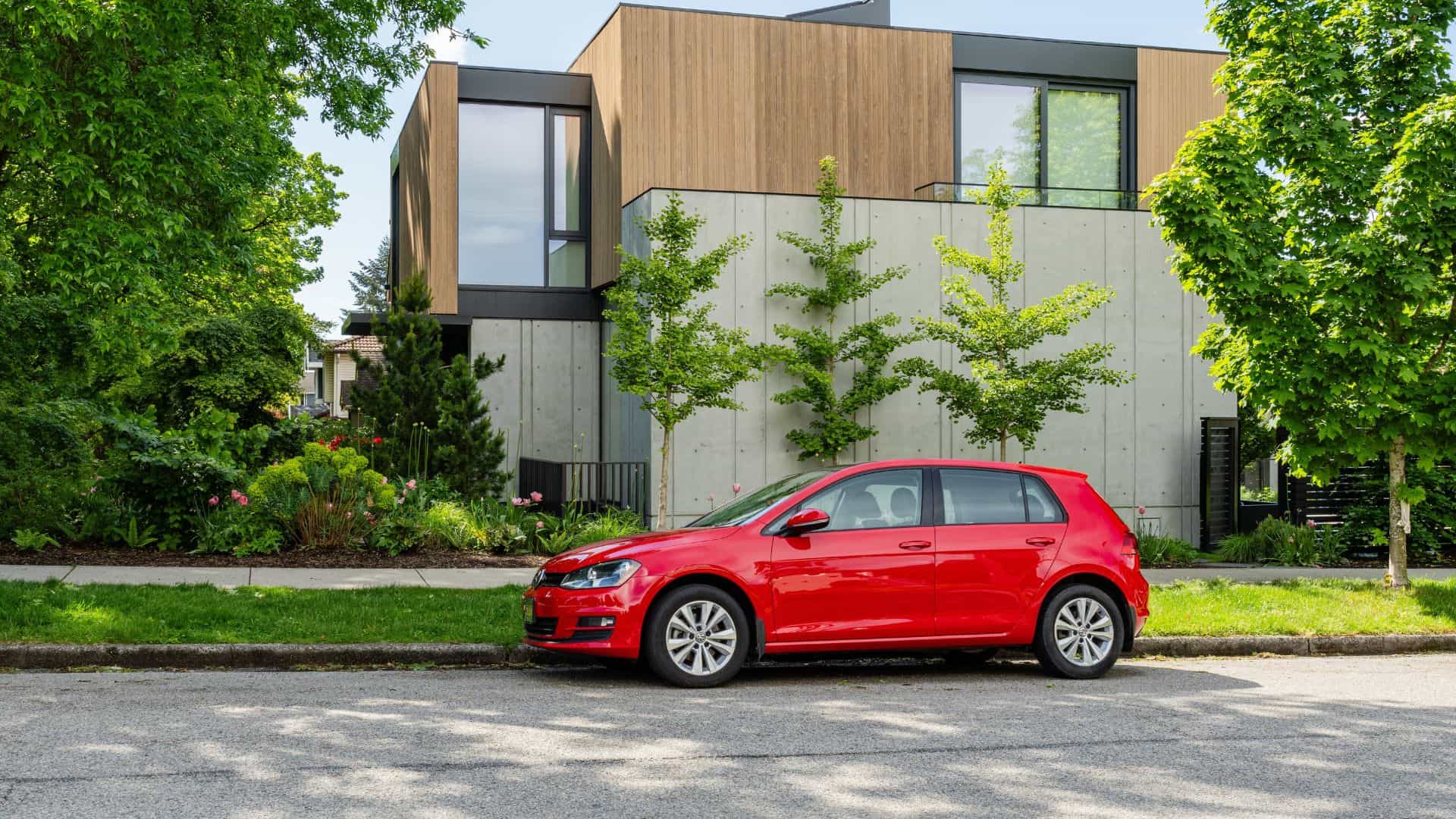
A simple parking habit on a quiet street set off a debate that spread far beyond the neighborhood.
Parking disputes are common in residential areas, and many of these issues can escalate over time if left unresolved. A recent online post outlined one resident’s daily frustration with a neighbor’s parking routine and sparked a discussion about street etiquette, legality, and expectations in shared spaces.
The story
The original poster wrote on Reddit that their neighbor consistently leaves an open space in front of their own home while parking in front of the poster’s property instead. They do it often, which is hard to ignore. The poster said they often hear the vehicle arrive, but reach the door too late to speak with the driver. They considered leaving a note, but worried about starting a drama on their street.
They turned to the community and asked whether others had experienced similar issues.
The reactions
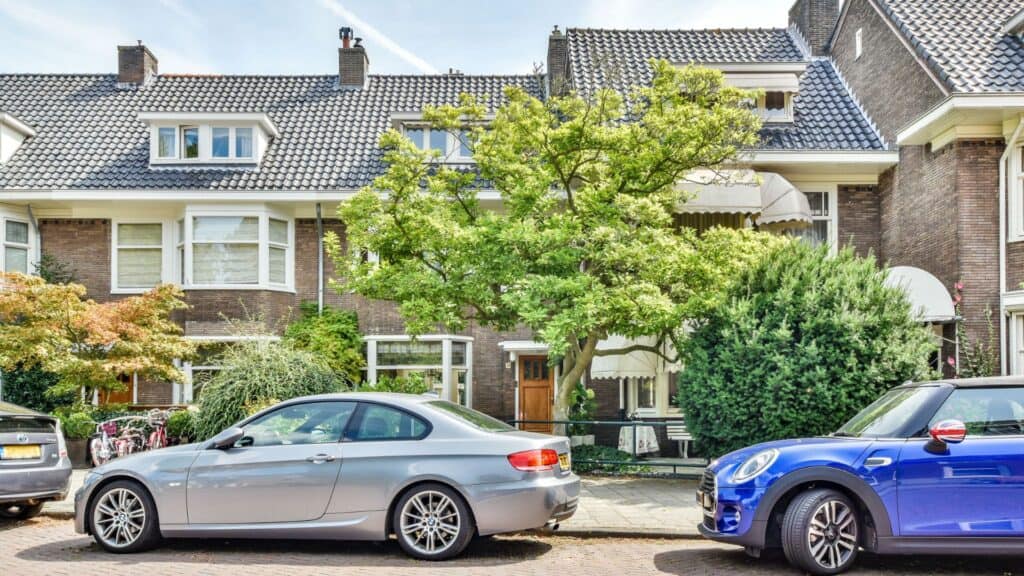
The post received many responses from people familiar with similar disputes. Some described long-running problems with neighbors who treat the curbside space as if it were assigned.
One user shared their own similar experience, “My neighbors will park in front of my house, but retaliate and harass me if I park in front of theirs. If we’re paying the same taxes, then how come some neighbors act entitled as if the street parking belongs to them but not the other neighbors?”
Another user shared how they handled the same issue: “Years ago, when this happened to me, I parked in front of theirs for a while. (Like weeks). They stopped. My vehicle was MUCH older and uglier than theirs.”
Disagreements over street parking can escalate when one household assumes priority over a shared public area. In several cities, this type of conflict becomes more common on streets where parking is limited, or homes rely heavily on curb access rather than driveways.
Cities do not police where someone chooses to park unless a posted restriction applies, so many neighborhoods resolve these habits on their own. Informal adjustments, such as parking in front of their house as a form of retaliation, are common when families face pressure in the neighborhood.
Several replies focused on the legal reality of curbside parking. One user wrote:
“Just park in front of their house. Unless there are laws in your area stating otherwise, street parking is generally open to all. My neighbors and I try to respect each other’s street parking options, but at the end of the day, it is what it is.”
Municipal departments in many U.S. cities treat curb space the same way; they regulate it through signage, meters, and permit zones, but the default is open access. Residential blocks often have no special designation, meaning anyone with a registered vehicle may park there.
Others emphasized the rules of street parking. One shared, “If you want the spot in front of your house, come home earlier. Street parking is first-come, first-served.” Streets are open to all drivers unless otherwise mentioned. Anyone can park in front of the property, as long as their vehicle doesn’t block the driveway or cause any other issue that could break the law.
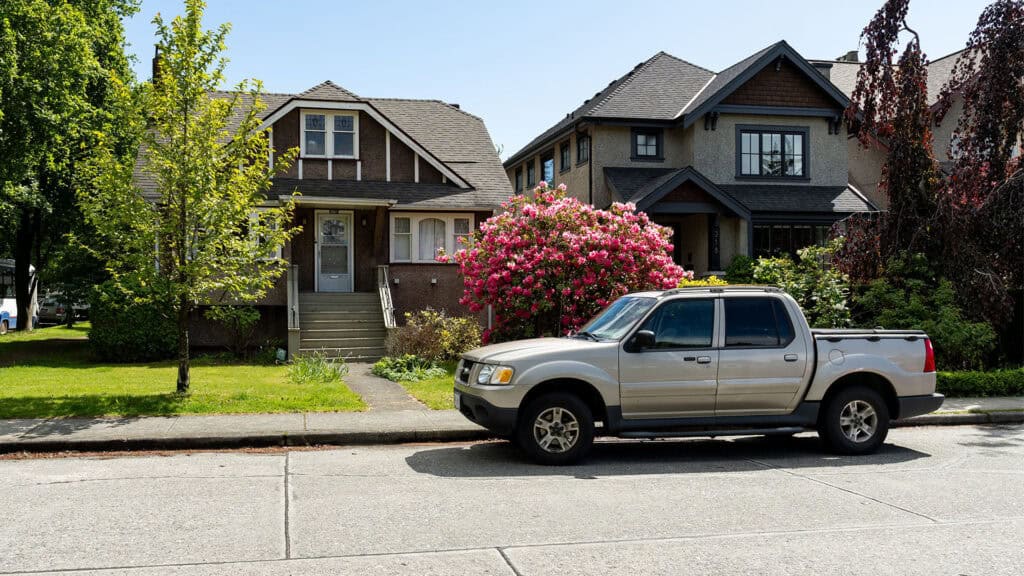
Some respondents questioned why residents expect control over public streets. One Redditor commented, “Never understood this need to ‘own’ the public street outside your house.” Another responded, “Do you own the road? In my area, the city owns the roads in front of our houses, so we cannot dictate who parks there.”
Since the curb is part of the public way, residents cannot modify it. They must obtain permits to make changes, such as placing objects in the parking lane or restricting access. Many newer developments have private roads with different rules, but most U.S. suburban and urban neighborhoods rely entirely on public street systems. This creates a consistent standard that applies to all vehicles regardless of where the driver lives.
Another user said, “Unless they’re blocking your driveway, that’s not illegal.”
Driveway obstruction is one of the few issues cities respond to quickly because it affects property access and emergency clearance. Most municipal codes include specific language prohibiting vehicles from obstructing driveways, fire hydrants, and intersections. Beyond those limited cases, curbside placement is generally not restricted.
A European user asked about North American attitudes toward cars parked outside homes: “Can you enlighten an ignorant European: why do Americans (or maybe even Canadians) dislike ‘cars in front of their houses”? Do they mean in front of their driveways, and they can’t get out? Or do they mean just in front of their houses? I see people complaining about it often. Am I misunderstanding something, or is it a cultural thing?”
Another user responded with an explanation about expectations in some neighborhoods: “They feel entitled because they own or rent the property, that the area of the public street is theirs as well. And it should only be used by them or a visitor for them. Some say neighborly etiquette, some just don’t care.”
Street layouts differ significantly between Europe and North America. Many European residential areas use narrower streets, shared courtyards, and designated parking zones away from homes, reducing the expectation of parking directly outside one’s door, which is why it’s unusual for some people to witness disputes over street parking in the United States, which is not common in other countries.
Street parking rules in the United States
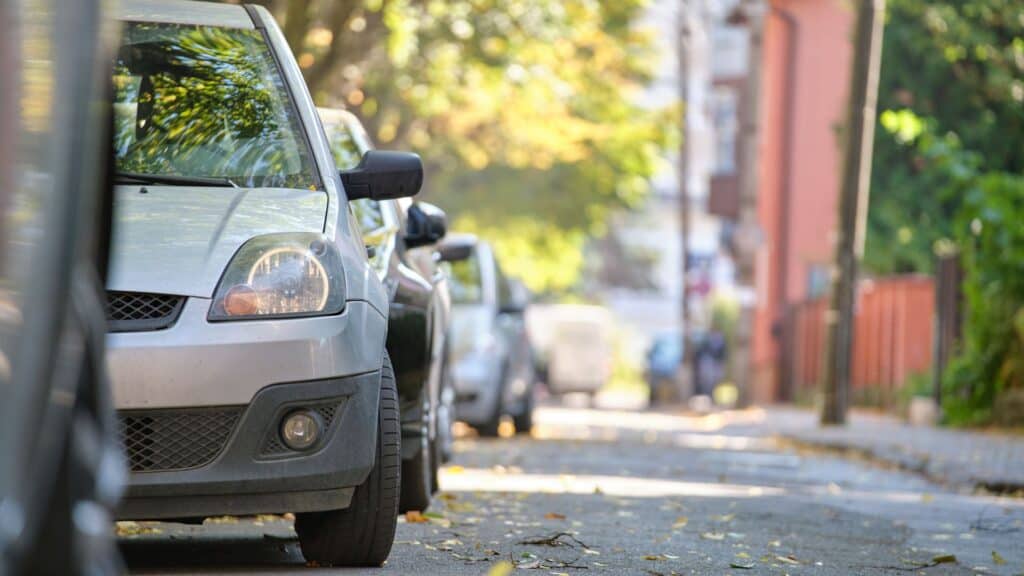
Residential street parking in the United States is handled by local governments, and the rules vary by city. The basic rules are similar across many municipalities: street parking is public, and drivers must follow posted signs or city regulations that apply to specific neighborhoods.
Some cities manage overnight parking through permit systems. Milwaukee, for example, requires an overnight permit on most residential streets and alternates which side of the street may be used depending on the date. Other cities focus on how long a vehicle may remain in the same spot. For example, in Salt Lake City, vehicles cannot stay parked on a public street for more than 48 hours.
Cities also set restrictions near hydrants, intersections, bus stops, and loading areas, and many enforce seasonal or weather-related rules. Because each municipality creates its own guidelines, residents are expected to follow the posted signage or the regulations listed by their city’s parking or public works department.
The takeaway
Parking rules in residential neighborhoods depend on city policy, but the discussion showed how strongly personal expectations shape everyday interactions. Public streets are shared space, yet many people still develop informal habits about where they believe cars should be parked.
In the end, everyone is sharing the same street. Neighbors should choose to handle small issues like this while keeping the legalities in mind.