
Reddit can’t believe this Tesla was written off after a minor scrape—here’s why it happened

When a car that looks perfectly drivable gets written off, the real damage is done by a system most drivers never knew existed.
A post on r/TeslaCollision caught fire this week after a Tesla owner described a scenario that left him and thousands of Reddit commenters completely floored. The original poster explained that someone side-swiped his 2021 Tesla Model Y Performance in traffic. He was not at fault. The other driver’s insurance accepted liability, sent the car in for repairs, and called him shortly after with news he still can’t believe: his vehicle had been declared a total loss. The settlement offer? Seventeen thousand dollars.
Photos of the car show side panel scuffs, a scraped door, and surface bodywork damage. Nothing that looks like a write-off. Nothing that looks like the end of a car. Yet somehow, the repair estimate came back at $17,000, and that number is the entire point of this story.
The community response was immediate. “Definitely not totaled,” wrote one commenter. Another called it a buff job. A top reply questioned, “It should be under $2000 dollars at a local body shop to do everything, so not sure why? ” And based on the first look at the images, we assume the same, it should not be more than some paint job.
The OP was active in the comment section and later shared that “was quoted $7,000 at the start because they said front fender got scuffed, so it needed to be replaced, and door needed to be replaced, along with side mirror, and they sent the updated repair costs, and it’s $17,000 for repair costs. Apparently, the steering column also needed replacement?? I feel like this is a joke.” The steering column is new info, and based on the images, it’s hard to believe the steering had issues unless the car hit something we can’t see in the image shared in the post.
What most commenters missed, though, is that the shop may not have been acting in bad faith at all. Tesla-certified repair facilities are required to follow Tesla’s own repair procedures, which mandate replacing entire assemblies rather than repairing individual components. A door with a crease is not straightened and repainted; instead, Tesla’s protocol requires replacing the door. A scuffed fender means a new fender. That is not fraud. That is how Tesla has designed its repair ecosystem, and it is a feature of owning the car that most buyers never think about until something goes wrong.
How a minor scrape becomes a written-off car
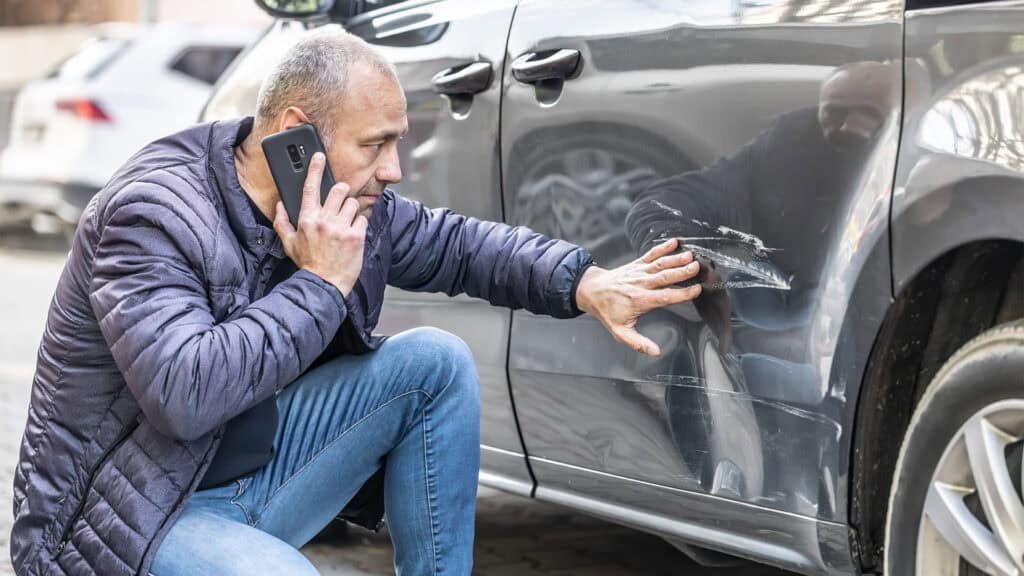
Most drivers assume a total loss means a destroyed vehicle, but the reality is more clinical. Insurance companies declare a total loss when the estimated repair cost exceeds a set percentage of the car’s actual cash value before the accident. This is typically between 70% and 80%, though thresholds vary by state. Tesla vehicles sit at an uncomfortable intersection: they depreciate like any other car, but their repair costs stay high regardless of age or mileage. A 2021 Model Y with 65,000 miles has lost a meaningful chunk of its original value. Its repair bill, governed by Tesla’s assembly-replacement protocols, has not dropped with it. That’s where write-offs happen on cars that look fine.
Then the owner shared another interesting detail about the case: “Unfortunately, they’re telling me the party at fault only had coverage for $25,000, and they discount the rental they provided, and they will pay the shop for disassembly fees with those $25,000, which would only leave me with about $17,000.”
The at-fault driver in this case carried a $25,000 policy limit, already tight for a Tesla claim. By the time Progressive deducted rental costs and shop disassembly fees from that cap, the owner was left with $17,000. The owner also noted that Florida’s state minimum liability coverage is just $10,000. That is not a footnote.
For anyone driving a vehicle worth more than that, it means one distracted driver with minimum coverage can total your car and leave you with almost nothing to show for it. The protection against this is uninsured and underinsured motorist coverage on your own policy, a relatively inexpensive add-on that pays out the difference when the at-fault driver’s limits fall short. Most people skip it, but this is exactly the situation it exists for.
What a driver can actually do
The single most important move in this situation and the one the owner in this post took too late is to file immediately through your own insurer rather than dealing directly with the at-fault party’s insurance company. When you file through your own collision or uninsured motorist coverage, your insurer becomes your legal advocate. They handle the fight with the other carrier to recover costs and are contractually obligated to make you whole up to your policy limits.
According to the comments, the owner spent hours on the phone with Progressive, getting nowhere. But that entire conversation should never have happened, and his insurer should have been in the room from the start.
On the total loss valuation itself, drivers have more leverage than they realize. Never accept a write-off declaration without challenging the insurer’s actual cash value figure. Most policies include a formal appraisal clause: both sides hire an independent appraiser, and if they cannot agree on the car’s pre-accident value, a neutral umpire makes the final call. The process typically costs a few hundred dollars and can recover thousands if the insurer’s ACV estimate was low. Gather comparable listings for your make, model, year, and mileage in your area, as these are your strongest arguments.
Finally, if the total loss stands, know that buying the salvage title back from the insurer is a real option. The insurer takes the car, pays out the settlement, and, in most states, will sell the salvage back to the original owner at a discount. The car gets a salvage title, which affects resale value. This is critical for Tesla owners because it triggers a supercharger access restriction until a Tesla service center inspects and clears the high-voltage system.
It is not the prettiest outcome, but for a car with a solid drivetrain and surface damage, it often beats starting over. Knowing that the option exists before you sign anything is half the battle.