
Jim Parsons opens up about his Broadway return and the personal lessons of playing female characters

A Broadway return can mean revisiting something familiar or stepping into something completely unexpected. This time around, it’s a little bit of both.
For Jim Parsons, stepping back onto the stage isn’t just about taking on another role. Just a year after starring in the critically acclaimed Our Town, Parsons has traded one stage for another—and one tone for its complete opposite—in Titanique, an over-the-top musical parody that retells Titanic through the lens of Celine Dion.
In a recent appearance on Late Night with Seth Meyers, Parsons shared what makes this role so different from his last Broadway turn, and how revisiting female roles decades after first exploring them has shaped his understanding of himself as an actor and as a person.
The interview
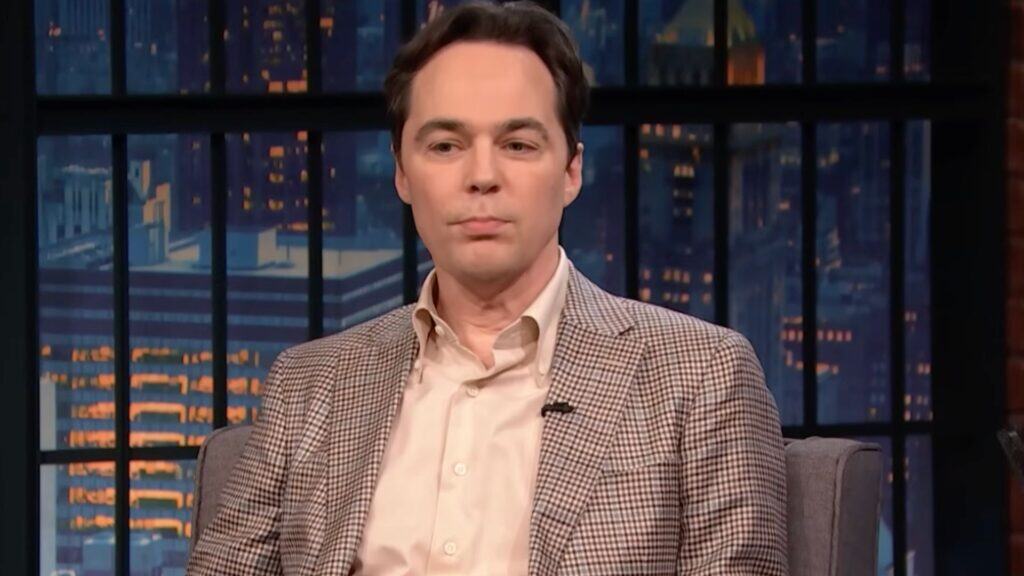
Jim Parsons recently stopped by Late Night with Seth Meyers to talk about his return to the stage and how different this experience feels compared to his last Broadway run.
He was on Broadway just a year ago in Our Town, and now he’s back in Titanique. Titanique is an over-the-top parody that retells the story of Titanic through the lens of Celine Dion, with the twist that she claims she was secretly on the ship all along. As Parsons put it, “They’re not similar except that they’re both on stage.” He described Our Town as one of the best American plays ever written, adding that Titanique might be as well, just in a completely different way.
The show blends scenes inspired by the movie with Dion’s biggest hits, turning the tragic love story into a fast-paced comedy, packed with music and plenty of fourth-wall-breaking humor. It doesn’t take itself seriously, leaning into absurdity and nostalgia while celebrating both the film and Dion’s iconic music.
Parsons said rehearsals have been filled with hilarious moments, noting, “It’s just been heaven to be there.” Still, he joked that audiences shouldn’t expect powerhouse vocals from him, saying, “I’m not one of the people singing where you’re going to get chills.”
That led to the discussion of his role. Parsons shared that he’s playing Rose’s mother, Ruth, a casting choice that drew laughs and cheers from the audience. He said he didn’t hesitate when the offer came in: “I got an email where they offered me the role of Ruth’s mother. I was like, tell them yes, before I even read it.”
The role also connects to something more personal. Parsons explained that when he was in his 20s, he was often offered female roles in plays, experiences that helped shape his understanding of himself as an actor.
“I wasn’t out at the time. And only through playing those roles did I realize…. what I could bring as an actor when I wasn’t trying to hide the fact that I was gay, when I wasn’t afraid of being looked at as effeminate or again, just gay or afraid I’ll never get to play straight if they know or whatever like that.”
Now, about 30 years later, he said he’s been curious to revisit that side of himself. Reflecting on the experience, he joked that he wanted to see what the little lady inside him had been doing, adding, “We’re slowly finding out.”
The reactions
People love seeing actors talk about Broadway experiences, and this time was no different.
One person said, “I saw TITANIQUE off-Broadway a few years ago and it was the hardest I’d laughed at live theater in years. Full belly laughs! Break legs to Jim and the rest of the cast and crew on your Broadway transfer!”
Another wrote, “Rose’s mother! What a hoot! I wish I could see Jim on stage!” This person is a big fan, saying, “I could listen to Jim talk about anything all the time. His wit, opinion, personal life anecdotes, and inflections are fascinating.”
Another added, “Oh man, I have to see this play.”

Why this matters
Jim Parsons stepping back onto Broadway isn’t just another career move. It reflects a broader shift in how actors approach identity, casting, and creative freedom.
For years, many performers felt pressure to fit into specific boxes, especially regarding how they were perceived onstage. Parsons’ comments highlight how much that mindset has evolved. Playing a female role is no longer something that needs explanation or justification. Instead, it can be playful and rooted in the kind of storytelling audiences are embracing right now.
For Parsons, the role feels personal, but it also reflects a larger industry trend. Broadway is making more room for actors to show their full potential, and audiences seem more than ready for it.