
Are Carmakers Quietly Bringing Back Buttons?
Over the last decade, the lines between mobile phones and cars have begun to blur. As our lives became more connected, screens inside vehicles started to expand. For a while, it seemed like an arms race: who could pack the largest, slickest, most tablet-like display into a dashboard? Climate controls, radio dials, and even hazard lights quietly disappeared behind glossy glass panels, and touchscreens became the new standard.
But now, something is happening.
After years of pushing digital everything, some of the car manufacturers are reversing course. They’re bringing back real, tactile, physical buttons.. The shift is part of a growing recognition that perhaps we have gone too far. Safety, usability, and driver satisfaction are all playing a role in this unexpected comeback. And it’s not just a passing fad; it may be the beginning of a much-needed correction in automotive design.

What’s the Problem With Touchscreens?
Not long ago, adjusting the air conditioning or changing the radio station in your car was a simple, almost instinctive action. You didn’t have to think about it. Your hand reached for a familiar knob or button, and your eyes stayed focused on the road. But with the rise of oversized touchscreens and minimalistic interiors, that ease has been replaced by something far more distracting. Basic functions, such as temperature control, fan speed, and even hazard lights, are now buried in digital menus. You no longer feel your way around the dashboard; you have to navigate it like an app.
I’m currently test-driving a Polestar 4, and the lack of physical controls is hard to ignore. Sure, you can access a few settings through the steering wheel, but something as simple as directing cabin airflow requires tapping through layers of on-screen options. The graphics are beautiful, and the interface is technically impressive, but trying to do this at 70 miles per hour feels terrible. It’s not just annoying, it’s dangerous. No surprise, the car warns me every time to have a coffee break.
This type of interface-induced distraction has a name: distracted driving, and it’s quickly becoming one of the most significant threats on American roads. Texting while driving has already proven to be deadlier than most people think. And touchscreens, when poorly implemented, can have a similar effect. Even Motor1 flagged this issue in their review of the new Volvo EX30, pointing out how the screen-heavy design makes even routine driving tasks more complicated than they need to be.
What We See On The Market

Automakers are slowly starting to acknowledge what many drivers have been saying for years: touchscreens aren’t ideal for everything. While they’re great for navigation or smartphone mirroring, they fall short when it comes to quick, repetitive tasks that require minimal distraction. Adjusting the temperature, changing the radio, these are functions that should be immediate, intuitive, and tactile. That’s why we’re beginning to see more buttons. Some automakers have begun to realize that certain functions work better with a physical button or knob, providing both comfort and safety benefits.
The alternative is voice control, which sounds promising on paper but often fails in practice. And let’s be honest: do you really want to announce to your entire family, “Set seat level to 3 and increase lumbar support,” like you’re talking to a robot butler? Most of us would rather discreetly press a button and move on. While no brand actively advertising that buttons are making a comeback, several new vehicles point to a smarter, more balanced direction.
New regulations in Europe
Europe is waking up to the real-world dangers of touchscreen overload. Starting in 2026, Euro NCAP (the European agency responsible for crash and safety testing) will require that five essential functions in every vehicle be operated through physical controls to qualify for a five-star safety rating. That includes indicators, hazard warning lights, windshield wipers, the horn, and emergency (SOS) systems. These are features drivers might need in a split second, and hiding them behind layers of digital menus simply isn’t safe. The new guidelines reflect a growing recognition that while screens may look sleek, physical buttons are often faster, safer, and more reliable.
Until these regulations arrive in the US, the following four models offer a great combination of touchscreens with thoughtfully placed physical controls. Hopefully, more manufacturers will follow their lead before drivers fully lose patience… or focus.
Hyundai Ioniq 9

Hyundai’s upcoming Ioniq 9 proves that a futuristic EV doesn’t have to sacrifice practicality. While the SUV features a large central touchscreen, it wisely keeps physical controls for essential functions. Volume, climate temperature, and fan speed are all operated via traditional knobs and switches. It’s a small but significant win for drivers who want tech without losing touch with the basics.
Subaru Outback (2026)
The 2026 Subaru Outback continues the brand’s reputation for no-nonsense design. While the infotainment screen handles navigation and media, Subaru has maintained its commitment to keeping physical buttons for climate control, heated seats, and drive mode settings. These functions are located where you would expect them and are easy to use, even with gloves on.
Kia EV4 (2026)

Kia’s EV4 blends sleek, modern design with user-friendly touches, including a welcome return of hard buttons. Beneath the floating display, you’ll find actual physical controls for volume and key climate settings, such as temperature and fan speed. By placing the most frequently used functions outside the screen, Kia strikes a smart balance between high-tech and hands-on convenience.
Ford Maverick (2025)
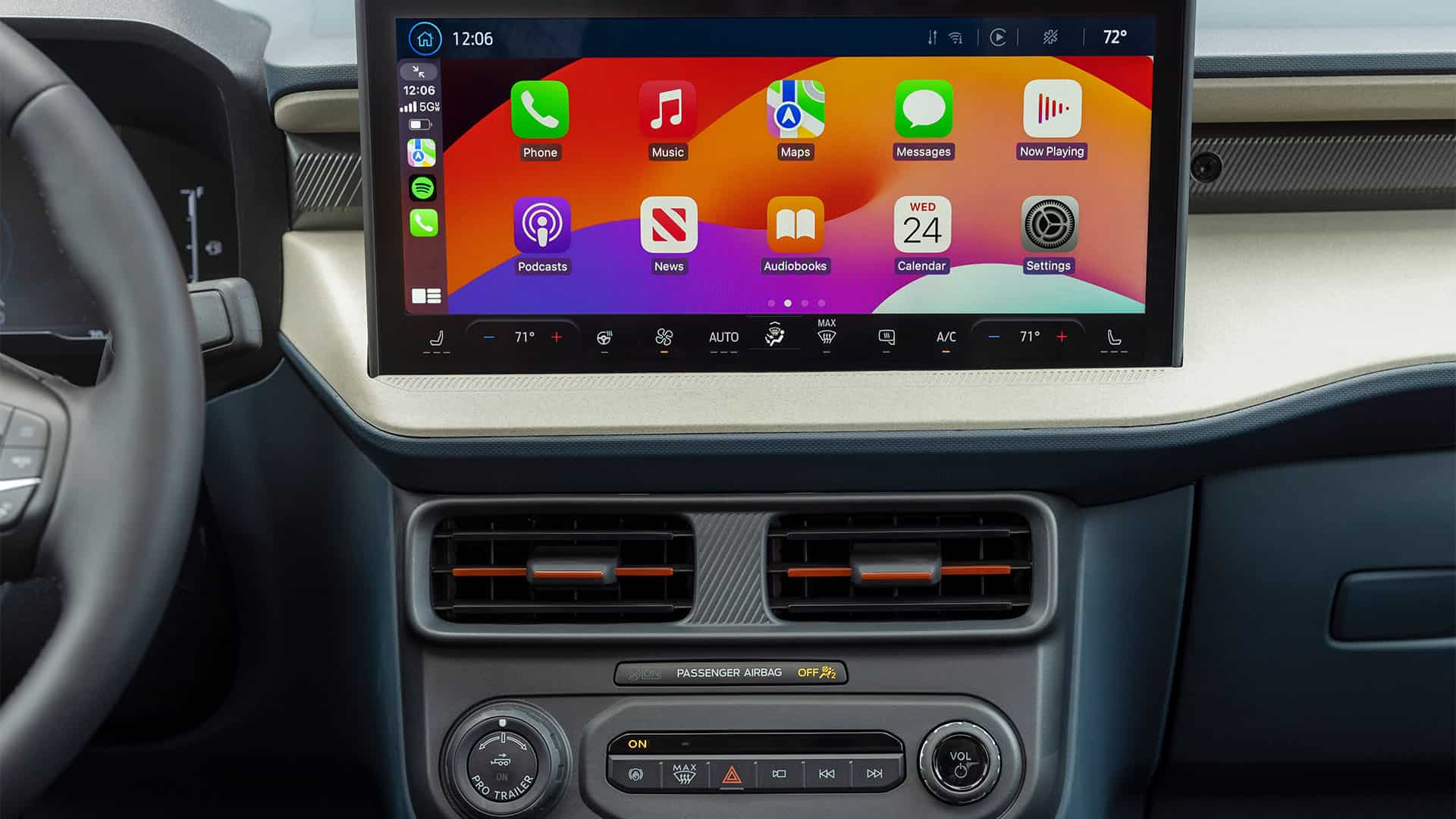
Ford’s Maverick may be compact and affordable, but it’s refreshingly straightforward where it matters. The 2025 model retains good old-fashioned knobs and buttons for the audio system and AC controls. You won’t need to scroll or swipe to adjust the air conditioning or tune the radio, just reach out and twist. It’s proof that modern trucks don’t need to bury everything behind glass to feel current.