
The man who made $120,000 at Tesla, lost it all in one morning, and now lives free full-time in a Model X
A genuinely impressive nomad lifestyle in a car after two years in, the real picture is more honest than it sounds.
Nico Marillo was driving to work when his phone lit up with an email notifying him that his work account had been deactivated. He texted his boss, who told him everyone got the same message and to just come in. He drove an hour and a half to the Tesla factory in Fremont, California, slid his badge at the gate, and watched it turn red. A security guard pulled him aside and told him he had been laid off after five years of work.
That was April 2024. What followed were months of applying for every job he could find, including Target cashier positions he could not get. He eventually landed a retail associate job at GNC, a health supplement store. He had to sell the $1.2 million house his family had bought together because, without the Tesla salary, nobody could afford the mortgage. He moved into his Model Y full-time while working at GNC, figured out the car-life basics the hard way, and by August 2024 had built a YouTube channel around the whole journey, to the point where it paid better than retail. Today, Nico, 31, lives full-time in a converted Tesla Model X and documents the whole thing on YouTube. What he built inside that car is worth understanding, but so is what daily life in it actually looks like.
How he converted the car
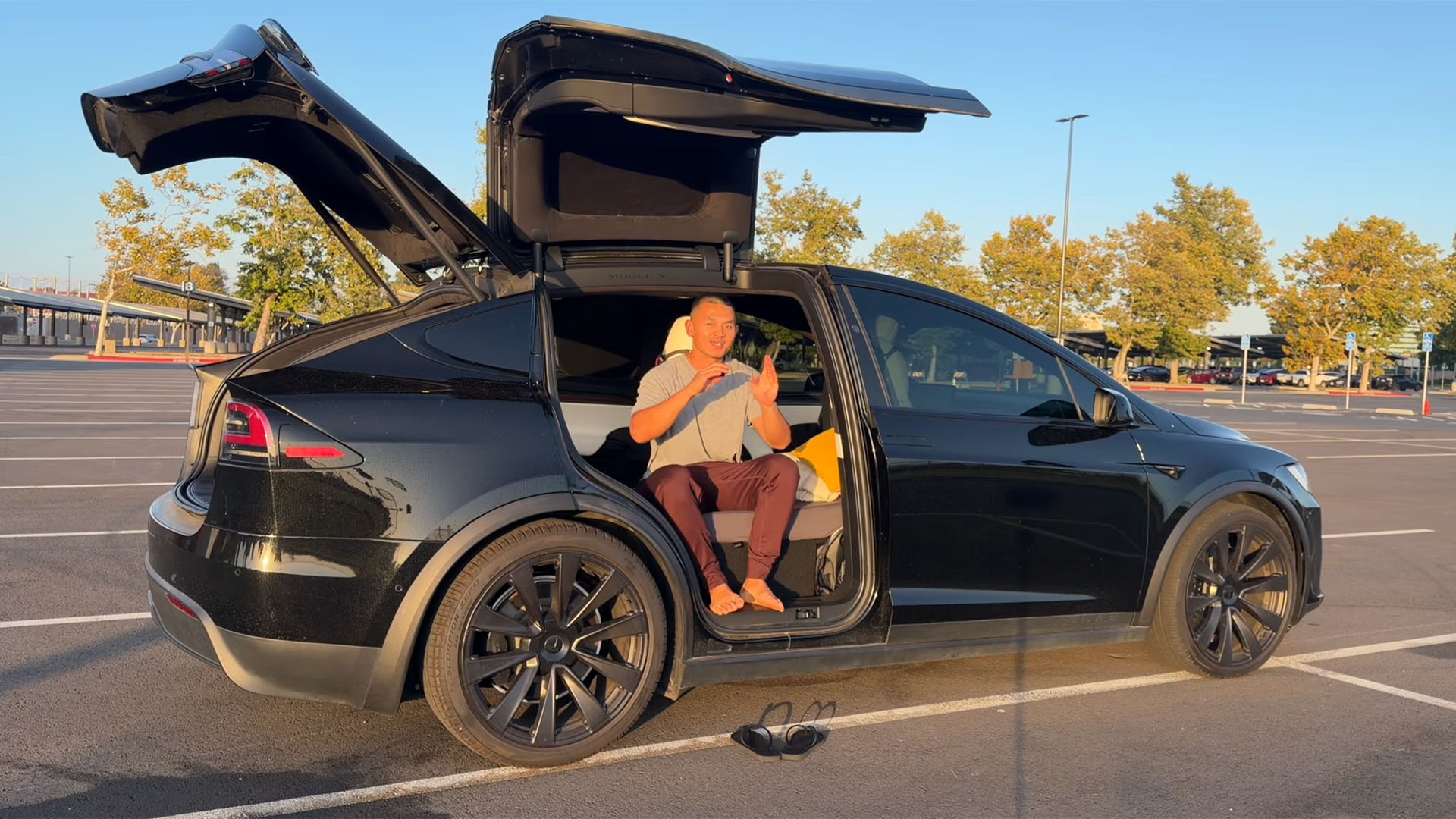
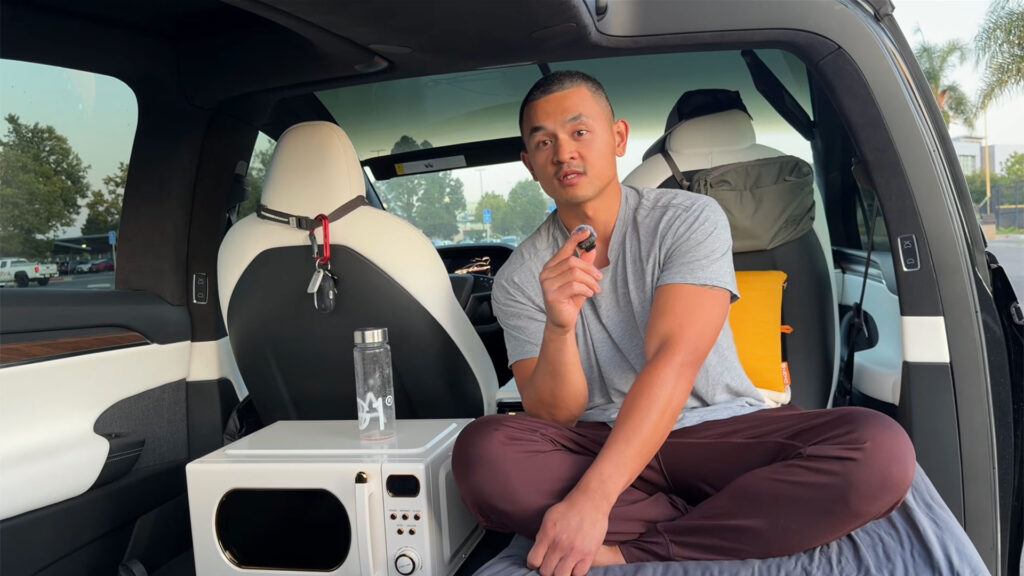
The Model X is no longer just a car. Nico worked with a builder to create a wooden platform underneath the rear cargo area, which now houses a full single bed. Tucked in beside it are a microwave powered by a power bank, a water pump with a pop-down sink, and a full-size portable fridge that runs off the Tesla’s 12-volt outlet around the clock. At the rear, he installed storage drawers that keep everything organized underneath the sleeping surface. From the outside, it still looks like a Model X, but inside, it functions as a studio apartment on wheels, minus the square footage.
The Model X he chose is the discontinued falcon-wing door version, which Tesla no longer manufactures. The great thing about this car is that the Falcon doors make access easy from either side. The car itself handles climate control, which is one genuine advantage over a traditional van, and Tesla’s camp mode keeps the cabin at a set temperature overnight without running the engine.
What daily life in it actually looks like
Here is where the picture gets more real. Showering means driving to a gym. Nico uses Anytime Fitness locations, which are franchised across the country and operate 24 hours with keycard access. Planet Fitness locations work, though not all run overnight. This is the practical foundation of car life that the conversion photos do not show: before you worry about which microwave to mount, figure out where you will shower every single morning for the foreseeable future.
Overnight parking is its own system. Most nights Nico parks in residential neighborhoods, using a nearby 24-hour gym as the bathroom stop before settling in for the night. Truck stops and rest areas fill in the gaps on road trips. It works, and he has been running this rhythm for nearly two years, but it is worth naming it plainly: every night requires a plan that most people with apartments do not have to make.
He also stays off the road in the coldest months. November through February, he rents a room or stays with family, because winter in a car is a genuinely different situation than summer car camping. The rest of the year, he travels, parks, and wakes up wherever he landed the night before.
The upside he points to is real. Even on a GNC retail salary, he was saving $1,500 a month once the big fixed costs disappeared. No rent, no mortgage, no car payment. He eliminated the expenses most people treat as non-negotiable, and the savings math worked immediately. That financial breathing room, combined with the YouTube channel growing in the background, is what eventually made the full-time creator life possible.
The honest take on whether this works
Spending a few nights in a car is genuinely great. Waking up somewhere scenic, no alarm, coffee from a camp setup, no commute and nowhere to be: there is real appeal there, and anyone who has done even a weekend of car camping understands why people find it hard to go back inside. The simplicity of it lands in a way that is hard to explain until you have tried it.
Full-time is a different question. The shower logistics alone require a level of daily planning that adds up fast. Even with the right gym membership sorted out, the morning routine depends on a facility being open, clean, and close to wherever you happened to park the night before. A location that turns out not to run 24 hours means driving somewhere else before you can start your day. His portable fridge, the one running off the Tesla’s 12-volt outlet, overheated in California in June and became a problem on top of everything else, but I think this is still just a minor issue. These are the actual daily variables of life, manageable in the short run, but over months and years, they become a logistics job in themselves.
Then there is the question of what freedom actually means here. Nico describes the nomadic life as liberating, and in some real ways it is. But consider what the setup actually looks like day to day. The “apartment” is a single bed in a cargo area where you cannot stand upright. The kitchen has a microwave on a power bank. The bathroom is a gym facility shared with every other member at whatever location you drove to that morning. Every morning, for two years. At some point, it is worth asking whether the freedom is genuine or just a different set of constraints dressed up as a lifestyle choice.
The minimalist appeal is real and worth separating from the car-life specifics. Owning less, spending less, not being tethered to a lease: those are legitimate and smart things to want. The honest version of that, for most people, is a small inexpensive apartment with very few things in it, not a converted SUV with no room to stand up. A modest place at $800 or $900 a month gives you a private bathroom, a kitchen that does not require a power bank, and a space where you can actually move around. It costs more than a Tesla Model X and a gym membership, but it costs considerably less in daily friction.
Nico figured out something real when he lost everything in one morning: fixed costs are where financial leverage actually lives, not in cutting subscriptions. That part transfers. The specific solution he landed on is his own, and it is working for him. Whether it is the right solution for anyone else depends almost entirely on how much daily logistics costs you in energy, and whether that trade feels like freedom or like labor with a better view.