
The hidden problem with AI-edited family photos no one talks about

Reddit highlighted a family boundary issue that many people recognized immediately.
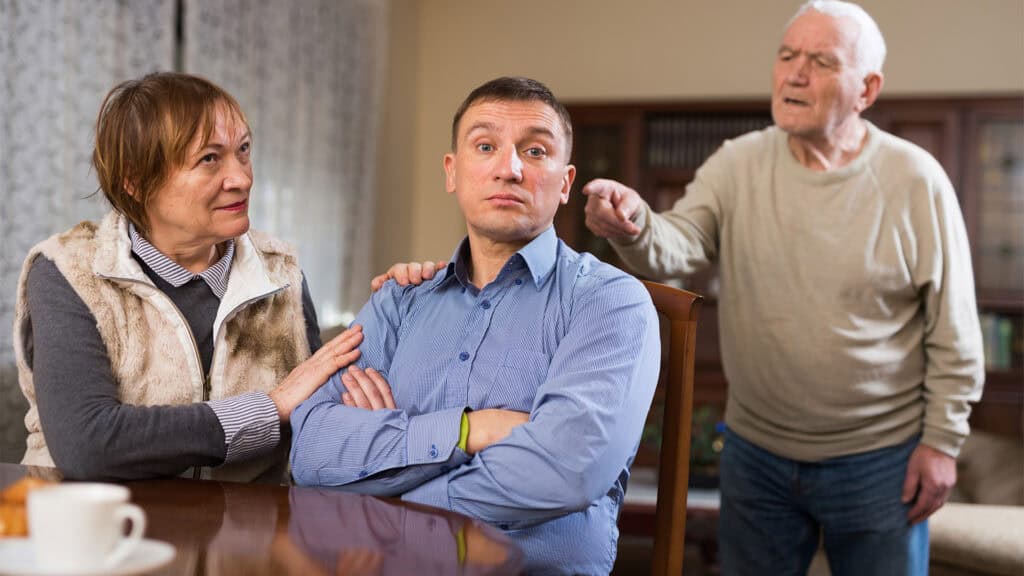
At a family party, his aunt had hung AI-generated cartoon versions of family photos around the room as decoration. Most of them looked harmless except one. The image, made from a real photograph of him with his dad, stepmom, and a cousin, had distorted his features so dramatically that he estimated he appeared to weigh somewhere between 300 and 400 pounds. Nobody else in the photo looked off, and only his body had been changed. He spotted it once at the party, laughed it off when his stepmom pointed it out, and told her directly that he hated how he looked in it, figuring that would be the end of the conversation but he was wrong.
When he took the story to Reddit’s r/AmIOverreacting, the response came back fast and almost entirely in his corner.
At the party, he clearly mentioned that the image bothered him, assumed it was acknowledged, and moved on with his evening. What he did not know was that his stepmom had folded the picture up and tucked it into her bag before they left.
That evening, back home, she pulled it out in front of him. “I know you hate how you look in it,” she said, “but I think it’s cute, so I’ll use it anyway.” The emotion hit him so suddenly that he could say a world just turned around and walked upstairs, telling her he needed to use the bathroom, and spent the next ten minutes crying by himself.
Several details made the moment harder to shake. His girlfriend of six years had been at the party and had seen the image, which he described as genuinely embarrassing. More significantly, he is one year into recovery from an eating disorder and still working through it in therapy. His stepmom, he noted in his post, has never believed the eating disorder was real. In the days after the party, he brought it up twice more in conversation with her, but she ignored it both times. His dad ended up taking the image to get framed for his office, which meant that at least he would not be seeing it at home, but probably even more people at the office.
Reddit landed firmly against the stepmom. Someone shared that she is also in eating disorder recovery, was direct about what she read into the dynamic: “When someone knows something bothers you and tries to poke you with it again, it’s a red flag that they are enjoying hurting you. This would be pretty intolerable for me as well.”
Others addressed the mother’s argument that images like this are simply “meant” to make fun of people, and “We absolutely need better boundaries as a society about what we do with other people’s images, especially when AI is involved.”
AI images and what to do when family crosses a line
The situation this post describes has become increasingly common as AI image tools get easier to use, and it raises a question that applies to anyone, regardless of age, gender, or background: what do you actually have the right to do with an image of someone else?
The short answer is less than most people assume. Using AI to alter someone’s photo and then displaying or distributing that image without their consent is not a neutral act, even when it is framed as playful or decorative. The person in the image has not agreed to be represented that way, and when they say they object and the image is kept and displayed anyway, the situation moves from careless to deliberate. Body image struggles, eating disorders, and insecurities about physical appearance affect people across every demographic, and an AI-distorted image that exaggerates someone’s features can do real harm.
If you find yourself in a similar situation, a few things tend to matter. First, ask for the image to be deleted rather than just put away. “I won’t have to see it anymore” and “it no longer exists” are meaningfully different outcomes, especially when the file can be forwarded to anyone at any time. A direct, specific request gives the other person less room to reinterpret your objection as something milder than it is.
Second, if the person dismisses a direct request, it helps to name what is actually happening rather than softening it. Saying “I have asked you more than once to remove this image and you have not done that, which tells me this is not an accident” is a harder statement to wave away than a general expression of discomfort. It requires the other person to respond to the pattern of behavior rather than relitigate whether the original image was meant as a joke.
Third, for anyone in recovery from an eating disorder or working through body image issues, the standard advice to “not let it bother you” misses the point entirely. Recovery does not make a person immune to triggers. It builds the tools to manage them, and that management takes real effort. Someone whose image has been altered and displayed without their consent is not overreacting by finding it upsetting. They are responding to something that actually happened to them.
Crying alone in a bathroom over an image that distorted your body is not an overreaction when you are in the middle of working hard to change how you see yourself. Family members who dismiss what you have communicated clearly, more than once, are not offering perspective. They are showing you how seriously they take your well-being. That is the reality, even when it is uncomfortable to acknowledge in someone close to you. And anyone using AI tools to alter and share images of other people without asking first would do well to remember that the person in that image gets no vote once the file exists.