
I almost paid $50,000 cash for a new truck — Then I found a much smarter way to put my money to work
Paying cash for a vehicle ties up your money in a depreciating asset; leveraging 0% APR lets that $50,000 grow while you drive.
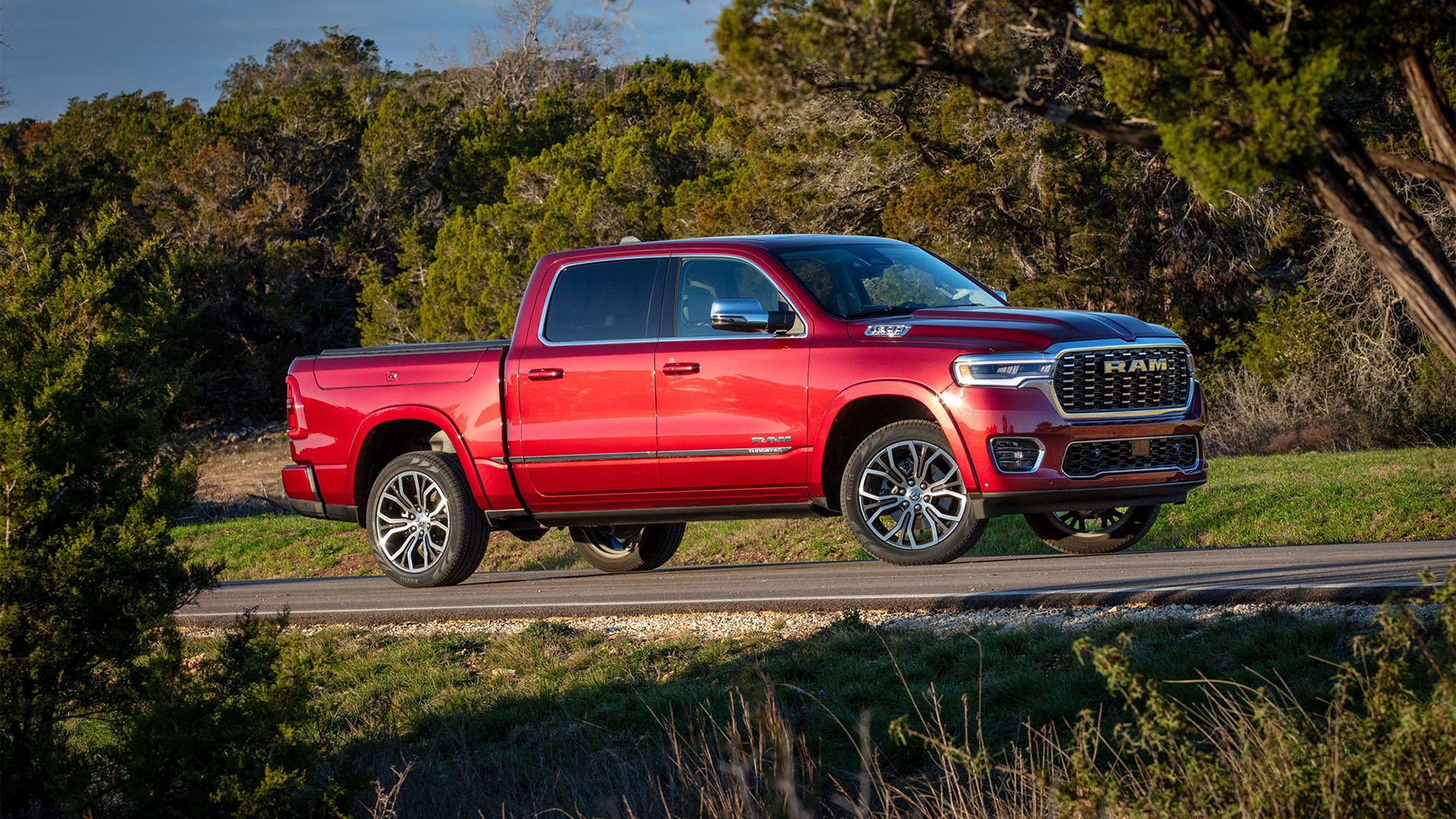
When I went to pick up my 2026 Ram 1500, I already knew what the finance office would offer and what I’d say. The cash was sitting in my account, ready to go. I had run the numbers the week before, and already made a decision: take the free loan, put the $50,000 somewhere it can grow, and let the market help pay for the truck.
The truck is a 2026 Ram 1500, which starts at $42,400. My out-the-door price on a Big Horn trim was around $50,000, which I was happy with, especially with my plan. According to August 2026 incentive data, Ram is one of 19 brands currently offering zero-percent financing, with the 1500 qualifying for 0% over 60 months. A deal that is just too good to be missed.
What zero percent financing actually means
The key thing to understand about a 0% APR loan is that it costs you nothing extra. Your monthly payment on a $50,000 truck over 60 months comes out to $833, and at the end of those five years you’ve paid exactly $50,000, the same total as writing a check on day one. The lender charges you no interest, no financing fee, no markup of any kind. You are borrowing $50,000 for free.
What changes between paying cash and taking the loan isn’t the total cost of the truck. Both cost you $50,000, but what changes is when that money leaves your account, and that is where the real opportunity lies.
The moment you hand over $50,000 cash at the dealership, that money becomes a depreciating asset. The Ram 1500 loses roughly 40% of its value over five years. Your $50,000 is now a truck worth closer to $30,000 by the time the odometer hits 80,000 miles. When you finance at 0% instead, that $50,000 stays in your account and can work for you elsewhere while you pay the truck off gradually with money you were going to spend anyway.
What that $50,000 does in five years
One of the well-known investment opportunities is the S&P 500, which has returned an average of 10.3% per year over the past 30 years, with dividends reinvested, a figure that holds across recessions, corrections, and full market cycles. If I put $50,000 into an index fund on the day I bought the car at the dealership, left it alone for the same 60 months, I would end up with roughly $81,500.
That’s about a $31,500 gain over five years, generated while I was making $833 monthly payments with money already budgeted for the truck. The loan costs me nothing while the investment returns you $31,500. The person who paid cash has the same truck and an empty savings account, and I have the same truck, the same $50,000 paid off over five years, and $31,500 in market growth sitting in a brokerage account.
For those who’d rather put the cash into real estate, the logic runs similarly. A $50,000 down payment on a $250,000 rental property gives you control of an appreciating asset five times the size of your initial investment, with rental income helping offset carrying costs along the way. Real estate requires more active management, but the leverage on that $50,000 seed is just as compelling.
The one condition that makes this work

This entire strategy rests on a single variable: the loan has to be at or near 0%. The moment a dealer charges you 7% or 8% APR, the math flips. A $50,000 truck at 7% APR over 60 months adds roughly $9,400 in interest charges, and your investment return has to clear that hurdle before you’re ahead of anything. The 0% offer is the unlock. Without it, the strategy collapses.
The second requirement is discipline. The $50,000 must go into an investment account on day one and stay there for the full loan term. If you’re the kind of person who would find reasons to dip into it, consider setting up a separate brokerage account you treat as untouchable, or ask a fee-only financial advisor to help you structure it that way.
This is the same principle that banks and institutional investors have used for decades: borrow cheap money, deploy it into higher-returning assets, pocket the spread. When a manufacturer hands you 0% financing on a $50,000 vehicle, they’re offering you access to that same mechanic. Most buyers hand it back by writing a check at the desk and feeling good about it.
The truck depreciates either way. The only question is whether the $50,000 you spent on it also disappears, or whether it keeps growing somewhere else while you drive. It is not financial advice, but it is worth considering before you make the down payment of $50,000 for a truck.