

Millennial dads are spending more time with their kids than ever, and many say it’s making life feel more meaningful
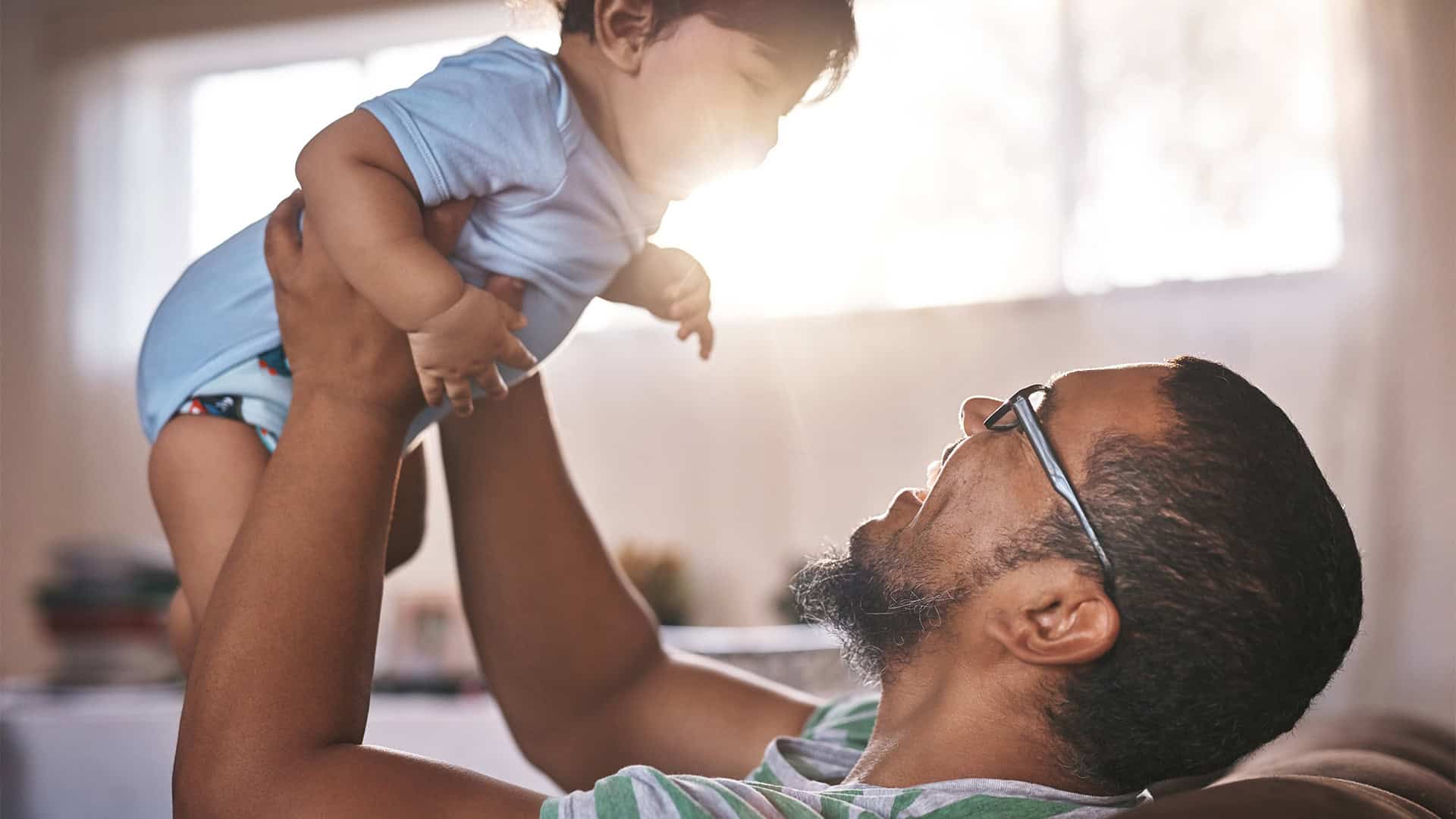
Fathers today are far more involved than previous generations, but the shift is also changing how men think about what it means to be a “good dad.”
For a long time, many fathers were expected to provide financially while staying somewhat distant from the day-to-day realities of raising children. But that version of fatherhood has been steadily disappearing. I see a growing number of Millennial dads are far more involved at home than previous generations ever were, and new data shows the shift is reshaping everything from work-life balance to how many men experience purpose, stress, and family life itself.

The modern dad isn’t just a provider anymore
According to a recent analysis by Derek Thompson and Aziz Sunderji, Millennial fathers now spend more than twice as much time on childcare as Boomer dads did, and nearly four times as much as fathers from the Silent Generation. In 1965, the average married father spent barely half an hour a day actively engaged with his children. Today, Millennial dads spend more than 80 minutes daily on hands-on parenting tasks, such as reading, playing, driving kids to activities, helping with homework, and caring for infants.
Fatherhood didn’t change because dads suddenly became more nurturing. The expectations around family life changed entirely. As more women entered the workforce over the last several decades, the traditional “working husband and stay-at-home wife” model became less common. In dual-income households, parenting responsibilities also had to shift. But the data shows something more complicated than dads merely “helping out.”
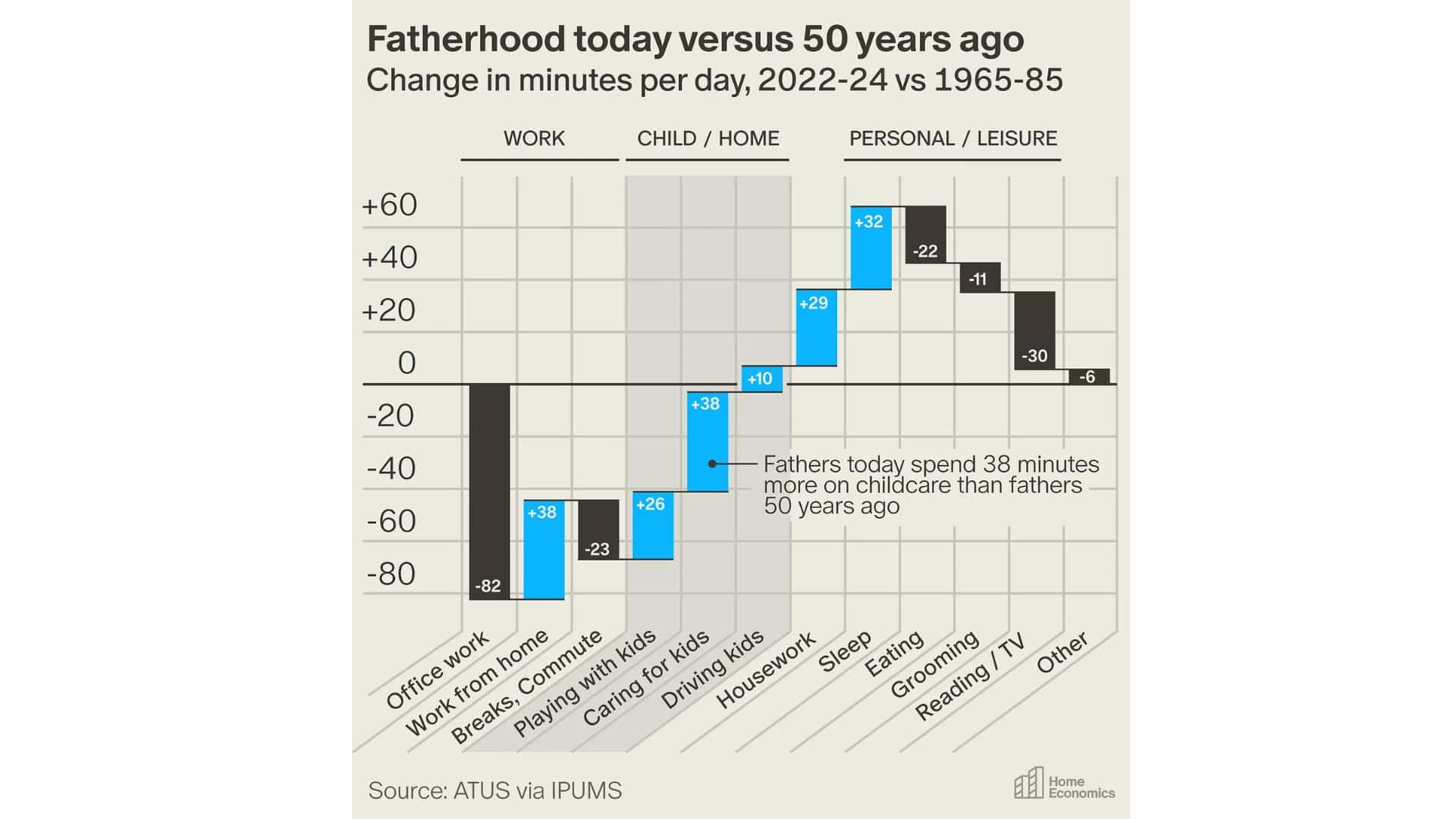
Mothers’ childcare time also increased over the same period. In other words, parenting itself became more intensive for everyone. The role of the modern father expanded from breadwinner into something much more emotionally involved. They’re also equal parts co-parent, coach, caretaker, appointment manager, chauffeur, homework helper, and constant emotional presence. For many men, being a good father now means showing up physically and emotionally in ways previous generations often didn’t. Many modern dads are trying to become the kind of parent they wished they had growing up. They’re more available, more expressive, and more connected to everyday family life.
Parenting became part love, part pressure
Stereotypes around masculinity and parenting have evolved, and modern parenting can feel exhausting because it’s no longer treated as basic caregiving. It’s become an investment project. Researchers found that college-educated parents have dramatically increased the time they spend with their children over the past few decades. This increase wasn’t only driven by love or enjoyment. Anxiety has played a role, too. Parents today are under constant pressure to optimize childhood through better schools, activities, developmental outcomes, and schedules.
Childhood itself has become increasingly structured and competitive, especially among middle- and upper-income families. The result is a version of fatherhood where dads are more involved than ever, but also more stretched thin. The same surveys show that fathers are more likely than non-parents to feel overwhelmed, exhausted, and short on free time. At the same time, many also report feeling more satisfied with life overall. And this might make it all worth it.
Why so many dads feel exhausted but fulfilled at the same time
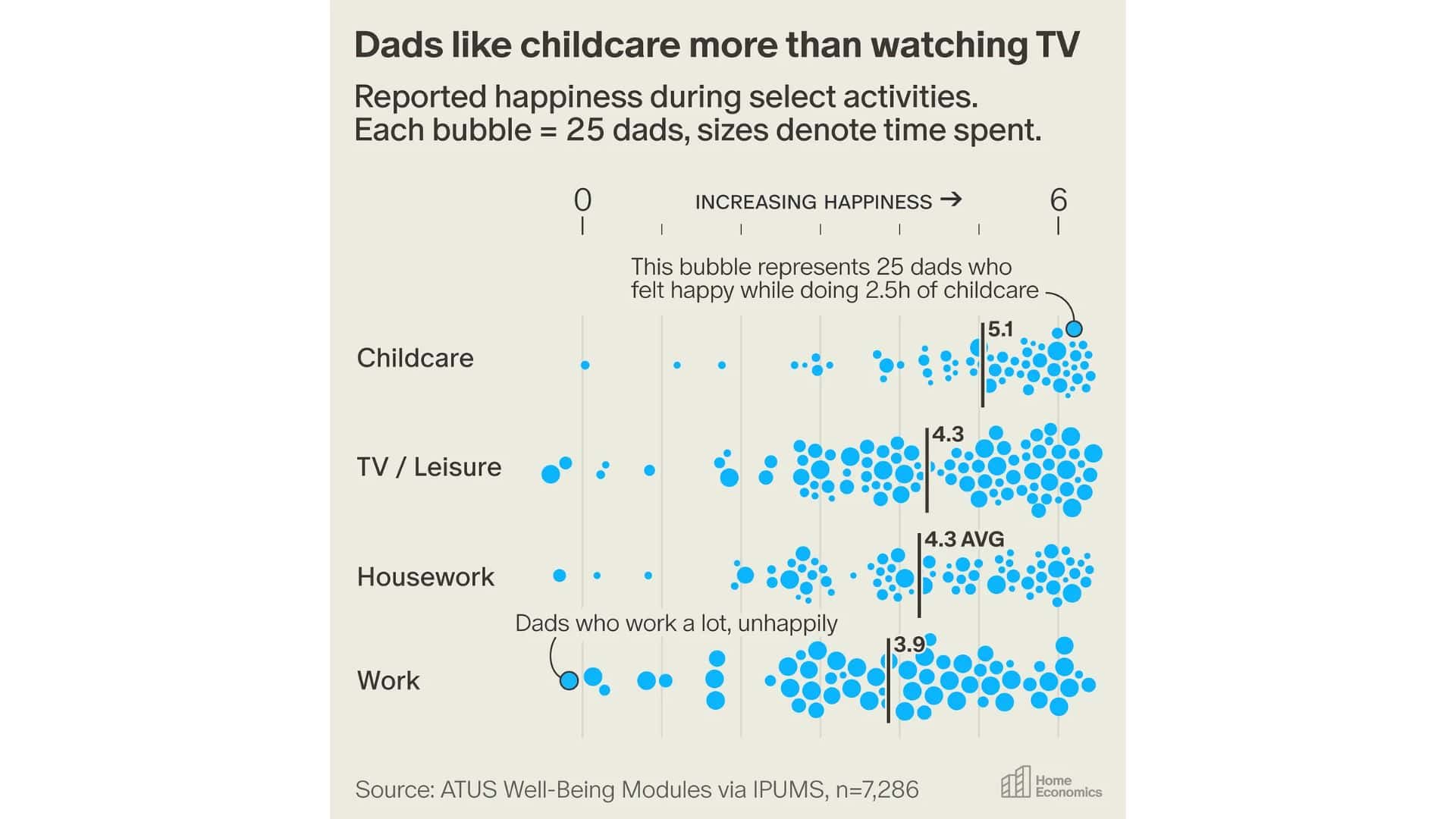
The report points out that fathers today spend less time watching television and more time at home with family. Social activities outside the home have also declined over the decades, meaning more emotional energy is now concentrated within the family.
It comes with obvious stress, but it also changes how men experience purpose and connection. According to the analysis, fathers’ time spent with their children is among the most enjoyable parts of their lives, alongside socializing with close friends. Even as sleep decreases and stress rises, many dads still say their lives feel closer to “ideal” after becoming parents.
Modern fatherhood isn’t easier these days; if anything, it may be more emotionally demanding than ever before. But there are still so many ways men are redefining it every day, so mothers don’t have to carry a disproportionate amount of the mental load and solo parenting responsibilities, especially around planning, scheduling, and medical care. For a growing number of dads, that emotional involvement may be exhausting, but it’s also becoming one of the most meaningful parts of adulthood.