

How I keep my outdoor timber platforms in good shape with minimal effort
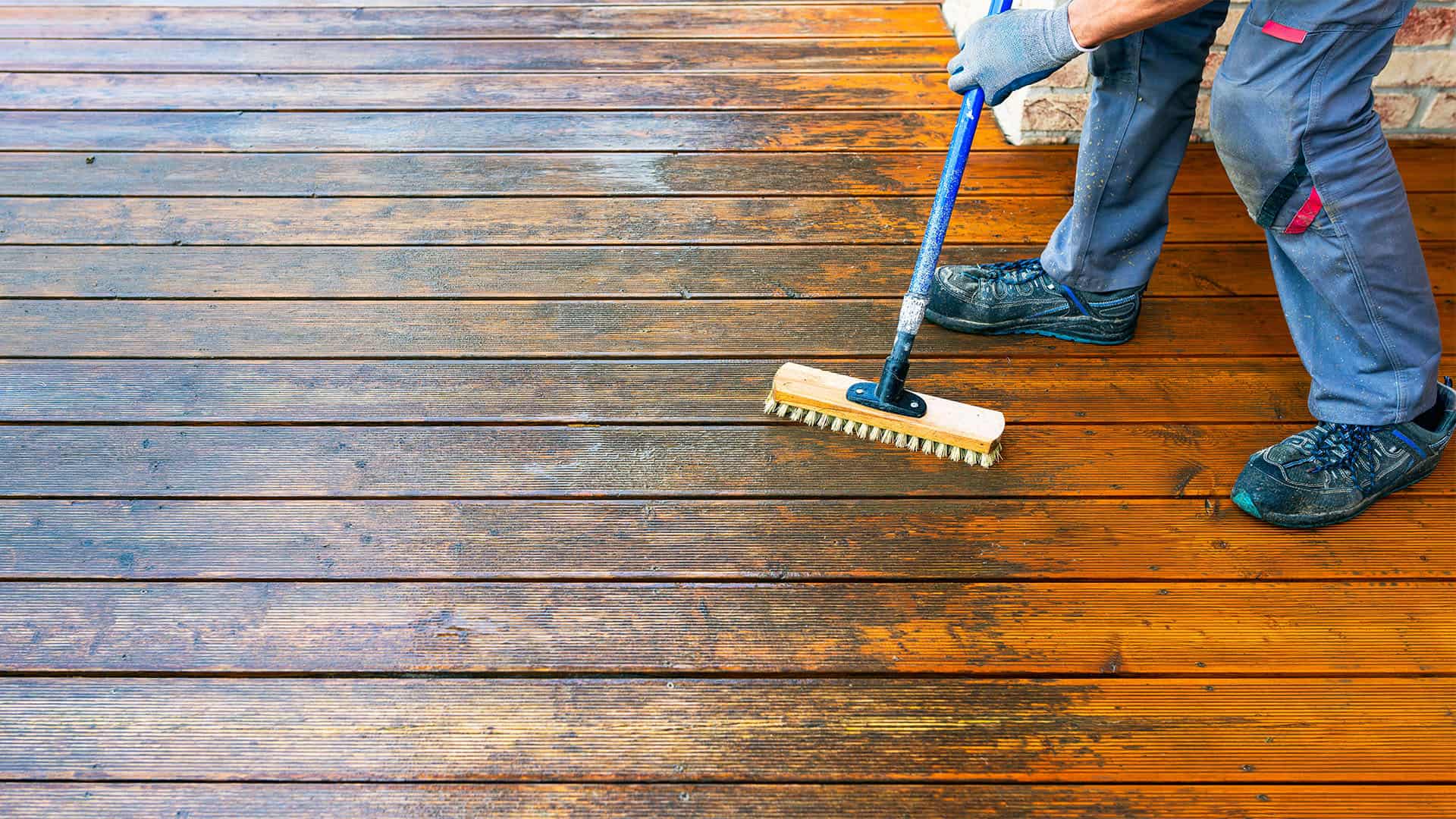
Nobody told me a wooden deck needed anything beyond a sweep. My deck made sure I found out the hard way.
When I bought my house, I genuinely thought a wooden deck was a set-it-and-forget-it feature. You build it, you put furniture on it, you sweep it off occasionally. That was the full mental model. The first spring I noticed a green tinge spreading across the boards, I assumed it was just dirt. By summer, it was a proper carpet of algae, slick enough to slide on in flip flops, and visibly eating into the surface of the wood. What I had ignored for one season cost me a full day of work to fix.
Since then, I have figured out a routine that keeps it clean, protected, and structurally sound without it becoming a weekend project every month.
Why timber decks go green and why it matters
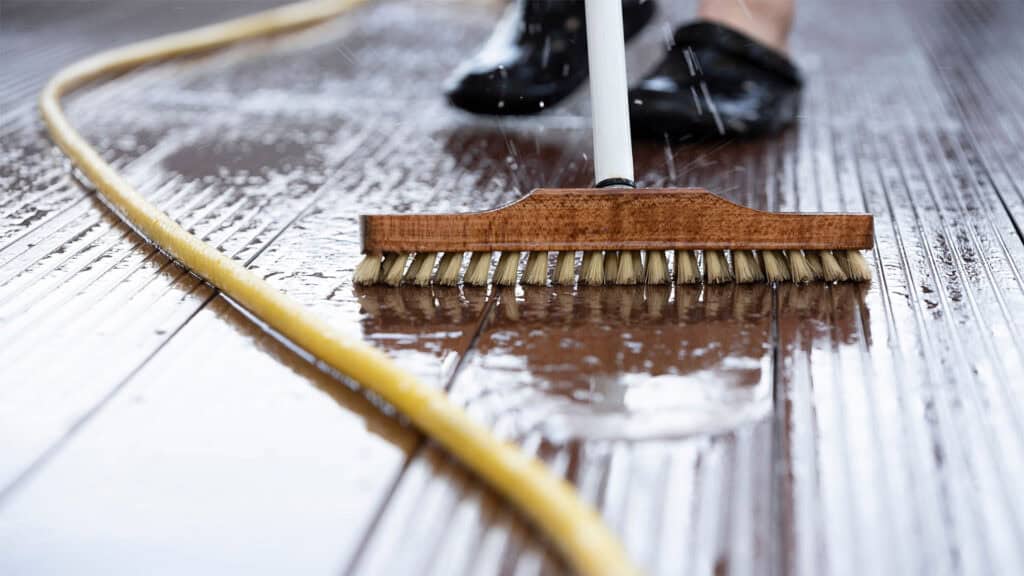
Algae forms when moisture sits on wood long enough for spores to take hold. In a humid climate or in areas that see regular rain, this happens faster than most people expect. Shaded decks are worse because the wood dries out slowly after rain. The green layer looks bad, but the real problem is underneath. The algae retain moisture against the wood, accelerating rot and potentially compromising the structure over time if left untreated. The slip hazard is also real and immediate. A thin layer of algae on damp timber is genuinely dangerous.
How to clean the deck properly
This detail sounds minor, but it makes a bigger difference than most people expect. An overcast day with mild temperatures gives you the perfect conditions to do the job right. Full sun dries the cleaning product quickly, allowing it to kill the algae before it dries.
First, clear everything off. Furniture, planters, and the grill. Run a stiff broom across the surface to pull off leaves, debris, and loose dirt. Get a putty knife or a flat tool into the gaps between boards where compacted debris has accumulated. That material holds moisture and feeds algae growth more than anything on the surface.
For regular annual cleaning, I use an alkaline deck cleaner that contains Sodium hydroxide at around 2% and nonionic surfactants at 5%. These are widely available at hardware stores and are formulated specifically to break down algae, mildew, and organic buildup on timber without damaging the wood. Mix it with water as directed. Apply it with a stiff brush or a low-pressure garden sprayer, work it into the surface, and let it sit for 5 to 10 minutes. Then scrub with a hard-bristle brush and rinse off with a hose. Wear safety glasses and protective gloves because sodium hydroxide is alkaline enough to irritate skin and eyes on contact.
If you want a cheaper option that works reasonably well for a light buildup, plain dish soap dissolved in warm water does the job, too. The catch is foam. You will generate a lot of it, which slows rinsing and makes it messier. It is fine for a quick clean between annual treatments, but the alkaline cleaner is more effective when algae has had time to establish.
On pressure washing: use caution. A low-pressure setting with a fan nozzle is fine for rinsing. High pressure drives water deep into the wood grain, and moisture trapped inside the timber is exactly what you are trying to avoid. I skip the pressure washer entirely and use a hard brush and a hose. The results are the same without the risk.
Seal and oil the wood after cleaning
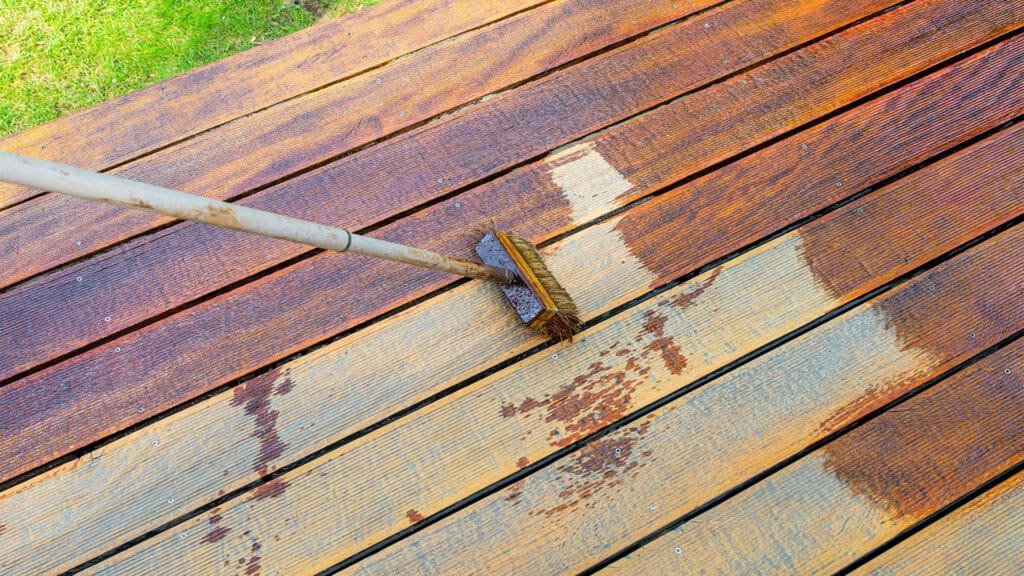
After cleaning, the deck needs to dry completely before you apply any protective treatment. This means at least 24 to 48 hours in warm, dry weather. Then you can use a sealant or oil.
Cleaning removes what has built up. Sealing is what protects the wood going forward. A penetrating oil or sealant soaks into the timber, creating a barrier against moisture rather than sitting as a coating on top. Most wood decks need sealing every one to two years and more frequently if the deck gets heavy sun exposure or sits under trees that drop sap and debris.
The water bead test tells you when it is time. Pour a small amount of water on the surface. If it soaks in rather than beading up, the existing sealant has broken down, and the wood is absorbing moisture unprotected. That is the signal to clean and reseal. Apply oil or sealant with a brush or low-pressure sprayer, working with the grain. Wipe off any excess that sits on the surface after 10 to 15 minutes.
Small habits that slow algae down between cleans
A few things make the annual job easier by reducing what builds up in the first place. Move furniture and planters periodically so moisture does not sit trapped in the same spot for months. Clear leaves off the deck after they fall rather than letting them sit and decompose on the surface. Wet leaf is one of the fastest ways to feed algae growth. If you have overhanging branches shading the deck heavily, trimming them back improves airflow and sunlight, both of which help the wood dry faster after rain.
None of this takes much time unless you have a really big deck. The payoff is that the annual clean stays manageable instead of becoming a full-day restoration project every spring.