
Who Is Going to Control Your Dashboard: A Debate Between Apple and Carmakers
In 2025, it’s hard to imagine a new car that doesn’t connect seamlessly with your phone. As a consumer, connectivity has become one of the most essential features for me. I drive dozens of cars each year, and if I can’t connect my phone within a few minutes or the connection is lost between the car and my mobile, I start questioning the quality of the entire vehicle. It might sound like a first-world problem, but in today’s automotive landscape, connectivity matters more than horsepower.
Drivers now expect their vehicles and smartphones to work together flawlessly. It is not just about convenience; it is also about safety. Because a connected phone isn’t simply for streaming music or checking messages, it’s essential for hands-free calls, real-time navigation, and receiving urgent alerts without distraction. In this connected age, the car is no longer just a means of transportation from A to B; it is more like a smartphone on wheels.
But behind this seamless experience lies a growing conflict between automakers and tech giants like Apple. At the center of this quiet battle is a question: Who will control the dashboard and the driver’s digital life?

Apple CarPlay
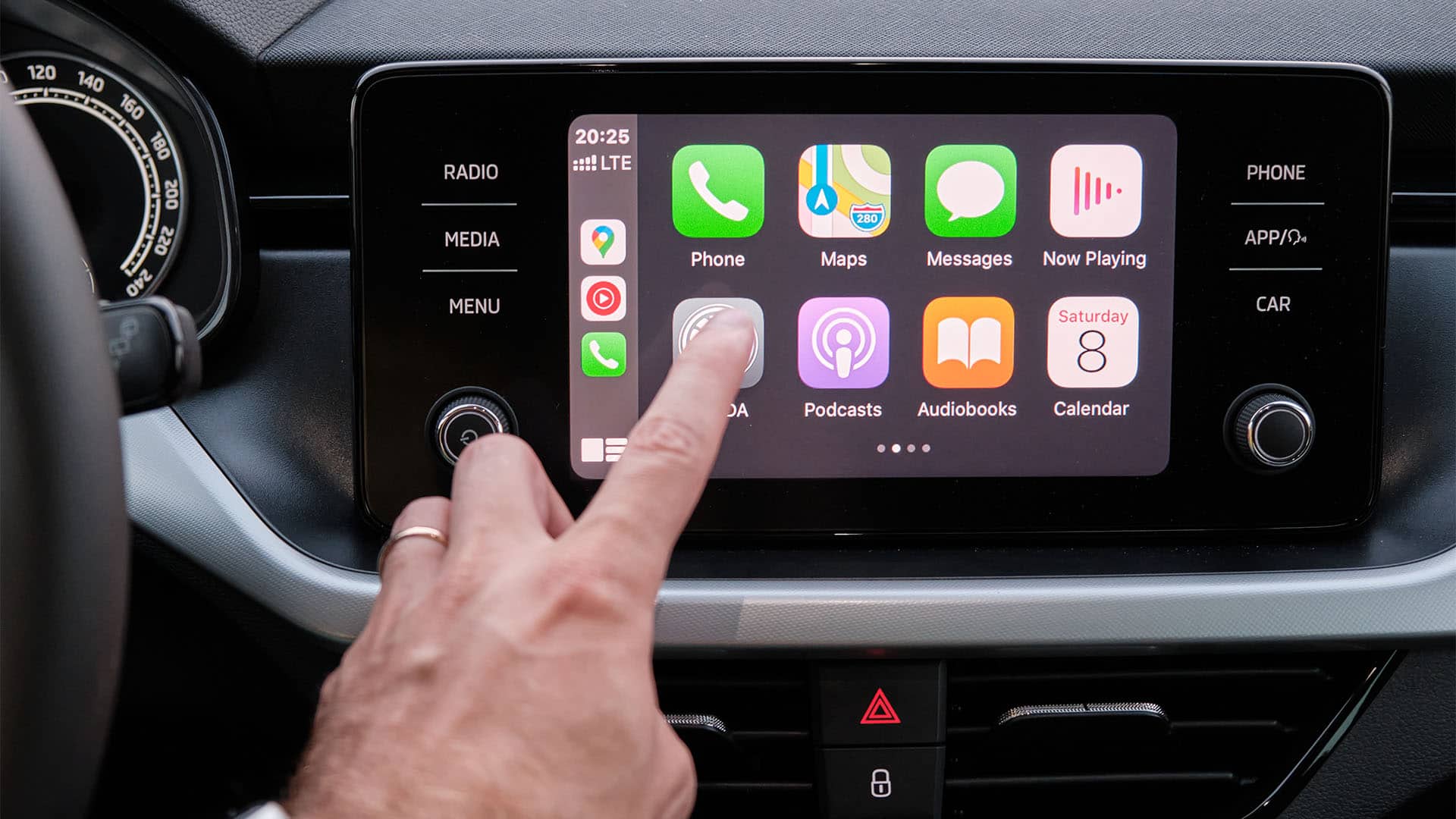
Apple CarPlay was officially introduced in 2014 as an iOS-based interface that allows drivers to connect their iPhones to their vehicle’s infotainment system. The concept was to bring the familiar Apple experience to the car’s dashboard, reducing distraction and enhancing functionality. Instead of learning a new interface developed by the manufacturer, drivers could rely on trusted apps like Maps, Messages, and Music.
Apple’s move into the automotive space wasn’t accidental. The company had long been rumored to be working on its own vehicle, but CarPlay was a strategic and immediate way to establish a strong presence without having to build a car. It was a smart and timely decision. At a moment when automakers were struggling to develop their own infotainment systems, Apple offered a polished, familiar solution that simply worked.
Over the next decade, CarPlay gained widespread adoption. Today, more than 80 percent of new cars sold in the U.S. support it. For many consumers, it has become a non-negotiable feature. The ability to use voice commands through Siri, access real-time navigation, and safely manage calls or messages while driving has redefined expectations around in-car technology.
By offering a seamless, user-first experience, Apple earned a place in millions of vehicles around the world. CarPlay may have started as a convenience feature, but it quickly evolved into a critical part of how people interact with their cars. As a result, some automakers are beginning to reconsider just how much of that experience they want to control.
Giving Up the Dashboard

Software has never been the core business of most automakers. They are good at engineering powertrains and optimizing safety, but building intuitive, responsive infotainment systems is a different discipline altogether. As smartphone technology advanced at a rapid pace, carmakers struggled to keep up. Developing a new vehicle typically takes five years, and during that time, mobile operating systems may see five major updates.
This is where Apple CarPlay and Android Auto stepped in. These platforms filled the gap by offering sleek, user-friendly interfaces that felt as polished as the phones we use every day. Users can utilize their well-known apps, such as Apple Maps and Music, without needing to learn the car´s own interface.
But by handing over the user interface to Apple, automakers also handed over something far more valuable: user data. In 2025, data is currency. The platforms that know what drivers search for, which apps they use, and what subscriptions they pay for gain powerful insights into behavior and preferences. Carmakers don’t know how you use their infotainment system. This is a big problem for car companies, because they can’t improve their offerings.

Automakers understand how their vehicles perform and how drivers interact with physical systems, such as acceleration, braking, and range. However, once CarPlay is connected, they no longer see which music app you’re using, the route you’re selecting, or whether you’re paying for premium audio content. All of that data flows to Apple.
And that’s not all. In-app purchases and subscription models for navigation, music streaming, or other services go through Apple’s ecosystem, not the automaker’s. With many brands now looking to adopt their own subscription-based features, such as heated seat upgrades or advanced driver assistance systems, the business case for controlling the entire infotainment system is becoming more urgent.
The upcoming release of Apple CarPlay Ultra, which aims to integrate more deeply into vehicle functions such as climate control and speedometers, only intensifies this concern. As tech companies move further into territory traditionally owned by automakers, the pressure to control the dashboard is growing rapidly.
How Companies React
Some brands have begun to realize that they are losing out. Tesla, for example, never adopted CarPlay or Android Auto. Its core operating system allows the company to control every aspect of the in-car experience and own all the data. Other carmakers are now following slowly. General Motors has announced it is phasing out CarPlay and Android Auto in future electric vehicles in favor of Ultifi, its own Google-powered infotainment platform. GM aims to manage both the user experience and the flow of customer data directly.

European automakers have also made their position clear. BMW, Mercedes-Benz, Audi, and Volvo have declined to adopt Apple’s upcoming CarPlay Ultra, instead investing in their own native systems. These brands believe that controlling the in-car interface allows for tighter integration with vehicle functions and a more consistent brand experience.
On the other side of the debate, some luxury and performance brands continue to support Apple’s evolving ecosystem. Aston Martin has fully adopted CarPlay Ultra, incorporating it not only into the center screen but also into the instrument cluster. Hyundai and its subsidiaries Kia and Genesis, along with Porsche, have also signaled interest in offering the upgraded version of CarPlay in future models.
The Road Ahead
Automakers are drawing lines around their digital territory. Some are favoring their own systems and increasing software investments. Others are happy to work alongside tech companies like Apple, opting for a seamless user experience over complete control. What remains uncertain is which strategy will win in the long run.
Ultimately, consumers will have a strong voice in shaping that outcome. Drivers will expect the same speed and usability from their cars as they do from their smartphones. Brands that fail to meet these expectations risk losing customers.