

Reddit is full of drivers changing oil grades, but as a car expert, I say it’s not that simple

Everyone has a theory or a mileage milestone to prove it, and the comment threads fill up fast with strong opinions backed by no data.
A recent post on Reddit tapped directly into that current when a user asked a genuine, curious question: for those of you running a different oil grade than the one your owner’s manual recommends, why did you make the switch? The responses came quickly, and they painted a familiar picture of drivers doing their best with incomplete information.
The original poster was not advocating for anything. They were learning, and the thread reflects what that looks like in practice: a mix of reasonable observations, regional logic, and a few claims that warrant closer scrutiny.
Several commenters raised a point that has some merit. Users in hot climates, including Arizona and Texas, noted that they had moved to a slightly thicker oil grade because they felt a 0W-20 or 5W-20 ran too thin in extreme summer heat. One commenter with a 1992 Dodge van with 180,000 miles explained that worn engine bearings create more clearance than the original tolerances called for, so a heavier oil helps maintain pressure at hot idle. That is a legitimate, practical adjustment for an aging engine where the original specs no longer reflect the mechanical reality.
A longer post made a comparison of tires worth paying attention to. The argument was that manufacturers spec the lightest possible oil, much as they put fuel-economy-optimized tires on new vehicles, primarily to hit federal CAFE mileage targets rather than to maximize engine longevity. The commenter noted that a 2024 Mazda Miata sold in Mexico is approved for five oil grades, with 5W-30 listed as preferred, whereas the US version recommends only 0W-20. That is a real and documented difference.
But mixed into that thoughtful thread were also the usual shortcuts: people running heavier oil on modern vehicles with variable valve timing because they just felt better about it, or others who had made the switch years ago and declared victory because the engine had not seized. That is not evidence. That is survival bias dressed up as a maintenance strategy.
My honest take
The specification in your owner’s manual is not just an oil grade. It is a complete technical standard. When a manufacturer lists 0W-20, they are almost always pointing you toward an oil that meets a precise performance certification, one that governs how well the oil protects under heat, how cleanly it burns, and how effectively it controls engine deposits. A 5W-30 from the shelf at a big-box store may be a fine oil, but if your engine was engineered around a certified 0W-20 that meets those specific requirements, you are not simply running a thicker product. You are running one that may not deliver the lubrication the engine was built for.
Modern engines are built with extremely tight internal tolerances. Variable valve timing systems, high-pressure fuel injectors, and turbocharged configurations all depend on oil reaching their components at the right viscosity and speed. A heavier oil flows more slowly at a cold start, which is when the vast majority of engine wear actually occurs. The protective film takes longer to build, and that first minute of operation is exactly when the engine needs it most.
The older-engine argument is the notable exception. A worn engine with expanded clearances is a different mechanical situation than a new one, and running a slightly heavier oil to compensate for reduced oil pressure at idle is an accepted approach. But applying that logic to a late-model vehicle with tight factory tolerances and sophisticated oil-dependent systems is a matter entirely different.
The CAFE argument has teeth, but it does not lead where many people think it does. CAFE stands for Corporate Average Fuel Economy, the federal regulations that require automakers to maximize fleet-wide fuel economy. Yes, some oil grades have been lightened partly to meet those targets. That makes it more important to use the correct oil, not a heavier substitute of your own choosing. If your engine calls for a specific certified synthetic, find that oil rather than reaching for something thicker because it feels more substantial.
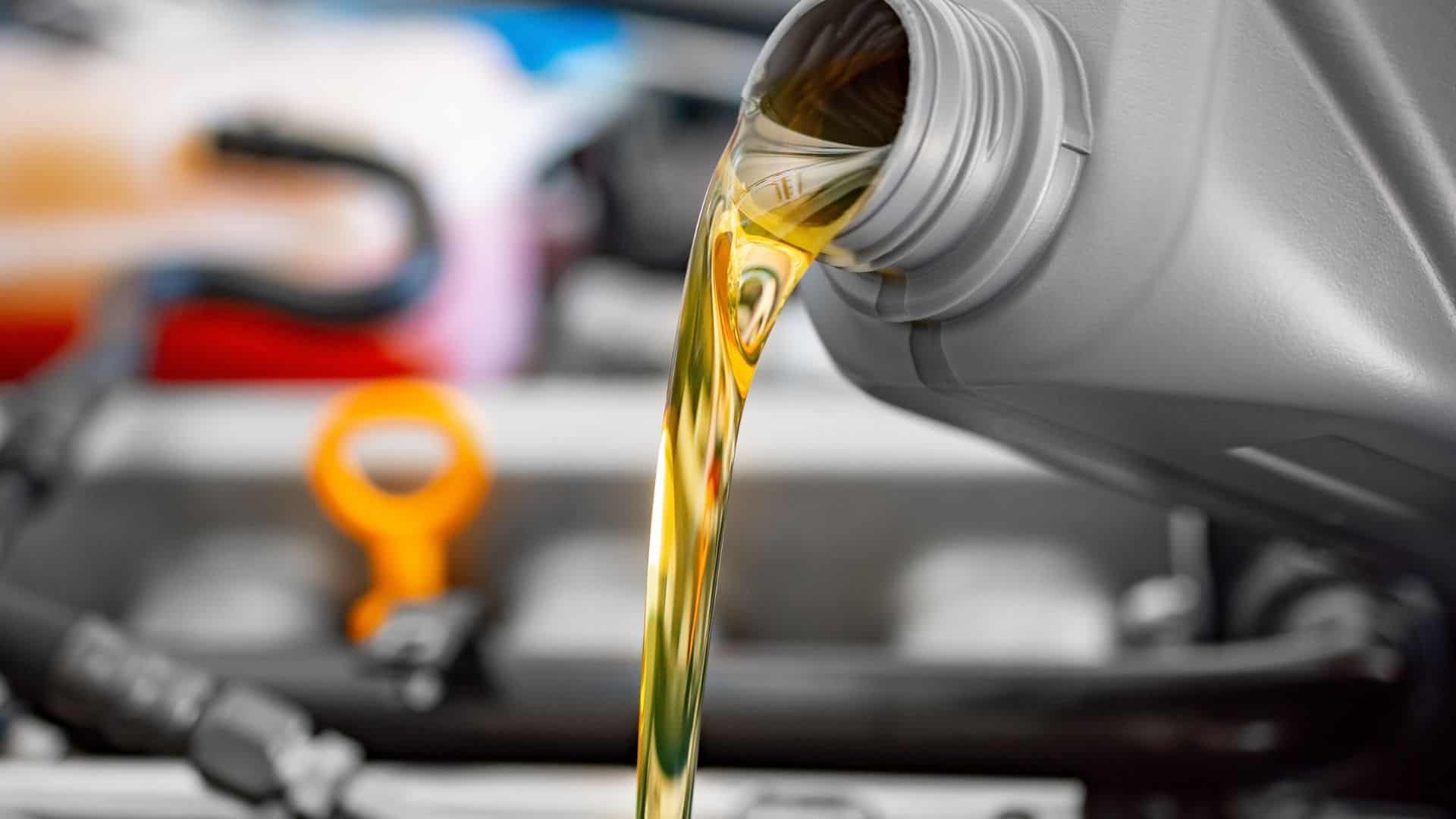
How to choose the right engine oil for your car?
Check the owner’s manual, and then read past the viscosity grade. On the back of any oil bottle, you will find a certification mark, a small symbol or code that tells you whether that oil meets the performance standard your engine was designed around. That is the part most drivers overlook entirely, and it matters as much as the grade itself.
If you live somewhere brutally hot and feel uncertain, the right move is to consult a dealer or an independent mechanic who knows your make, not to poll a forum and pick the answer with the most upvotes. The Reddit commenter who pointed out that running thicker oil without actual data is a gamble with unknown internal clearances was the most technically accurate voice in the entire thread. They were also not the most upvoted ones.
Your owner’s manual was written by engineers who spent years testing that specific engine in conditions most of us will never replicate. The forum has its place, and curiosity about how your car works is always worth encouraging. But the manual is not a suggestion.