
$19K EV car just launched abroad with an unexpected twist — should it come to the U.S.?
With affordable EVs nearly impossible to find, this new release introduces a pricing model that could reshape how electric cars are sold.
Electric vehicles remain out of reach for many buyers, as prices have climbed sharply over the past several years. Supply-chain disruptions, rising material costs, and increasingly complex technology have pushed new-car prices to record levels. In the United States, the average new-vehicle price has reached $50,000, far above what many consumers can comfortably afford. Even as automakers promise more affordable EVs in the coming years, lower-priced options have been slow to arrive.

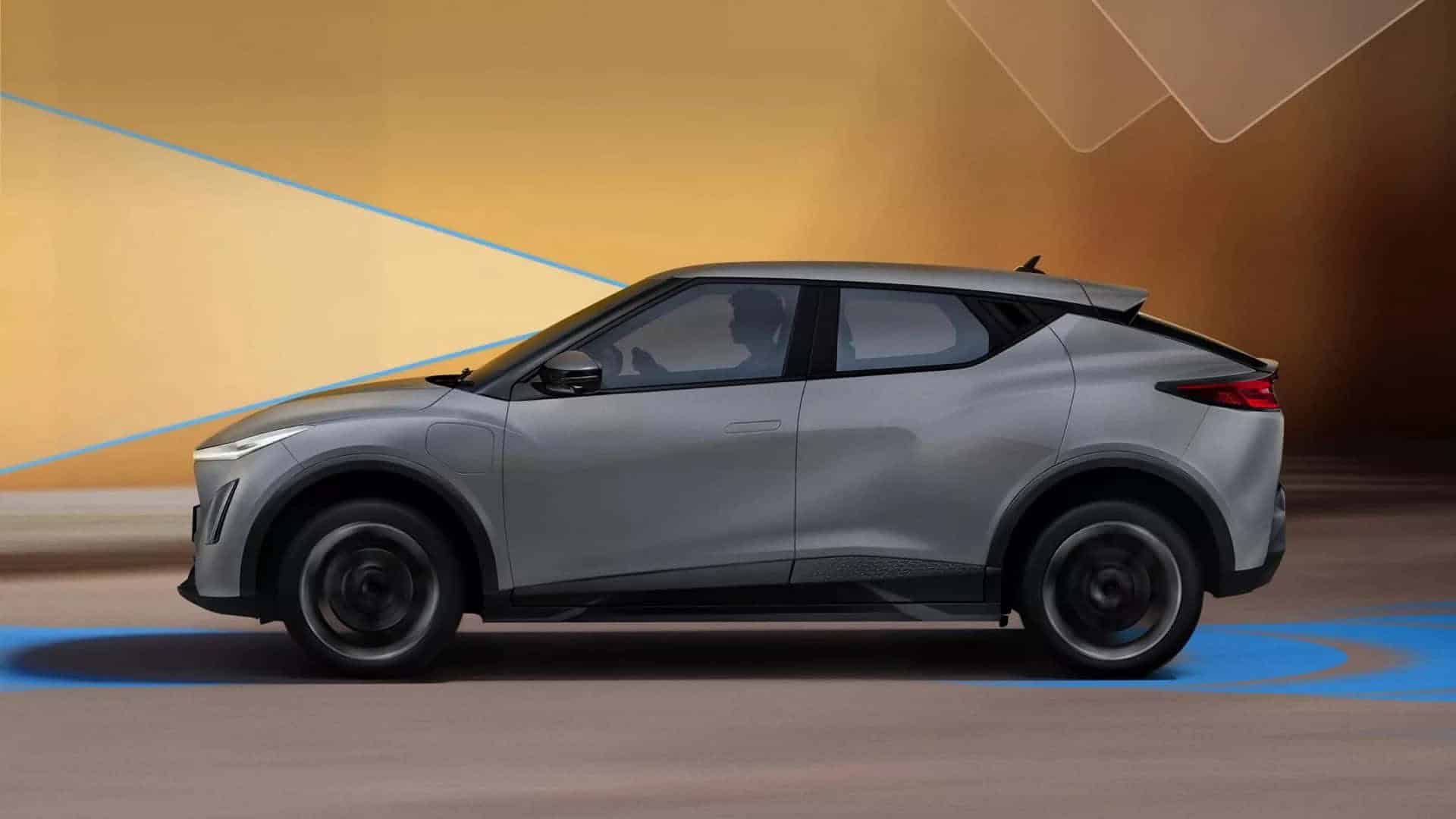
Cars outside the US are not cheap either, but at the Guangzhou Auto Show in China, a Malaysian automaker, Perodua, has introduced a different approach to affordability. Their new compact electric crossover is the Perodua QV-E comes with a starting price of roughly $19,400 (80,000 ringgit)
At this price point, it is one of the lowest-priced EVs announced in recent years. But the low upfront cost comes with a trick. The battery is not included.
The battery is sold via a subscription model separately for around $67 per month (275 ringgit). This is essentially a nine-year lease, with customers paying an additional $7,236 for the battery.
Performance
The QV-E is powered by a front-mounted electric motor producing 201 horsepower (150 kilowatts) and 210 pound-feet (285 newton-meters) of torque. Perodua estimates a 0–62 mph (0–100 km/h) time of 7.5 seconds, placing it in line with many compact gasoline crossovers. The power comes from a modest 52.5-kilowatt-hour lithium-iron phosphate (LFP) battery from CATL.
On the optimistic NEDC test cycle, the vehicle is rated for 276 miles (445 km) of range; on the more conservative EPA cycle, that estimate would likely fall to around 203 miles, which is ok for a daily city drive and looks average in this price range.
The vehicle also offers vehicle-to-load (V2L) capability, allowing owners to power tools or small appliances directly from the high-voltage battery. This is a great feature, and more and more EV manufacturers now offer it as a default.

Perodua says the QV-E is built on a new platform designed specifically for compact EVs, and the company has invested nearly $200 million in research and development for its first mass-market electric model. Local production is set to begin soon, with an initial output of 500 units per month and a planned increase to 3,000 units by the third quarter of 2026.
Battery subscriptions are not new globally. Companies such as Nio and VinFast have used similar systems to lower upfront EV prices, while Renault previously offered leased batteries for the Zoe in Europe. Whether such a model could gain traction outside Southeast Asia remains uncertain, but Perodua’s approach highlights the growing interest in alternative pricing structures as automakers seek to make EV ownership more accessible.
What can you get for $20K
For buyers searching for an electric vehicle in this price range, the only realistic option today is a well-kept used model such as a 2023 Chevy Bolt. In the new-car market, nothing comparable exists from U.S. automakers, and many hope that this new low-cost EV is where the industry is heading.
The few remaining vehicles under $20,000 in the United States are gasoline models like the Nissan Versa, starting around $17,000, and the Mitsubishi Mirage. With such limited choices, the arrival of a sub-$20,000 EV would dramatically reshape the U.S. auto market.