
These 5 popular cars lose value faster than most buyers expect

New cars lose value quickly, but these models are ownership nightmares.
Buying a car is almost never a smart financial investment. For most Americans, it’s one of the biggest ongoing expenses after housing, quietly draining money over time. Unlike real estate, which can appreciate, a car begins to lose value the second it leaves the dealership, often dropping 10% or more before you even make it home.
That said, depreciation isn’t equal across the board. Market demand, brand perception, reliability, and new technology all play a role in how quickly a vehicle loses value. While a handful of rare models can hold steady or even appreciate, the five cars on this list fall firmly on the other end of the spectrum.
Why do cars lose so much value
On average, a new vehicle in the U.S. depreciates 30% of its value in the first 2 years alone, and approximately 55% over five years. For some models, especially luxury or electric cars, that number can rise significantly.
Why does this happen? It’s a mix of economics, perception, and evolving technologies. The moment a car is titled and insured, it becomes “used,” no matter how new it still feels. And buyers on the used market are quick to calculate risks: Has the warranty expired? Are repair costs looming? Is a newer, better version already out?
Then there’s the tech factor. In today’s market, software and battery improvements are outpacing traditional product cycles. Especially in the EV world, what was cutting-edge two years ago can already feel outdated. Add concerns about battery degradation and limited range, and even a well-maintained electric vehicle can lose value quickly.
Models known for mechanical issues, poor fuel economy, or outdated interiors become harder to resell. Others are victims of overproduction, with an excessive number of units flooding the used market.
In short, cars depreciate because the market is constantly changing. Warranties expire, tech evolves, competition grows, and buyers demand more. The trick is knowing which cars lose their value fastest and making sure you’re not the one left holding the bill.
1. Volkswagen ID4
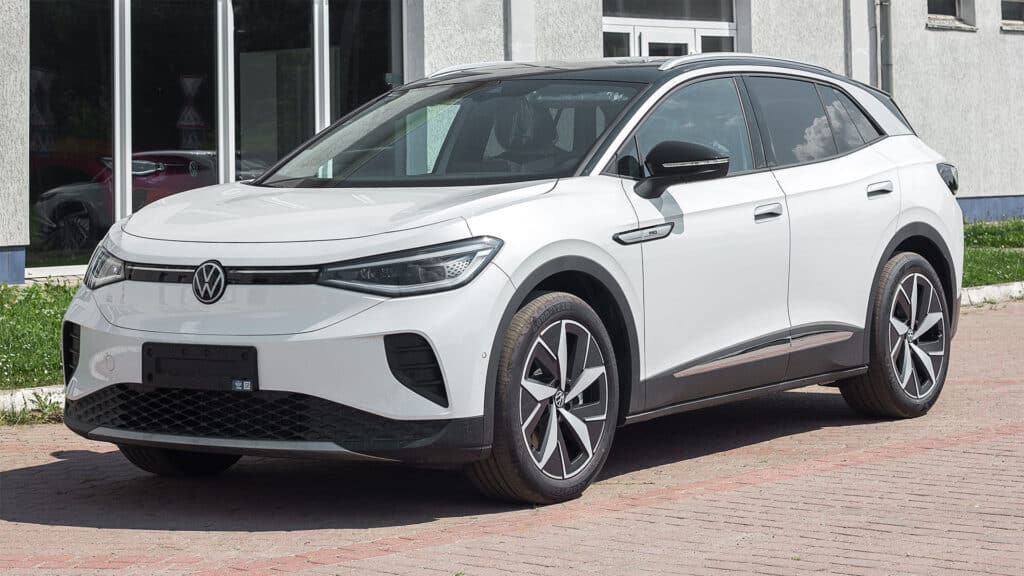
MSRP (2020): Around $40,000
Average Current Used Price (2026): Roughly $15,800, about 60% depreciation.
The Volkswagen ID.4 was introduced as Volkswagen’s ambitious entry into the electric SUV market, offering a practical blend of range, comfort, and everyday usability. With its clean design, spacious interior, and competitive pricing, it quickly appealed to buyers looking to transition from traditional gas-powered crossovers to something more future-focused. Early models delivered a respectable range of around 250 miles, along with a smooth, quiet driving experience and access to expanding charging networks.
However, by 2026, the ID.4 has experienced steep depreciation, losing roughly 60% of its original value. A major factor is the rapid pace of innovation in the EV segment. Newer competitors now offer longer ranges, significantly faster charging speeds, and more refined software systems. The ID.4, in comparison, has faced criticism for its laggy infotainment interface and less intuitive controls, which hurt its appeal on the used market. Additionally, aggressive incentives and discounts on new electric vehicles have pushed down resale prices across the board. While the ID.4 remains a practical and comfortable electric SUV, it struggles to stand out in an increasingly crowded, fast-evolving segment, leading to a sharp decline in value.
2. Nissan Leaf SV Plus

MSRP (circa 2020): About $35,000 for SV trim.
Average Used resell value (2026): Roughly $7,850, a 77% depreciation.
The Nissan Leaf SV Plus was once seen as a practical and approachable entry into the world of electric vehicles. With its decent all-electric range (up to 226 miles) and affordable price point, it has become a favorite among city drivers and commuters. The SV Plus trim introduced useful upgrades, including a larger battery, ProPILOT Assist for semi-autonomous driving, and a reasonably equipped interior.
But in 2025, the used market hasn’t been kind to the Leaf, especially older SV Plus models. Much of that has to do with the rapid evolution of the EV landscape. What was considered a good range in 2020 now feels mediocre at best.
Competing models, such as the Hyundai Ioniq 5 and Tesla Model 3, have begun offering more advanced battery technology, faster charging speeds, and improved range. Adding to the Leaf’s resale woes is its reliance on CHAdeMO fast charging, a now-obsolete standard that’s nearly phased out in the U.S., severely limiting rapid charging options. Even with low operating costs and a decent reliability record, the Leaf SV Plus couldn’t keep pace with the next generation of electric cars, resulting in one of the steepest resale declines in the market.
3. Infiniti QX80

MSRP in 2021: Around $73,000 for base Luxe trim
Average Used resale value (2026): Approximately $26,500 with a total depreciation of around 63%.
The Infiniti QX80 was once a flagship of full-size luxury SUVs, built to rival the likes of the Cadillac Escalade and Lexus LX. It came equipped with features such as a powerful 5.6L V8 engine, spacious three-row seating, and upscale materials. A premium SUV with bold styling and towing capabilities, the QX80 offered plenty to love.
But despite its high price tag when new, the QX80’s resale value has dropped sharply. Several factors contributed to this plunge. First, the QX80’s fuel economy is among the worst in its class, making it a tough sell. Second, Infiniti’s brand prestige has weakened, and the model hasn’t seen major technological updates in years. Buyers seeking advanced driver assistance features, modern infotainment systems, or hybrid options often find better value elsewhere. The QX80 is still a capable and comfortable SUV, but the used market treats it as a dated option in a segment filled with fresher, more fuel-efficient rivals.
4. BMW 7‑Series

MSRP in 2020: Approximately $87,000 (base 740i)
Average Used resell value (2026): Around $32,800 with depreciation of around 62%.
The BMW 7-Series represented the pinnacle of German sedan luxury, featuring luxurious rear seating, advanced suspension, powerful turbocharged engines, and innovative features such as Gesture Control and laser headlights. With its quiet, refined ride and prestige, it was meant to be the flagship executive car for business elites and chauffeurs alike.
Yet by year five, the 7‑Series plummets in resale value more than most of its peers. Buyers on the second-hand market often encounter high service and insurance costs, outdated infotainment systems, and reports of expensive component failures, such as air suspension and electronic modules. Furthermore, demand for large luxury sedans is declining as consumers shift to SUVs. For those reasons, even a moderately used 7‑Series can end up listed in the low-to-mid $30,000.
5. Tesla Model S

MSRP in 2020: Around $76,000
Average Used resell value (2026): Approximately $28,900 with about 62% depreciation.
When it launched, the Tesla Model S redefined what an electric car could be. It has blistering acceleration, cutting-edge design, and one of the longest driving ranges in the industry. It stood as a status symbol for tech-forward luxury buyers. Even five years ago, the Model S offered features that most rivals hadn’t caught up to: over-the-air software updates, a minimalist interior with a giant touchscreen, access to Tesla’s exclusive Supercharger network, and many more.
Tesla’s aggressive price cuts on new models have repeatedly reset market expectations. When a brand-new Model S gets a sudden $10,000 price drop, used versions instantly look overpriced. Then, battery and tech concerns weigh heavily on the used market. Although Teslas are known for strong performance, out-of-warranty repairs can be expensive and time-consuming, often requiring visits to Tesla-only service centers. Lastly, competition has caught up. In 2020, the Model S had few true rivals; by 2025, luxury EVs from Mercedes-Benz, BMW, and Porsche will offer similar or better features, along with fresher interiors, new designs, and improved build quality.
Despite all this, the Model S remains a technological milestone and can still be a great used buy, if you know what you’re getting into. But for those who purchased it new, the resale reality is harsh.