
Copy, Paste, Drive: China’s Knockoff Cars Take on Global Icons
A Chinese-made copy is nothing new. For decades, industries from fashion to electronics have been flooded with replicas — some so crude they’re spotted a mile away, others so well-made that even brand loyalists struggle to tell the original from the fake. But while copying a sneaker or a handbag is one thing, replicating a car is an entirely different challenge.
As China steadily became the world’s manufacturing hub, its automakers began producing more advanced knockoffs — not hidden behind fake badges, but bold enough to stand on their own while clearly echoing iconic models. Some of these vehicles are laughably obvious, others surprisingly convincing, but all share one thing in common: they blur the line between homage and imitation.
Why So Many Copycats?
Over the last two decades, China’s economy has grown at such a rapid pace that few other countries can match its ability to produce high-quality products on a large scale. You can see it across almost every industry, but the strides in battery technology and manufacturing over the past few years have been especially dramatic. Nowhere else can you find such a concentration of skilled labor and advanced production facilities in one place. With that strength, however, also comes a wave of copycat cars that push the limits of design mimicry.
But why they choose to do a copy?
- Brand recognition shortcut: Consumers know Rolls-Royce, Range Rover, and the G-Wagen. Look-alikes provide newcomers with a means to borrow prestige without having to build a legacy from scratch.
- Lower legal enforcement: Intellectual property laws exist, but enforcement varies, giving younger or smaller companies more freedom to experiment without immediate consequences.
- Rapid tech and manufacturing learning: As Chinese automakers master EV platforms, battery systems, and global supply chains, borrowing design becomes the quickest way to get noticed.
- Shock value & marketing: Sometimes the outrage is the point. Getting people to talk about your car — even to call it a knockoff — can be free advertising.
If you have seen some premium car brands lately or had the chance to travel to China, you can see that brands don’t need to make copies. The Chinese automotive industry is significantly more advanced than that of Europe and North America. For example, Baidu’s robot taxis have been officially on the road in Beijing since 2022.
Let´s see which brands are building lookalike cars and if the big names need to fear them.
A Cullinan Cosplay

If you’ve never heard of Dreame, you’re not alone. Founded in 2017, the company established its reputation by manufacturing home appliances, including vacuum cleaners and lawnmowers. Cars were never part of the plan until now. Dreame has surprised the industry by unveiling an SUV that looks remarkably like the Rolls-Royce Cullinan.
The grille is unmistakably Rolls-inspired, with proportions and a silhouette that echo the British luxury icon, and even the rear styling feels familiar. What Dreame isn’t copying, however, is the badge. There’s no Spirit of Ecstasy here. Instead, the startup is leaning on technology. Previews suggest the SUV will feature four independent electric motors, a 100 kWh battery with an optional range extender, and a suspension system that adapts using lidar and radar. Even more surprisingly, production is set to take place near Tesla’s German plant, with a target launch in 2027.
It’s a bold leap for a company better known for cleaning carpets than building cars. Borrowing style is one thing, but delivering a car that plays in the same league as a Rolls-Royce is a tall order. Entering a new industry is not for the faint of heart. Selling a car in Europe, with all its regulations and safety requirements, is a significant step that can only be accomplished by the best.
Hunkt Canticie
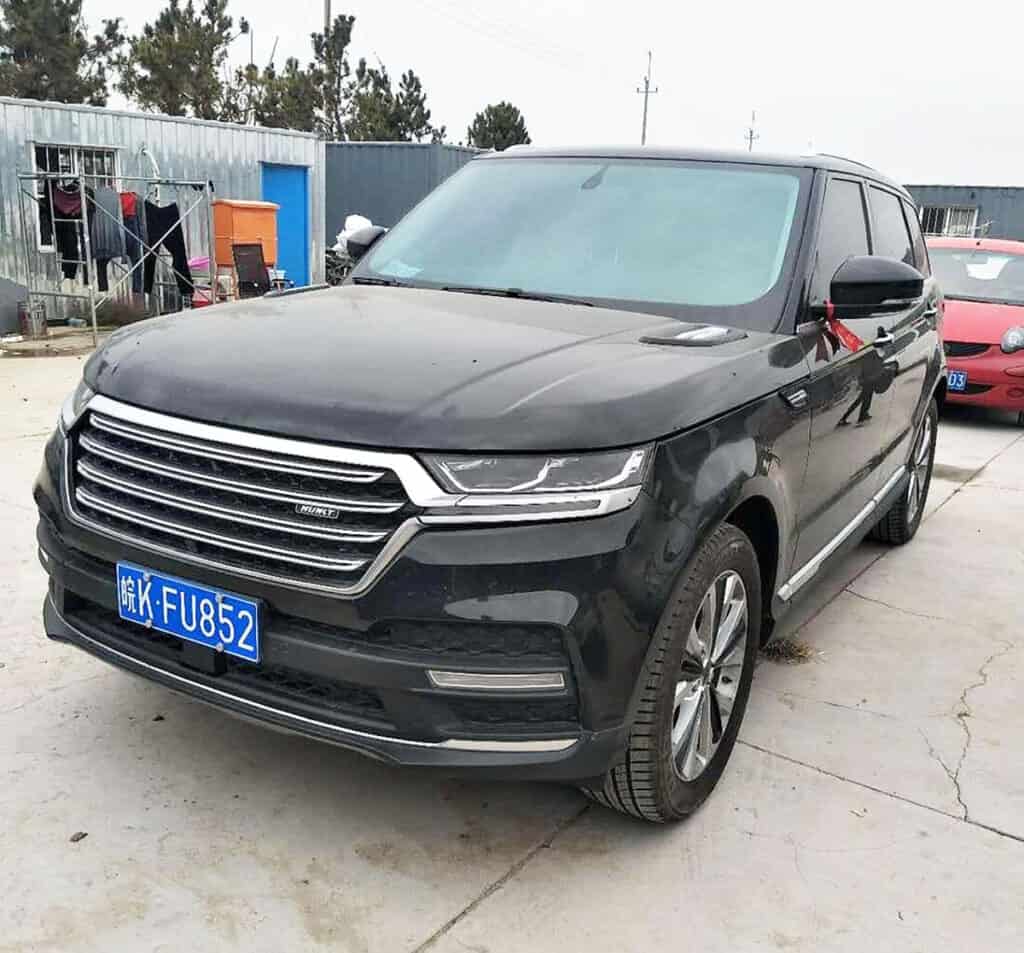
Chinese automakers have long flirted with Range Rover styling, but few took it as far as Hunkt. Founded in 2016, the company appeared to have a promising start, striking partnerships with major suppliers such as Valeo and Bosch to boost its credibility. Its first and only model, the Hunkt Canticie, was launched in 2018 and held such a strong resemblance to the Range Rover Autobiography that some examples were even seen wearing genuine Land Rover badges.
On the outside, the resemblance was uncanny. The upright stance, squared-off proportions, and luxury cues all shouted Range Rover. But the illusion fell apart in the details. At the rear, the design drifted, and inside, the Canticie couldn’t match the refinement of its muse. The three-spoke steering wheel, flashy LCD screens, and low-grade upholstery gave the impression of a budget SUV rather than a British luxury vehicle.
By November 2020, the dream had collapsed. Hunkt halted production as financial difficulties mounted, leaving the Canticie as its only legacy. In hindsight, starting a brand with such a blatant copycat design may not have been the best strategy for winning over buyers or for building long-term trust.
Beijing Auto BJ80 SUV
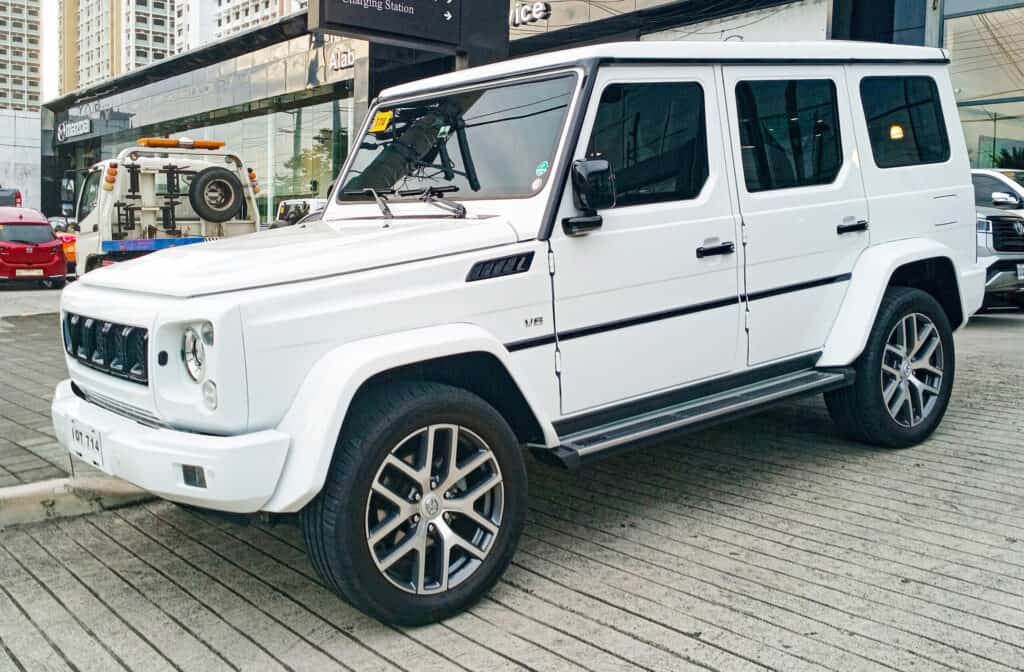
If you thought the G-Wagen was untouchable, Beijing Auto proved otherwise. Their BJ80 SUV borrows heavily from Mercedes’ boxy off-road icon, to the extent that the latest versions resemble almost a carbon copy of the G-Class. To push the resemblance further, they even unveiled a limited BJ80 6×6 clearly modeled on the rare and outrageous Mercedes-Benz G63 AMG 6×6.
Under the skin, though, the similarities stop. Instead of AMG power, the BJ80 relies on more modest hardware, including a 2.3-liter turbocharged four-cylinder engine sourced initially from GM/SAAB. The overall stance might scream G-Wagen, but the performance and refinement are nowhere close. Interestingly, the BJ80’s front fascia has even drawn comparisons to the Suzuki Jimny, another boxy off-roader with cult appeal.
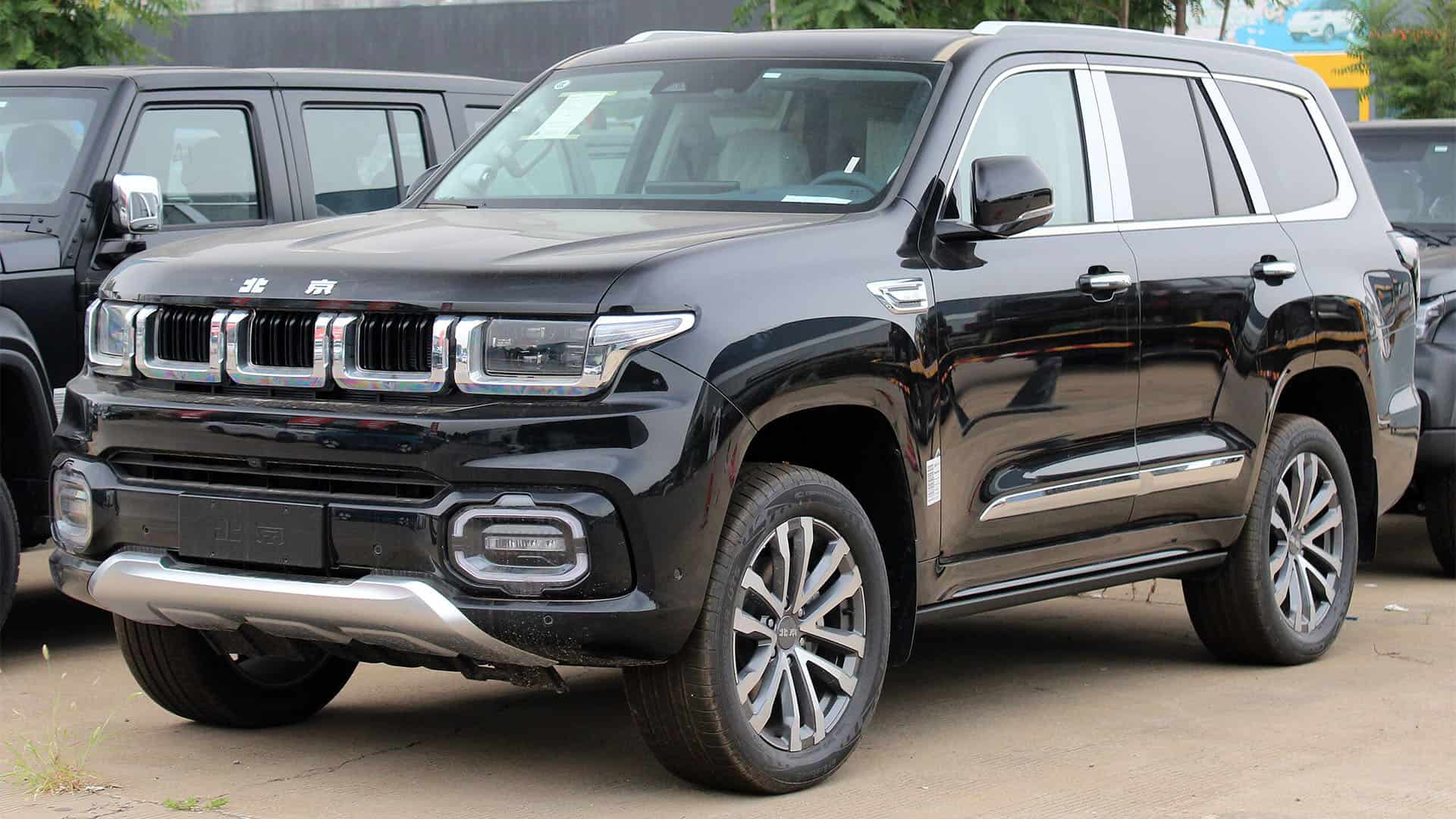
Beijing Auto isn’t a small name in China either — they have a full lineup ranging from sedans to SUVs and rugged off-roaders. But the BJ series in particular seems heavily “inspired” by global icons. Just look at the BJ60, which many observers note carries a striking resemblance to the Toyota Land Cruiser. With styling cues borrowed from the best-known off-roaders in the world, Beijing Auto’s BJ range shows how far design mimicry can go when a company is intent on channeling prestige.
China’s copycat cars may spark laughter, or even admiration. Still, they also highlight a more profound truth: the country’s automakers are no longer outsiders trying to imitate their way into relevance. While some still lean heavily on Western silhouettes, others are pushing ahead with their own technology, EV platforms, and global ambitions. The knockoffs grab headlines, but the real story is how quickly China has gone from copying to competing. Whether Europe and North America like it or not, the next wave of automotive innovation may not come from Stuttgart or Detroit — but from Shenzhen or Beijing.