
“It drives me crazy that nobody else thinks about risk in this way” — Alex Honnold, the world’s most famous free solo climber

On Diary of a CEO, the legendary climber challenges how we think about danger, and why most of us are taking risks we never meant to.
When Alex Honnold talks about risk, he doesn’t sound like a man dangling off a 3,000-foot wall without a rope. He sounds analytical. Almost irritated. During a recent podcast appearance, the world’s most famous free solo climber pushed back on the narrative that he’s some kind of adrenaline junkie and flipped the script on what “dangerous” really means.
Alex Honnold, the world’s most famous free solo climber
If you don’t follow climbing, you still probably know his name. Honnold became a household figure after free soloing El Capitan in Yosemite, a climb so audacious it became the Oscar-winning documentary Free Solo. Since then, he’s remained the public face of extreme climbing, balancing fatherhood and advocacy work with projects that still make most people’s palms sweat.
He climbed the famous Taipei 101 tower, which was broadcast live on Netflix. This high-profile ascent reinforced his reputation as someone who continues to push himself, even after “making history” more than once.
What is risk anyway
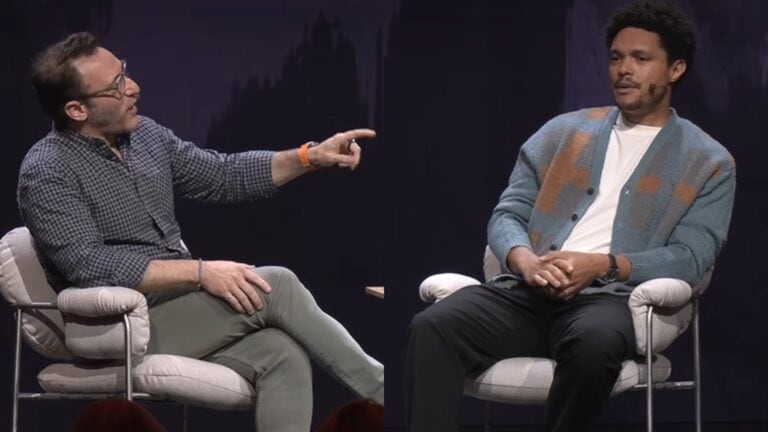
Recently, Honnold appeared on The Diary of a CEO with Steven Bartlett, where he unpacked the psychology behind his climbs. But the moment getting the most attention is about the risk, not the climb. “It drives me crazy that nobody else thinks about risk in this way,” Honnold said during the interview. And then he explained why.
When Bartlett raised the idea that many view him as a thrill-seeker, Honnold pushed back. “At least I’m taking the risks that I’m choosing,” he said.
He contrasted his climbs with everyday behaviors most of us barely question, like driving home after a few drinks, living a sedentary lifestyle, and ignoring long-term health. “Even sedentary people who are like, ‘I don’t take risks, I stay home and play video games,’” he said, are still facing serious health risks, they’re just less dramatic. His point is that risk is everywhere. The difference is whether you’re conscious of it.
Honnold also bristles at the idea that he’s neurologically “different.” Brain scans have famously shown lower amygdala activation when he’s shown frightening images, leading some to conclude he doesn’t experience fear like other people.
“I actually hate all the brain stuff,” he admitted. He doesn’t see himself as genetically wired for danger. Instead, he describes himself as a “middle-class suburban kid” who simply spent 20 years climbing five days a week and being “really freaking scared” along the way. Fear, in his telling, isn’t absent. It’s trained.
He talked about living in his car for years, scraping by on a couple of hundred dollars a month, struggling emotionally when he didn’t feel good enough. Mastery didn’t come quickly. It came through repetition and persistence. “You just can’t master a craft overnight,” he said.
Even in extreme environments, the throughline wasn’t recklessness. It was preparation, partnership, and continuing despite discomfort. Before dangerous climbs, he has hard conversations with his partner. She once wrote him a letter that began, “This is your worst nightmare.” His response? “We all have to do scary things.” That’s not a daredevil talking, just a man who has decided which fears are worth facing.
Why this matters
Honnold’s argument resonates with us because it goes far beyond climbing. Most of us tell ourselves we’re “risk-averse.” But we routinely accept risks by default: staying in jobs we hate, avoiding hard conversations, neglecting our health, numbing out with distraction, making ourselves feel stuck, and risking regret. “You’re still going to freaking die either way,” he said plainly. The real question is whether the risks in your life are chosen or accidental.
There’s also something useful in how he dismantles the myth of natural talent. The idea that he’s simply wired differently lets everyone else off the hook. If he’s genetically fearless, then his achievements don’t require uncomfortable self-reflection from the rest of us. But if he’s just a guy who spent decades getting incrementally better at tolerating fear? That’s harder to dismiss.
There’s an uncomfortable mirror here for a lot of men. We’re often socialized to either chase adrenaline blindly or avoid vulnerability altogether. Honnold’s take is neither. It’s deliberate, calculated, and honest about trade-offs. He’s simply arguing that we should be more honest about the risks we’re already taking, and more intentional about the ones we actually want. It’s easy to call a climber crazy but it’s harder to admit that playing it “safe” might just be a different kind of gamble.