
Why your parked car becomes a heat trap, and how to stop it overheating
A few smart practices can keep a vehicle cool during extreme heat.
We have all experienced that frustrating moment on a hot summer day. The car door opens, and a wave of thick, stagnant air makes it hard to breathe. The steering wheel is often too hot to hold, and the metal on the seatbelts can feel like it will burn skin. During the warmer months, a parked vehicle quickly transforms into a rolling oven, making the first ten minutes of any drive completely miserable.
While turning the air conditioning to maximum capacity helps once the vehicle is moving, the most effective strategy is preventing the heat from building up in the first place. Understanding exactly how this thermal trap works makes it much easier to deploy a few simple tactics to keep the cabin temperature manageable.
Why your car gets so hot
The reason a vehicle interior gets significantly hotter than the outside air temperature comes down to how glass interacts with sunlight. When a vehicle sits in the sun, solar radiation passes directly through the large glass expanses of the windshield and side windows. This light strikes the dark, dense surfaces inside, such as the dashboard, steering wheel, and seats.
Once these materials absorb the light, they heat up and begin radiating that energy back out into the cabin as pure heat. The core problem is that this trapped heat cannot easily pass backward through the glass. Because the doors are closed and the windows are rolled up tight, there is zero ventilation to let the energy escape. The air simply sits stagnant, absorbing more and more heat until the interior temperature can easily climb past 130 degrees Fahrenheit on a standard 90-degree summer day.
How to keep the heat out
Fighting summer heat buildup starts with being strategic about where and how a vehicle is left. The most basic advice remains the most valuable: always prioritize parking in the shade. Even if it requires a slightly longer walk to a destination, parking under a tree or next to a building saves a tremendous amount of interior heat. It is also helpful to calculate the movement of the sun, as a spot that is perfectly shaded at noon can be exposed to direct, brutal sunlight by mid-afternoon.
When a vehicle is parked in a safe, secure area, leaving the windows slightly open makes a massive difference. Creating a small gap of just half an inch allows rising hot air to escape through the roofline, which naturally pulls slightly cooler air into the cabin from underneath the chassis. This continuous bit of airflow prevents the interior from becoming a high-pressure thermal cooker, keeping the baseline temperature much lower for the return drive.
Rethinking the sunshade
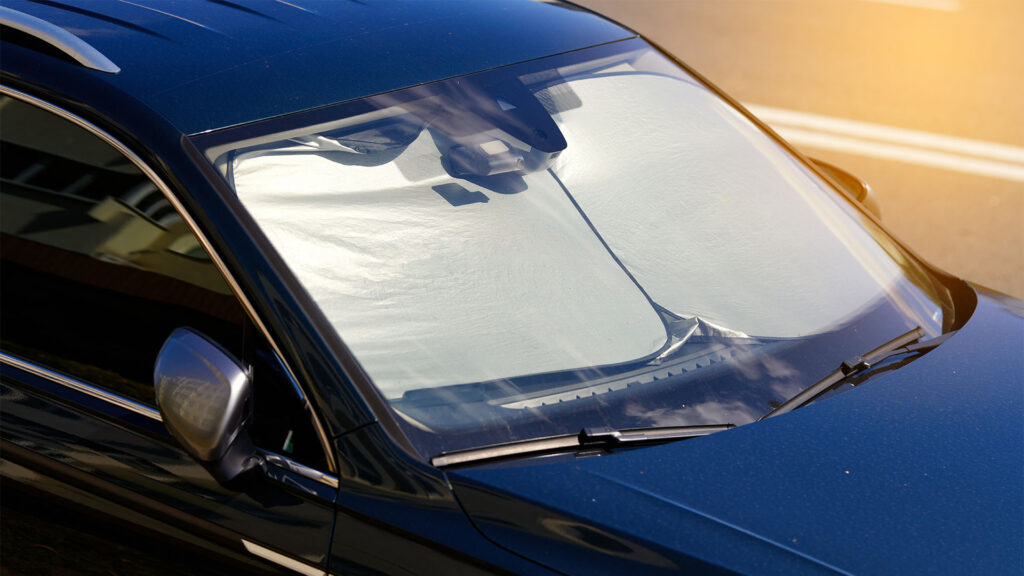
Using a reflective sunshade is an excellent habit, but the traditional way most people install them actually reduces their efficiency. Typically, these shades are unfolded inside the cabin and pushed up flush against the interior glass. While this method does a great job of protecting fragile dashboard plastics from cracking and fading under ultraviolet light, it still allows significant heat to cross the vehicle boundary.
A viral photo shared on Reddit’s “Mildly Interesting” forum caught the public’s attention when an onlooker spotted a car utilizing a standard reflective sunshade mounted entirely on the outside of the front windshield. While the setup looked unconventional, the driver was actually utilizing smart thermodynamics.
When a sunshade is placed on the inside, the sun’s rays have already passed through the glass and entered the vehicle. The heat becomes trapped in the small gap between the window and the shade, slowly heating up the vehicle. Placing a cover or shade on the outside of the glass blocks the solar radiation before it ever hits the vehicle, keeping the windshield itself completely cool. If an exterior shade is not practical due to wind or theft concerns, the next best option is ensuring the interior shade has a highly reflective silver coating and fits as tightly as possible to eliminate gaps.
Cool down the car
When a vehicle is already boiling upon return, the immediate instinct is often to jump in, roll up the windows, and blast the air conditioning on maximum. However, this is actually the slowest way to lower the cabin temperature and places an immense, unnecessary strain on the vehicle’s mechanical cooling system. Because the stagnant air inside is significantly hotter than the outdoor ambient air, the A/C compressor is forced to work twice as hard to fight the trapped heat.
The smartest mechanical move is to perform a fresh air flush before relying on the climate control. Opening all the windows completely and driving for the first two to three minutes of a trip forces the superheated air right out of the cabin, instantly replacing it with fresher outside air. Once that initial wall of heat has been cleared and the baseline temperature has dropped, the windows can be rolled up, and the A/C turned on. The system will be able to cool the cabin much faster because it is starting from a far more manageable baseline.