

Man wonders if he’s wrong for packing his lunch the way he likes it
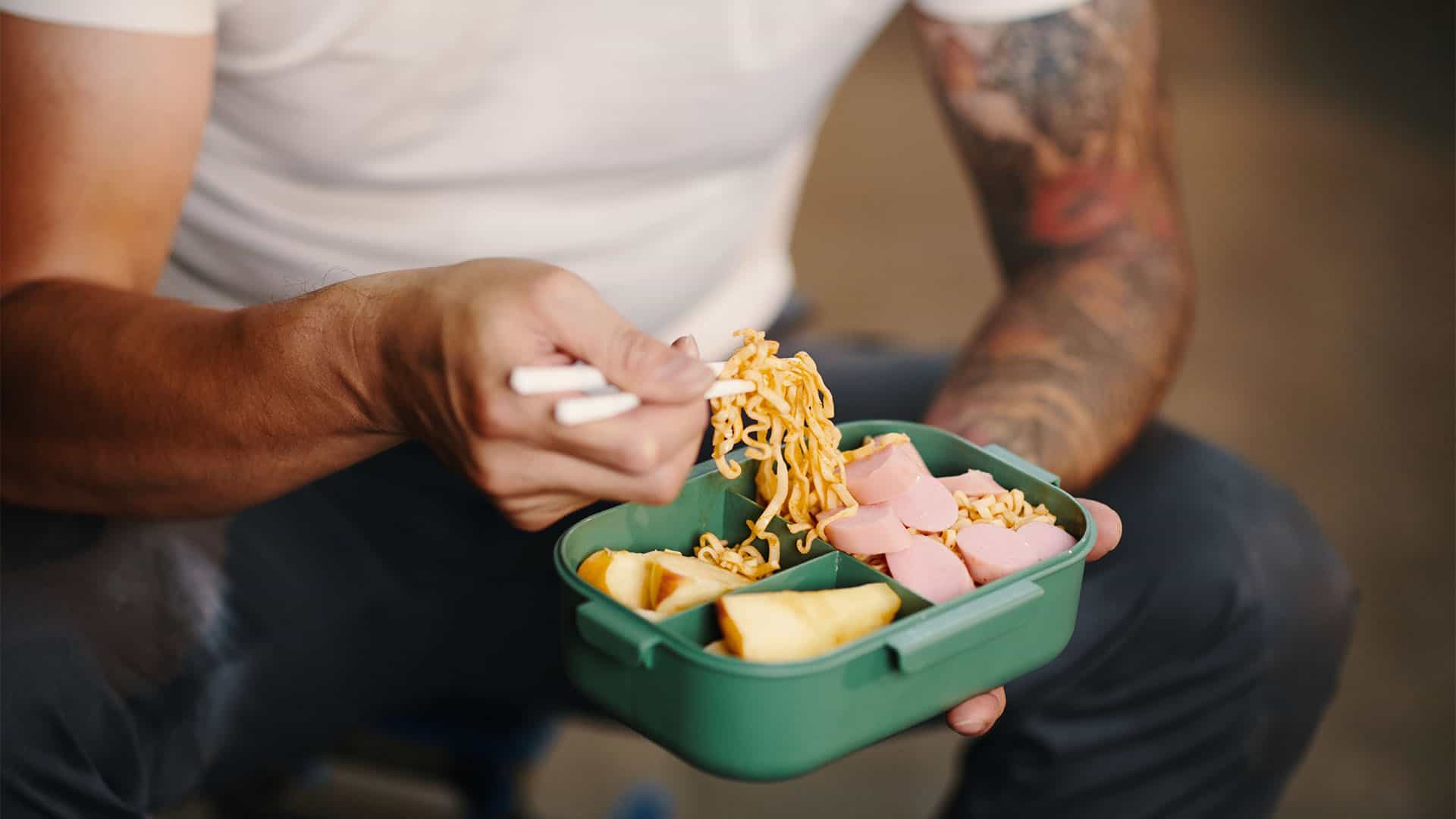
A recent Reddit post asks whether a man should pack lunch to his own taste when his fiancée believes a “proper” lunch looks very different.
Most of us have a picture of what a “proper” lunch looks like, shaped by whatever was in the lunchbox when we were kids. That picture is easy to forget about until someone we love opens their container and finds something completely different. A recent Reddit post follows a Danish man who packs lunch exactly the way he likes it, and whose fiancée thinks he is doing it wrong.
The poster is a 32-year-old electrician from Denmark who packs his own lunches. In Denmark, a traditional packed lunch is rye bread with cold cuts and liver pâté. He does it differently and packs vegetables with meat, cheese or eggs. His latest lunch was sliced cucumber, a handful of small tomatoes, 100 grams of ham and a spoonful of dressing.
His fiancée thinks this is wrong. She admits the lunches are healthy and that they keep him away from the gas stations and bakeries he used to visit all the time. Still, she says it is not a proper lunch, though she can’t explain why. He believes it is mostly cultural bias.
The argument started when she told him that once they have kids, he will have to make them proper lunches. He agreed that kids have different nutritional needs and asked her what a proper lunch means to her. She could not explain and got angry that he did not know what she meant. He thinks she means rye bread with cold cuts, but he finds that boring after sitting in the fridge for 16 hours.
He is now asking whether it is wrong to pack lunch his own way instead of following the cultural norm. He also wants to know whether he can take the same approach with his future kids, while making sure they get what they need nutritionally.
Readers say the question is about her, not the lunch
One reader skipped the food and went straight to the pattern. “Is she usually judgmental over small things that don’t matter? If so, you may want to reconsider having children with her. That kind of behavior only gets worse when you throw kids in the mix.” The comment takes the argument seriously as a preview of the future, since a partner who criticizes small choices now may do the same when the stakes are children’s meals.
Another commenter suggested a more direct response. “If she’s not going to eat it, ask her to mind her own business. And God forbid you have children who don’t like rye bread! There’s absolutely nothing wrong with what you eat, and children don’t have to eat rye bread either.” The point is fair, because lunch affects only the person eating it, and a tradition no one is required to follow shouldn’t become a rule for the next generation.
One person offered the most thoughtful explanation. “Some people have internalized food rules, whether they realize it or not, and a good chunk of those food rules have no basis in reality, just what they learned ‘should’ be done at some point. These are people who have issues about having meals at odd times, or the ‘wrong’ meal. I struggle with this myself.” That would fit the fiancée’s reaction, since she insists the lunch is wrong but cannot say why. Beliefs absorbed in childhood often feel like facts, and they are hard to explain because they were never examined.
Zooming out: why a lunch can start an argument

Food is one of the first places where culture shows up in a relationship. The meals we grew up with feel normal, and anything different can feel like a criticism even when no one intends one. In Denmark, rye bread with cold cuts is closely tied to everyday life, so a lunch without it can read as a break with tradition and not just a different menu. That explains how a harmless box of cucumber, tomatoes and ham turned into a debate about identity.
A useful move in these moments is to ask what the rule is protecting. When a partner calls something “improper,” the reason can be nutrition, habit, family tradition or a worry about what other people will think. The poster already asked her what a proper lunch means, which was the right instinct, and a calm follow-up such as “what did lunch look like in your house?” can bring out a reason both of them can discuss.
The kids question is where the conversation matters most. Children do need balanced meals, and parents reasonably want them to feel part of their own culture. Yet insisting on a single “correct” lunch can create the kind of rigid food rules the third commenter described, and many nutrition experts encourage offering a variety of foods and letting children develop their own tastes. A shared principle works better than a fixed menu, for instance that lunches should include protein, vegetables and something the kids actually enjoy, with rye bread on the list for days when they want it.
The takeaway for couples is simple. A difference in taste does not need a winner, and it helps to separate the habits that affect health from the ones that are only familiar. If they can agree on the first and relax about the second, the lunchbox will stop being a battleground, and the question of what their children eat can become a decision they make together.